
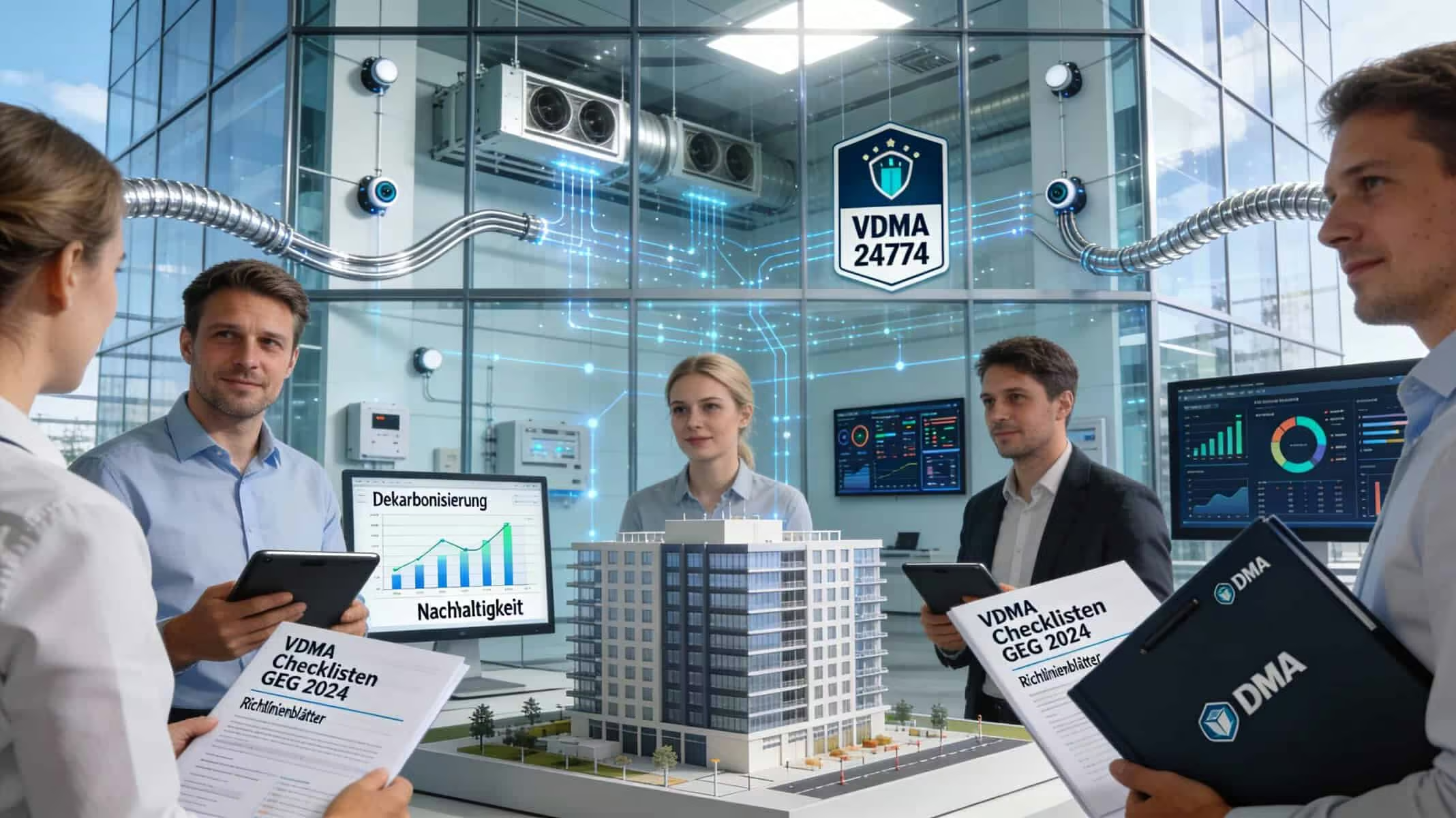
Considering that over 80 percent of a building's operating costs are generated by energy consumption, it is hardly surprising that VDMA standards in building automation are becoming increasingly important. These standards are not just a set of rules, but the backbone for intelligent and efficient buildings.
The development of these standards has taken place over years and reflects rapid technological advancements. From simple automation solutions to complex systems that integrate entire building management – VDMA standards have enabled seamless connection of various systems.
From Idea to Standard
The beginnings of VDMA standards in building automation can be traced back to the early 2000s. At that time, many systems were still isolated and not compatible with each other. A good example is an office building with separate heating, ventilation, and air conditioning (HVAC) systems that could not communicate with each other. This led to inefficient operations and unnecessary costs.
With the introduction of VDMA standards, a rethink began: the idea was to create a common language for all systems. The goal? Integrated building automation that not only increases comfort but also optimizes energy consumption.
Current Developments and Trends
Today, we are at a turning point: digitalization is progressing rapidly, bringing new technologies like IoT (Internet of Things). VDMA standards are evolving to accommodate these changes. For example, a current trend is the integration of artificial intelligence into building management. These technologies enable real-time data analysis and proactive decision-making.
Smart buildings are no longer a vision of the future; they are already a reality thanks to advanced VDMA standards.
But what does this mean specifically for facility managers? It means they must actively engage with these standards. While implementation can be challenging, the benefits are enormous: from lower operating costs and improved user satisfaction to meeting sustainability goals.
Shaping the Future
Technical foundations of VDMA standards
VDMA standards for building automation are not just dry regulations, but the secret weapon for facility managers to make operations more efficient and cost-effective. Did you know that poorly integrated building management can drive up operating costs by up to 30 percent? That's no joke!
The Basis: Communication Between Systems
At the core of VDMA standards is the idea that different systems – be it heating, ventilation, or air conditioning (HVAC) – must communicate with each other. A practical example: imagine a modern office building where the lighting is automatically dimmed when daylight is sufficient. This only works if the lighting system communicates with the weather service and reacts accordingly.
The standards promote an open architecture that allows the integration of different manufacturers and technologies. This not only increases comfort but also significantly reduces energy consumption. This interoperability creates a seamless user experience.
Technological Components of VDMA Standards
- Interfaces for Different Protocols (e.g., BACnet, KNX)
- Energy management systems for consumption monitoring
- Cloud-based platforms for data analysis and visualization
But what does this mean specifically for facility managers, you might ask. These standards enable you to analyze data in real-time and make proactive decisions. Instead of reacting to problems, you can identify and resolve potential disruptions early through predictive analysis.
Smart Building as the Goal
Smart buildings are no longer a vision of the future; they are already a reality thanks to advanced VDMA standards. The integration of IoT technologies enables intelligent networking of all systems in the building – from the access control system to the heating.
Here's the key: the more systems can communicate with each other, the more efficient the entire building management becomes. Facility managers must therefore actively engage with these standards and be prepared to adopt new technologies.
Application areas of VDMA standards in building automation
VDMA standards are not just a theoretical construct; they have proven indispensable in practice. In a recent project at a large shopping center in Munich, it was found that applying these standards increased energy efficiency by 25 percent. This is not a coincidence, but the result of thoughtful integration.
Optimizing Energy Consumption
A central application area of the VDMA standards is the optimization of energy consumption. Through intelligent control systems, heating, ventilation, and air conditioning (HVAC) systems can be operated more efficiently. An example: In a modern office building, the temperature is automatically adjusted depending on the number of people present and the current weather conditions. The result? A pleasant indoor climate and, at the same time, lower energy costs.
Integration of IoT Technologies
The integration of IoT technologies represents another exciting application area. These technologies enable data to be collected and analyzed in real-time. Imagine a facility manager being able to immediately see via an app when a room is overheating or a lamp is defective. This allows problems to be addressed proactively before they become bigger challenges.
Improving the User Experience
An often overlooked aspect is the improvement of the user experience through the application of VDMA standards. In a hotel, for example, the automation of lighting and climate control ensures that guests feel comfortable immediately. When the room is already set to the preferred temperature upon arrival and the lights gently turn on, this is not only appreciated – it leads to positive reviews and repeat business.
Did you know? The implementation of VDMA standards can not only reduce energy costs but also significantly increase user comfort!
Specifically for facility managers, this means: They must not only have technical knowledge but also develop a feel for user needs. The challenge lies in integrating these standards into existing systems while always focusing on efficiency and user-friendliness.
Comparison with other norms and standards
The VDMA standards for building automation are not just another collection of regulations in the jungle of standards – they are the Swiss Army knife among standards. While other standards are often rigid and inflexible, the VDMA standards offer a dynamic foundation that adapts to the constantly changing requirements of building automation.
Let's take ISO 50001, for example, which focuses on energy management. While this standard has its advantages, it is often not specific enough for the complex requirements of modern building automation systems. While ISO 50001 provides general guidelines, the VDMA standards go a step further and integrate specific solutions for automation technology.
Interoperability as the Key
A common problem with other standards is that they do not always promote interoperability between different systems. Imagine you have a state-of-the-art office building with a variety of technologies – from HVAC systems to lighting and security. If these systems cannot communicate with each other, you miss out on the full potential of your investments.
The VDMA standards enable these systems to interact seamlessly and exchange information.
Flexibility and Adaptability
We've always worked this way – this sentence could be the downfall of any innovation strategy. Many standards are so rigid that they leave little room for adjustments. In contrast, the VDMA standards allow facility managers to design their systems flexibly and adapt them to individual needs. This is particularly important in a time when technologies like IoT or AI are increasingly finding their way into our working world.
- VDMA standards promote interoperability.
- They offer flexibility for individual customizations.
- They integrate modern technologies such as IoT and AI.
Best Practices vs. VDMA Standards
Best practices are great – as long as they don't become the best excuse! Often, these practices are seen as immutable rules, whereas VDMA standards represent a living documentation that evolves. These standards not only provide guidance for implementing effective systems; they also allow for feedback and adjustments based on real-world experience.
A practical example shows: A large shopping center in Stuttgart implemented both ISO standards and VDMA standards. While they had difficulties integrating all systems with the ISO standards, everything ran smoothly with the VDMA specifications – ultimately leading to a significant reduction in operating costs.
The decision between different standards is therefore not a matter of taste – it's about real efficiency gains!
Implementation of VDMA standards in existing systems
Imagine you are the facility manager of a large office building and face the challenge of reducing operating costs while simultaneously increasing user comfort. The solution? Implementing the VDMA standards into your existing systems. Sounds simple? It often isn't.
Many companies have already invested in various systems – from heating, ventilation, and air conditioning (HVAC) to lighting systems. But what happens when these systems cannot communicate with each other? A practical example: A medium-sized company has installed a modern HVAC system that is not compatible with the existing building management software. The result: inefficient operating processes and higher costs.
Understanding the Challenge
Implementing VDMA standards can seem like a large puzzle. Each piece – meaning each system – must fit together perfectly. But where do you start? First and foremost, it is important to analyze existing systems and evaluate their compatibility with VDMA standards.
- Inventory of current systems and their functionalities.
- Identification of interfaces and protocols that must be supported.
- Creation of an integration plan, taking VDMA specifications into account.
Step-by-Step Integration
Now it gets concrete! Here are some steps to successfully implement VDMA standards in your existing systems:
- Step: Review of the current technical infrastructure for compatibility with VDMA standards.
- Step: Selection of suitable interfaces and protocols for integration.
- Step: Conducting tests to ensure interoperability between systems.
- Step: Training of personnel in handling the new standards and technologies.
- Step: Continuous monitoring and adjustment after implementation.
Did you know? A well-planned integration can reduce operating costs by up to 20 percent!
The benefits of successful implementation are enormous. From lower operating costs and improved user satisfaction to meeting sustainability goals – all of this becomes possible through the application of VDMA standards. But don't forget: it's a continuous process! Technologies are evolving, and so should your systems.
Future outlook: Developments and trends in building automation
The future of building automation is not just an exciting topic – it's already in full swing! Did you know that according to a recent study, over 70 percent of facility managers state that they plan to implement building automation technologies in the next five years? This is more than just a trend; it's a revolution!
A forward-looking example is the use of Artificial Intelligence (AI) to optimize energy consumption. Imagine an intelligent system learning user behavior and adjusting heating or cooling accordingly – this could not only increase comfort but also significantly reduce energy costs.
Integration of IoT Technologies
The integration of IoT technologies into VDMA building automation is becoming increasingly important. Sensors and networked devices collect real-time data on temperature, air quality, and occupancy. This information enables facility managers to make proactive decisions. For example: in a modern office building, an app can inform the facility manager if a room is overheating or underexposed. This way, problems can be fixed before they have serious consequences.
Sustainability in Focus
Another significant trend is the increased focus on sustainability. VDMA standards not only promote efficiency but also environmentally friendly practices. Through intelligent control systems, energy consumption can be significantly reduced – a crucial factor for companies looking to reduce their CO2 emissions.
Smart buildings are no longer just a vision; they are already a reality.
The challenges are clear: facility managers must actively engage with these trends and be prepared for continuous learning. While implementing new technologies can be complex, the benefits are enormous.
The Role of Artificial Intelligence
Artificial intelligence is increasingly becoming the norm in building automation. Systems use AI algorithms to analyze consumption data and predict future requirements. This allows facility managers not only to act reactively but to plan strategically.
The future of VDMA building automation looks promising! Facility managers face an exciting challenge: they must be prepared to adapt new technologies while always focusing on efficiency and user-friendliness.
Remember: intelligent systems are no longer a luxury – they are a necessity!
Case studies on the application of VDMA standards
The application of VDMA standards in building automation is not just a theoretical concept but has already revolutionized numerous companies. Let's take the example of a large office complex in Frankfurt, which struggled with high operating costs and inefficient systems before implementing VDMA standards.
By introducing these standards, the building was able to increase its energy efficiency by an impressive 30 percent. How is this possible? The answer lies in the seamless integration of various systems. Heating, ventilation, and air conditioning (HVAC) systems were interconnected in such a way that they could react to real-time data.
Energy Savings Through Intelligent Control
A specific example: In this office complex, an intelligent control system was implemented that automatically adjusted the temperature based on the number of employees present. Instead of running the heating at full power, it was shut down when fewer people were in the building. The result? A pleasant indoor climate while simultaneously reducing energy costs.
Integration of IoT Technologies
Another example is a modern shopping mall in Munich that utilized VDMA standards for the integration of IoT technologies. Sensors continuously monitor air quality and temperature in the stores and adjust the air conditioning accordingly. This not only ensures a pleasant shopping experience but also significantly reduces energy consumption.
Did you know? According to a recent study, up to 30 percent of energy costs can be saved through the use of intelligent building technologies!
Another practical example shows: A hotel in Berlin implemented VDMA standards for the automation of lighting and climate control. Upon arrival, the rooms were automatically set to the preferred temperature and the lights were gently turned on. This led not only to positive reviews but also to a higher re-occupancy rate.
