Implementation

CAFM-Blog.de | Why controlling in Facility Management is just colorful poetry without data architecture

Why controlling in facility management without data architecture is just colorful poetry

Congratulations. You are holding another paper that promises to miraculously reduce your operating costs with some "controlling" in facility management. As someone who cleans up the minefields of failed digitalization projects and the ruins of beautiful PowerPoint promises, I tell you: If your controlling consists of comparing an Excel spreadsheet from finance with the janitor's list at the end of the month, you are not doing controlling. You are managing damage control by chance. Anyone who sees FM controlling as just a pretty

Why controlling in facility management without data architecture is just colorful poetry Read more »


CAFM-Blog.de | Maintenance Software Comparison: Which tool really fits your operation?

Maintenance software comparison: Which tool really fits your operation?

Finding the right software for maintenance is rarely a walk in the park. After years in consulting, I've learned one thing: when maintenance managers and IT managers sit in a room, they usually speak two different languages. Some want a tool that works out there on the pump; others are concerned with ERP interfaces, data models, and the budget. Between cumbersome enterprise suites and lean cloud CMMS solutions, the truth usually doesn't lie in the brochure of the

Maintenance software comparison: Which tool really fits your operation? Read more »

CAFM-Blog.de | How to Build a Digital Management Tool from Maintenance Chaos

How to build a digital management tool from maintenance chaos

Welcome to the magical land of Computer-Aided Facility Management – CAFM for short. A term that reliably causes tired eyes in board meetings until the first main water pipe bursts in the server room. This little guide shows you (yeeees!), how to actually keep modern building structures under control with CAFM: from architectural models to integration paths to ERP, BMS, and IoT, to the uncomfortable truth about ROI and change management. 1. The role of CAFM: Why your Excel lists

How to build a digital management tool from maintenance chaos Read more »

CAFM-Blog.de | BIM in Facility Management: Why Colorful 3D Models Won't Save Operations

BIM in Facility Management: Why colorful 3D models don't save operations

Anyone talking about BIM in facility management today quickly ends up with shiny 3D models that look fantastic in the planning phase but fail miserably in operational use. This article brings the topic back down to earth: I want to briefly show how BIM processes really work in FM, why ruthless data architecture (CDE) is essential, and how you prevent your BIM data from rotting away in isolation from CAFM, sensor technology, and IoT.

BIM in Facility Management: Why colorful 3D models don't save operations Read more »

CAFM-Blog.de | Select IWMS Correctly: Architecture, TCO, Checklist

Select IWMS Correctly: Architecture, TCO, Checklist

An Integrated Workplace Management System, or IWMS for short, is intended to form the operational and strategic backbone for property and building management. In theory, space planning, maintenance, energy, and leasing converge on a central database. In practice, companies spend millions on a software suite that ultimately ends up as a nicely packaged data silo. The reason is almost always the same: integration into the existing ERP and building services environment is massively underestimated. This article shows, without marketing jargon,

Select IWMS Correctly: Architecture, TCO, Checklist Read more »

CAFM-Blog.de | Facility Management Software: Modules, Benefits, and a Few Buzzwords

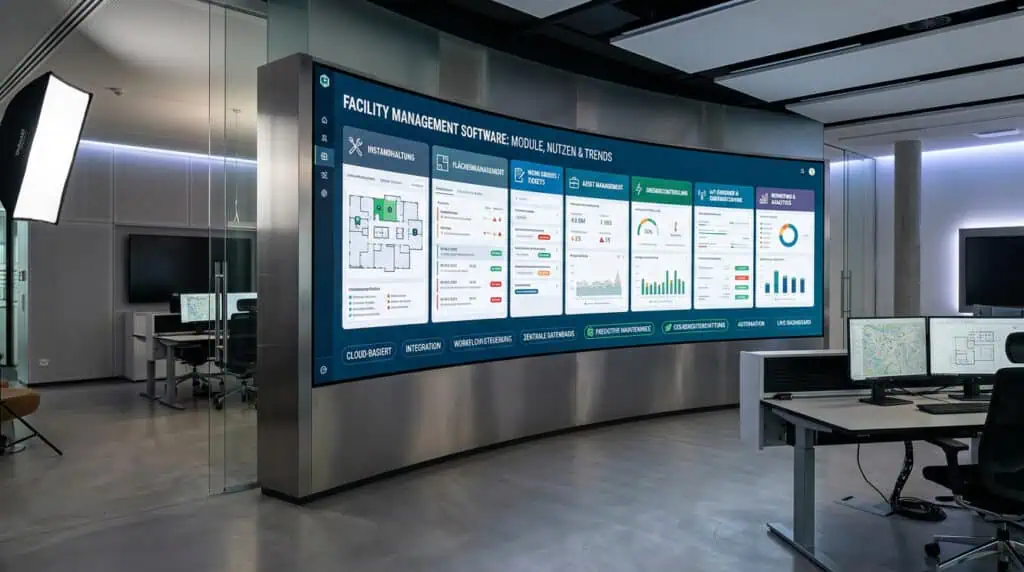
Facility Management Software: Modules, Benefits, and a Few Buzzwords

Facility Management software is said to be able to do everything. Maintenance, space planning, energy, services. Preferably all at once, if you please. In reality, however, it quickly becomes apparent: it's not the prettiest interface that wins, but the platform that functions cleanly in everyday use. For FM decision-makers and IT managers, that's the real question. Which modules do I really need? Where does automation bring real benefits? And where does it all end up as an expensive pile of half-baked master data? That's exactly what this is about.

Facility Management Software: Modules, Benefits, and a Few Buzzwords Read more »

CAFM-Blog.de | CMMS Explained: How Modern Maintenance Systems Reduce Downtime

CMMS Explained: How Modern Maintenance Systems Reduce Downtime

Downtime in industry and facility management is a real money drain. Modern Computerized Maintenance Management Systems (CMMS) promise a solution and bring order to daily chaos. In practice, a good CMMS is far more than just a digital software list for maintenance appointments. It functions as a central nervous system where work orders, inventory, and the entire maintenance history converge comprehensibly. Many companies are finally replacing their isolated Excel spreadsheets with these systems and creating

CMMS Explained: How Modern Maintenance Systems Reduce Downtime Read more »

CAFM-Blog.de | IWMS vs. CAFM: When an Integrated Workplace Management System is Worthwhile

IWMS vs. CAFM: When an Integrated Workplace Management System is Worthwhile

When deciding between classic CAFM and a fully integrated solution, the question often arises whether an IWMS justifies the additional effort. This post provides clear decision rules, quantifiable criteria, as well as typical cost and ROI parameters, and shows when an integrated workplace management system makes economic sense for space management, energy consumption optimization, and integrations with HR, ERP, and BMS. At the end, you will find an actionable checklist for evaluation, piloting, and implementation. Key takeaway for decision-makers Key takeaway: An IWMS is worthwhile

IWMS vs. CAFM: When an Integrated Workplace Management System is Worthwhile Read more »

CAFM-Blog.de | IFC Standards Explained: Data Exchange for CAFM and BIM Projects [Pset]

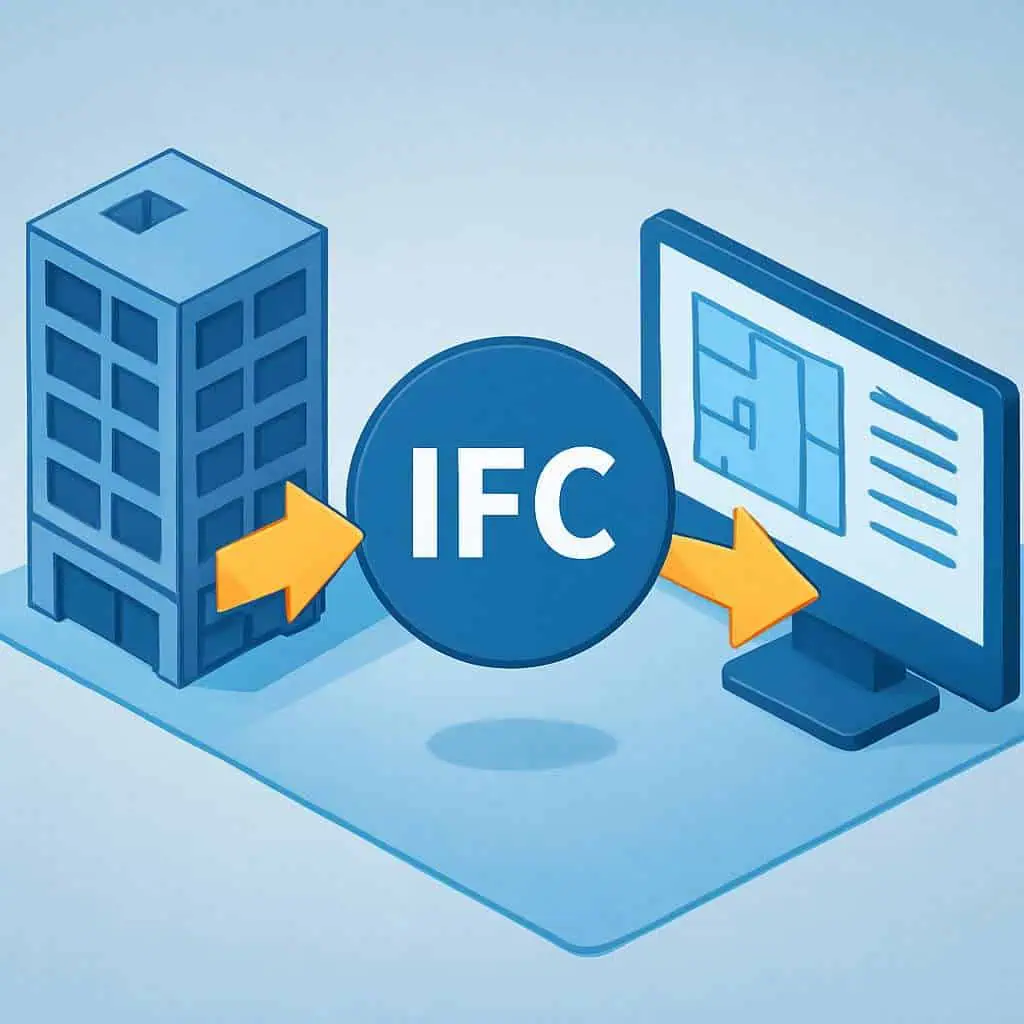
IFC Standards Explained: Data Exchange for CAFM and BIM Projects [Pset]

Today I'm trying to explain what the IFC standard means and how it makes data exchange between BIM models and CAFM systems openly interoperable. It's about data formats, property sets, and what workflows are typically needed, and how to plan a robust IFC-based integration strategy. Practical examples and recommended tools like Revit, Archicad, Solibri, IfcOpenShell, or BIMcollab show concrete implementation steps for CAFM and BIM projects. IFC Fundamentals and Relevance for CAFM and BIM The

IFC Standards Explained: Data Exchange for CAFM and BIM Projects [Pset] Read more »

CAFM-Blog.de | CAFM Replacement: The Holy Grail You Must First Dig Out of a Data Graveyard

CAFM Replacement: The Holy Grail You First Have to Dig Out of a Data Graveyard

In facility management, few projects are as reliably romanticized as replacing a CAFM system. On paper, it always sounds wonderfully simple: old system out, new system in, migrate data, modernize processes, everyone happy, operations more efficient, reporting cleaner, users delighted, management impressed. In practice, this is about as realistic as the idea that you can clear out a cluttered basement by simply...

CAFM Replacement: The Holy Grail You First Have to Dig Out of a Data Graveyard Read more »

CAFM-Blog.de | CAFM Software: The Most Expensive Way to Refine Excel?

CAFM Software: The most expensive way to refine Excel?

CAFM software is intended to bring order, transparency, and efficiency to facility management. In practice, however, it often results in an expensive system that promises more than it delivers in everyday use. CAFM software is often sold as the great salvation for facility management: finally transparency, finally clean processes, finally an end to Excel, email, and operational missteps. That sounds good, but it's also suspiciously smooth. Because anyone who looks closer quickly realizes: it's not the idea that is...

CAFM Software: The most expensive way to refine Excel? Read more »

CAFM-Blog.de | Increasing Efficiency in Building Operations with AI

Increasing Efficiency in Building Operations with AI

Increasing efficiency in building operations with AI is gaining relevance because buildings today must not only be comfortable and safe, but also operated economically and sustainably. Artificial intelligence (AI) makes it possible to analyze large amounts of data, recognize patterns, and automatically adjust operational processes. This allows for targeted improvements in energy consumption, maintenance costs, user comfort, and safety. Fundamentals: How AI is Changing Building Operations Efficiency increases in building operations with AI are based on the integration of sensors, software, and automated

Increasing Efficiency in Building Operations with AI Read more »

CAFM-Blog.de | RACI Matrix as a Lifeline for Complex Projects

RACI Matrix as a Lifeline for Complex Projects

Who doesn't know this? In everyday IT life or during the implementation of highly publicized facility management systems, an actually simple task often turns into a confusing web of emails, informal agreements, and sudden gaps in responsibility. When a project fails or schedules falter, it's rarely due to a lack of motivation – usually, there's simply a lack of clarity about who is in charge, who is taking action, and who actually just wanted to be CC'd. The RACI matrix...

RACI Matrix as a Lifeline for Complex Projects Read more »

CAFM-Blog.de | Operator Responsibility in Buildings: Duties, Liability, and Digital Tools

Operator Responsibility in Buildings: Duties, Liability, and Digital Tools

Operator responsibility is not an abstract liability issue, but a daily task: it's about organization, record-keeping, and legally compliant fulfillment of inspection and maintenance obligations in buildings. This article summarizes the relevant legal bases, highlights typical liability traps, and provides a practice-oriented roadmap with prioritized measures and digital tools such as CAFM, IoT, and document management, so that facility managers and technical directors have concrete to-dos and selection criteria for implementation. Legal bases and binding standards for operator responsibility Core message:

Operator Responsibility in Buildings: Duties, Liability, and Digital Tools Read more »

CAFM-Blog.de | GEFMA Guidelines: The Standard for Professional Facility Management

GEFMA Guidelines: The Standard for Professional Facility Management

The GEFMA guidelines are the practice-oriented standard for professional facility management in Germany and provide the operational specifications that can be translated into CAFM systems. This article shows which GEFMA documents, especially GEFMA 100, are relevant for CAFM projects, how standards can be mapped to data models, interfaces, and SLAs, and which implementation steps should not be missing from your implementation roadmap. Practical checklists, mapping templates, and notes on risks and audit criteria will help you implement GEFMA-compliant processes with minimal...

GEFMA Guidelines: The Standard for Professional Facility Management Read more »

Scroll to Top