Introduction

CAFM-Blog.de | Ticket Systems in Facility Management: Setting Up Efficient Fault Reporting and Processes

Ticket Systems in Facility Management: Setting Up Efficient Fault Reporting and Processes

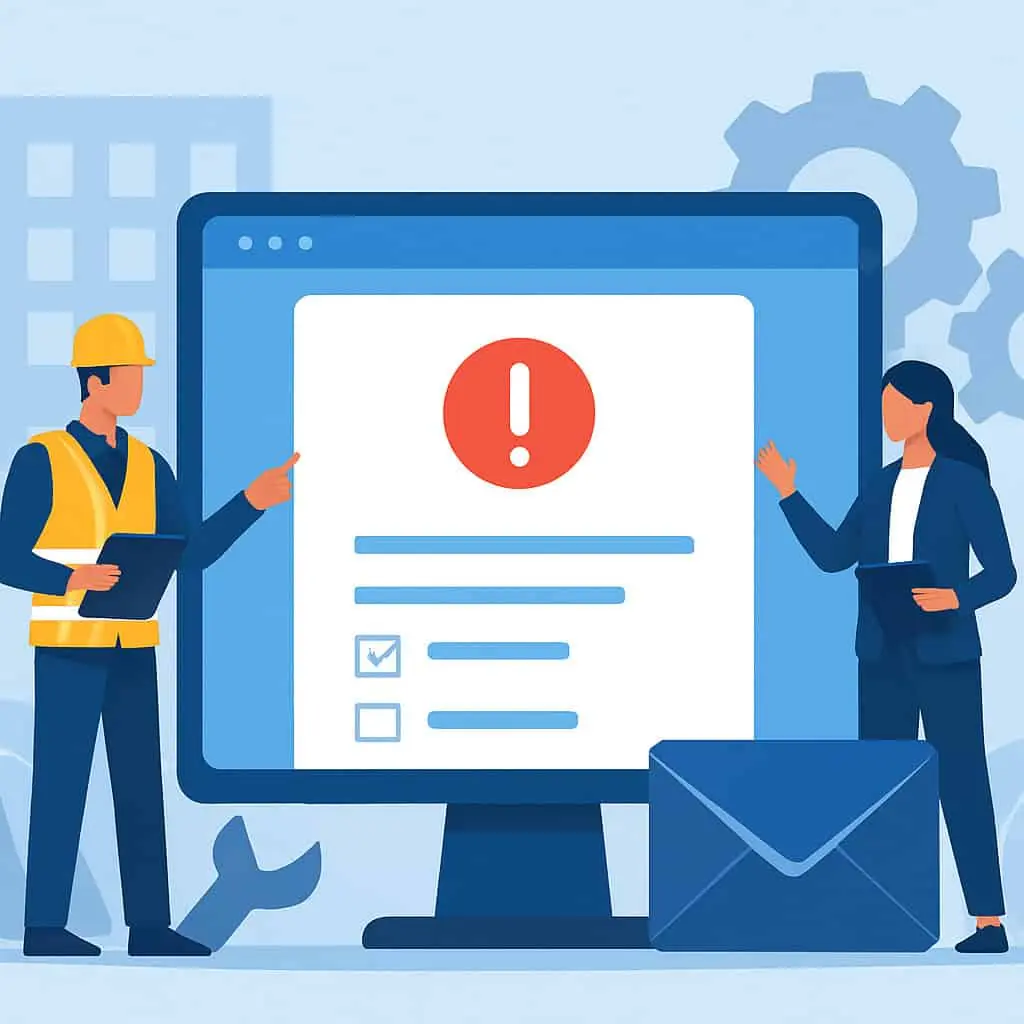
Fragmented fault reports delay responses and drive up costs; central ticket systems create transparency, traceability, and lower MTTR. This guide shows which functional requirements and integrations with CAFM, BMS, and IoT are necessary, how to design processes with SLA and escalation logic, and which KPIs you should measure. You will receive concrete process templates, implementation steps, and a go-live checklist for practical use. Why Ticket Systems in Facility Management Deliver Measurable Added Value Clear Result: Ticket systems reduce actual response times and [...]

Ticket Systems in Facility Management: Setting Up Efficient Fault Reporting and Processes Read more »

CAFM-Blog.de | Property Management Software: Solutions for Real Estate and Facility Managers

Property Management Software: Solutions for Real Estate and Facility Managers

A property management software often determines today how efficiently buildings are operated, rents are managed, and maintenance is organized. This article explains in a practice-oriented way which core functions are relevant, how property management software differs from CAFM and IWMS, which providers in the DACH and international markets are worth considering, and which selection, integration, and data protection criteria truly count. With a clear checklist, implementation roadmap, and KPIs, facility managers and IT managers receive concrete steps for a

Property Management Software: Solutions for Real Estate and Facility Managers Read more »

CAFM-Blog.de | IT Ticketing for FM in 11 Points [Best Practice & Implementation]

IT Ticketing for FM in 11 Points [Best Practice & Implementation]

Facility teams must handle disruptions, maintenance orders, and service requests quickly, comprehensibly, and with little friction between IT and CAFM systems. An IT ticketing system can achieve this if it is correctly integrated, linked with asset and room data, and made available on mobile devices. This guide provides concrete architecture and workflow specifications, migration steps, KPI metrics, and practical provider examples so you can plan selection, piloting, and rollout effectively. 1. Why an IT Ticketing System Specifically for Facility Teams Creates Added Value Core Claim: An

IT Ticketing for FM in 11 Points [Best Practice & Implementation] Read more »

CAFM-Blog.de | Asset Management Software: Functions, Integration, and Selection Criteria

Asset Management Software: Functions, Integration, and Selection Criteria

Facility managers and IT managers struggle with fragmented master data, missing interfaces, and risky migration paths; the right asset management software determines whether processes run smoothly digitally or continue to be handled manually. This practical guide describes concrete functions, integration patterns (ERP, BIM, IoT), an evaluable selection matrix, as well as migration and rollout checklists including TCO and KPI perspectives. Core Functions of Modern Asset Management Software The core program of a successful implementation is reliable master data management. Without a consistent asset base, automation, reporting, and predictive workflows do not function.

Asset Management Software: Functions, Integration, and Selection Criteria Read more »

CAFM-Blog.de | Work Management Tools for FM Teams: Collaboration, Prioritization, and KPIs

Work Management Tools for FM Teams: Collaboration, Prioritization, and KPIs

Facility management teams often find themselves between fragmented CAFM processes and mobile service teams, which slows down response times and makes service quality difficult to measure. In this guide, I show how suitable work management functions are selected and securely integrated into the CAFM landscape, how prioritization rules are introduced, and KPIs are defined. Practical selection criteria, integration patterns, and a pilot roadmap help you measurably increase operational efficiency and SLA fulfillment. 1 Relevance of Work Management for Modern FM Teams Core Statement: Effective work

Work Management Tools for FM Teams: Collaboration, Prioritization, and KPIs Read more »

CAFM-Blog.de | Ticketing Systems in Facility Management: Optimizing Workflows and Reducing Response Times

Ticketing Systems in Facility Management: Optimizing Workflows and Reducing Response Times

Ticketing systems are the lever with which scattered information, long response times, and unclear responsibilities in facility management are specifically reduced. This guide explains practically what functional requirements FM ticketing must fulfill, how to integrate it cleanly with CAFM, BIM, IoT, and ERP, and how to design workflows so that response times measurably decrease and SLA compliance is achieved. Practical checklists, KPIs, and a concrete implementation roadmap accompany piloting, rollout, and ongoing optimization. Why a ticketing

Ticketing Systems in Facility Management: Optimizing Workflows and Reducing Response Times Read more »

CAFM-Blog.de | CMMS: Functions, Benefits, and Selection for Facility Managers

CMMS: Functions, Benefits, and Selection for Facility Managers

A CMMS is the operational core of maintenance management and determines whether maintenance remains reactive or becomes planned, cost-effective, and auditable. This guide shows in a practical way which core functions and benefits CMMS software offers, how preventive and predictive maintenance is supported, which integration requirements for CAFM, ERP, and IoT must be considered, and which criteria truly matter when selecting a provider. You will receive concrete KPIs, a questionnaire for tenders, and an actionable implementation roadmap.

CMMS: Functions, Benefits, and Selection for Facility Managers Read more »

CAFM-Blog.de | Increasing Efficiency in Building Operations with AI

Increasing Efficiency in Building Operations with AI

Increasing efficiency in building operations with Artificial Intelligence (AI) is a field that has gained importance in recent years. It describes the use of AI technologies to optimize various aspects of building management and maintenance. This includes energy consumption, comfort, safety, and operating costs. The integration of AI into building systems aims to automate manual processes, enable data-driven decisions, and continuously improve the overall performance of a building.

Increasing Efficiency in Building Operations with AI Read more »

CAFM-Blog.de | CAFM Systems Explained: From Selection to Implementation

CAFM Systems Explained: From Selection to Implementation

CAFM systems often determine efficiency, costs, and compliance in your facility organization. This practical guide shows how to specify requirements, compare providers, technically integrate SAP, BIM, and IoT, and manage implementation with checklists, a pilot plan, and clear success metrics. No marketing jargon, but actionable steps for data migration, user acceptance, and sustainable operational management. 1. When is a CAFM system worthwhile? Strategic goals and business cases Key takeaway: A CAFM system is worthwhile when existing processes are noticeably

CAFM Systems Explained: From Selection to Implementation Read more »

CAFM-Blog.de | RACI Matrix as a Lifesaver for Complex Projects

RACI Matrix as a Lifesaver for Complex Projects

Who doesn't know it? In everyday IT life or during the implementation of highly publicized facility management systems, a seemingly simple task often turns into a confusing web of emails, informal agreements, and sudden gaps in responsibility. When a project fails or schedules falter, it's rarely due to a lack of motivation – usually, there's simply a lack of clarity about who is in charge, who is taking action, and who was actually just meant to be CC'd. The RACI Matrix

RACI Matrix as a Lifesaver for Complex Projects Read more »

CAFM-Blog.de | Energy Management Software in Facility Management: A Small Guide 2026

Energy Management Software in Facility Management: A Small Guide 2026

Energy management software transforms fragmented consumption data into concrete savings measures and systematically reduces operating costs. This extended guide for facility managers and IT managers integrates current trends for 2026 such as AI-based forecasts, ISO 50001 compliance, and cloud-edge hybrids – with practical examples, checklists, and ROI calculations. As a bonus at the end of the article, my top 10 facts including a reference to a relevant PwC study :-) Relevance of Energy Management Software for Facility Management Energy management software creates actionable insights from fragmented meter data and is the decisive lever for

Energy Management Software in Facility Management: A Small Guide 2026 Read more »

CAFM-Blog.de | Operator Responsibility in Buildings: Duties, Liability, and Digital Tools

Operator Responsibility in Buildings: Duties, Liability, and Digital Tools

Operator responsibility is not an abstract liability issue, but a daily task: it involves organization, proof of compliance, and legally sound fulfillment of inspection and maintenance obligations in buildings. This article summarizes the relevant legal bases, highlights typical liability traps, and provides a practice-oriented roadmap with prioritized measures and digital tools such as CAFM, IoT, and document management, so that facility managers and technical directors have concrete to-dos and selection criteria for implementation. Legal bases and binding standards for operator responsibility Key takeaway:

Operator Responsibility in Buildings: Duties, Liability, and Digital Tools Read more »

CAFM-Blog.de | CMMS Explained: How Modern Maintenance Software Reduces Downtime and Lowers Costs

CMMS Explained: How Modern Maintenance Software Reduces Downtime and Lowers Costs

A CMMS centralizes asset data, work orders, and spare parts management, making maintenance planned rather than reactive. In this article, I will specifically show which CMMS functions reduce downtime, which KPIs prove success, and how to implement it pragmatically, including a simple ROI calculation. Readers will receive practical decision-making and implementation advice for industry, property management, and healthcare facilities. Relevance and Differentiation: CMMS in the Context of CAFM and ERP. Clear statement: A CMMS is primarily for operational control and

CMMS Explained: How Modern Maintenance Software Reduces Downtime and Lowers Costs Read more »

CAFM-Blog.de | Asset Management Software for FM: Decision Guide and Differentiation

Asset Management Software for FM: Decision Guide and Differentiation

Choosing the right asset management software has far-reaching implications for budget, operating expenses, and regulatory compliance in facility management. A wrong decision not only leads to increased costs but often also to long-term problems with data quality, integration, and process stability. This guide therefore provides a practical decision-making framework based on weighted criteria, systematically considering functionality, integration, operation, and Total Cost of Ownership (TCO). Additionally, factors are discussed

Asset Management Software for FM: Decision Guide and Differentiation Read more »

CAFM-Blog.de | Facility Management Services: Efficiency Through Professional Administration

Facility Management Services: Efficiency Through Professional Management

Facility management services are essential to ensure the smooth operation of buildings and facilities. This blog post highlights the various facets of facility management, from building administration to modern software solutions that help overcome challenges and increase efficiency. Let's explore together how professional management not only optimizes costs but also offers sustainable solutions for future-proof property management. Definition and Scope of Facility Services

Facility Management Services: Efficiency Through Professional Management Read more »

Scroll to Top