
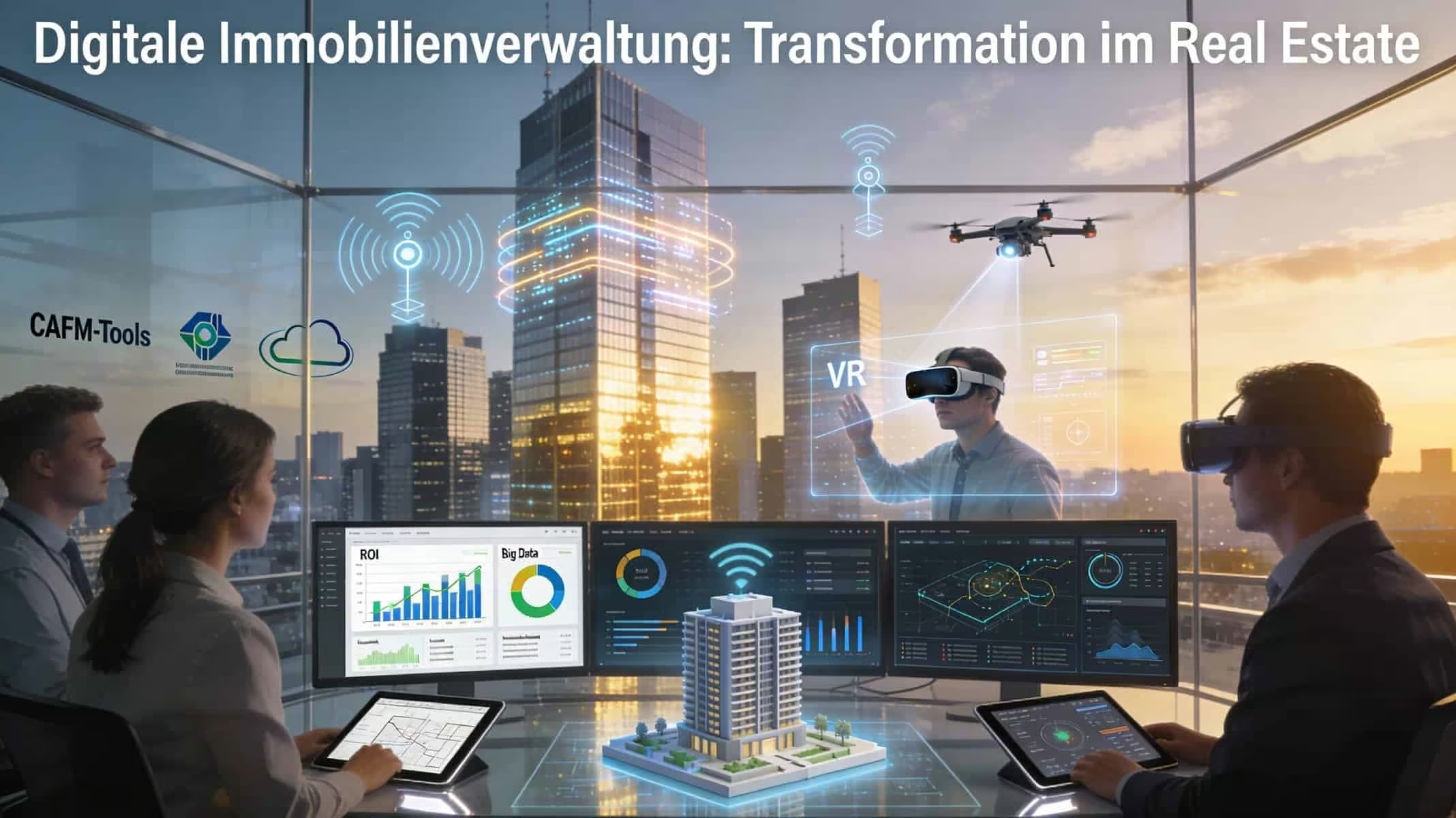
Imagine managing a portfolio of over 100 properties and having to process countless invoices, maintenance requests, and rental agreements every month. Sounds like a nightmare, right? This is where digital property management comes into play – a real lifesaver for the real estate industry.
Digital property management not only revolutionizes the way we handle our properties but also makes the lives of property managers significantly easier. One notable aspect is the integration of cloud technologies. According to a recent study, over 70% of property management companies are already using cloud-based solutions to optimize their processes.
Cloud Technology: The Backbone of Digital Management
Cloud technology allows data to be stored centrally and accessed from anywhere. For property managers, this means no more endless stacks of paper! Instead, they can conveniently access all important information from their desks or even on the go. This not only promotes efficiency but also collaboration among teams.
Automation: The Key to Efficiency
Another technical cornerstone is automation. Processes such as rent payments, maintenance requests, and even communication with tenants can be automated. This not only saves time but also minimizes human errors. For example, an automated payment reminder can ensure that no rent is received late – a true win-win situation!
- Centralized Data Management Through Cloud Solutions.
- Automated Processes to Reduce Human Errors.
- Real-time Analytics for Better Decision-Making.
Did you know? Over 80% of property managers report significant time savings through digital solutions.
Mobile Management: Always One Step Ahead
On-the-go is not just a trend – it's a necessity! With mobile applications for digital property management, managers can access important information and react immediately at any time. Whether it's an urgent repair or obtaining quotes – everything can be done quickly.
Digital transformation is not a destination, but a journey. For everyone in the real estate industry, this means that continuous adaptation to new technologies is essential. The question remains: Are you ready for the next step?
Imagine managing a portfolio of over 100 properties and having to process countless invoices, maintenance requests, and rental agreements every month. Sounds like a nightmare, right? This is where digital property management comes into play – a real lifesaver for the real estate industry.
Digital property management not only revolutionizes the way we handle our properties but also makes the lives of property managers significantly easier. One notable aspect is the integration of cloud technologies. According to a recent study, over 70% of property management companies are already using cloud-based solutions to optimize their processes.
Process Optimization Through Digital Tools
Imagine you are responsible for managing over 50 residential complexes and have to handle a flood of invoices and requests every month. The paper war is not only time-consuming but also prone to errors. This is where digital tools come into play, which not only optimize processes but also revolutionize the daily lives of property managers.
Did you know that according to a survey, over 75% of property managers state that digital tools have significantly increased their efficiency? This is no coincidence. Digital property management is more than just a trend – it is the key to a lean and effective way of working.
The Role of Digital Tools in Property Management
Digital tools offer a variety of possibilities for process optimization. From automated payment processes to intelligent maintenance requests – these technologies help to save time and minimize sources of error. For example, a cloud-based platform allows access to all relevant data in real-time, enabling faster decision-making.
- Real-time Access to Data for Faster Decisions.
- Automated processes to minimize human errors.
- Better communication between tenants and managers.
Digital solutions can increase efficiency by up to 40%!
Concrete Examples of Digital Process Optimization
Müller Property Management, a fictional company with several properties in the city, recently switched to a digital management system. Previously, invoices were processed manually and often delayed – leading to dissatisfied tenants. After implementing a digital system, they were able to automate the payment process and reduce processing time by over 50%.
Müller Property Management is now able to respond quickly to maintenance requests, which has significantly increased tenant satisfaction. Furthermore, by using data analytics, they have gained valuable insights that help them with strategic decisions.
Müller Property Management is not alone – more and more companies are recognizing the potential of digital solutions for optimizing their processes. The question remains: Are you ready for this transformation?
Imagine you are responsible for managing over 50 residential complexes and have to handle a flood of invoices and requests every month. The paper war is not only time-consuming but also prone to errors. This is where digital tools come into play, which not only optimize processes but also revolutionize the daily lives of property managers.
Did you know that according to a survey, over 75% of property managers state that digital tools have significantly increased their efficiency? This is no coincidence. Digital property management is more than just a trend – it is the key to a lean and effective way of working.
General Data Protection Regulation (GDPR) in Focus
The GDPR is the cornerstone of data protection regulations in Europe and directly influences digital property management. This regulation requires companies to securely process and store personal data of tenants and employees. When implementing digital solutions, property managers must ensure that all software solutions used are GDPR-compliant.
- Transparent data processing: Tenants must be informed about which data is processed for what purpose.
- Consent: Explicit consent must be obtained before storing personal data.
- Data security: Technical measures must be taken to ensure the security of stored data.
Legal Risks in Digital Property Management
The penalty for violating the GDPR can be up to 4% of annual turnover or up to 20 million euros – whichever amount is higher. This sounds like a nightmare for any property manager. Therefore, it is crucial to stay up-to-date with current legal requirements and offer appropriate training for employees.
One-time violations can not only have financial consequences but also permanently damage your company's reputation.
Best Practices for Data Protection in Digital Property Management
Best practices are more than just recommendations – they are essential for successful digital transformation. Here are a few tips:
- Regular audits: Regularly check your systems for GDPR compliance.
- Training: Offer training for your employees to raise awareness of data protection issues.
- Contractual agreements: Ensure that all service providers also work in compliance with GDPR.
Digital property management offers enormous opportunities for increasing efficiency – but only if it is in line with legal frameworks. Remember: compliance is not a one-time project, but an ongoing process.
Digital property management is not just a technical undertaking, but also a legal minefield. Imagine being able to significantly increase the efficiency of your management through the use of digital tools, but at the same time risking violating data protection regulations. According to a survey, over 60% of property managers stated that insufficient knowledge of legal frameworks hinders their digital transformation.
User Experiences and Acceptance of Digital Solutions
Have you ever tried to solve a complex problem with an outdated solution? It's like trying to fix a computer with a cassette recorder. That's exactly how many property managers feel when they forgo digital solutions. A survey has shown that over 70% of users of digital property management systems report a significant improvement in their workflows.
The Reality of User Experiences
Let's take the example of Hausverwaltung Schmidt, which struggled with constant inquiries and mountains of paperwork before introducing a digital system. After implementing a digital management system, the team was not only able to reduce the processing time for rental inquiries by 60% but also significantly increase tenant satisfaction. Employees reported less stress and more time for strategic tasks.
- Significant time savings in processing requests.
- Improved communication between managers and tenants.
- Higher satisfaction among employees and tenants.
Digital property management is not just a tool – it's a game changer!
Overcoming Acceptance Barriers
Despite these positive experiences, there are still reservations about digital solutions. Often, these are concerns about data protection or simply the fear of the unknown. A survey result shows that about 40% of property managers hesitate to use digital tools because they are unsure how secure their data is or how much training would be required.
Hausverwaltung Müller recognized this point and has already implemented training programs for its employees. This investment has paid off: the adoption rate of new technologies increased by over 50% within a few months. The moral? If you give people the necessary knowledge, they are ready for change!
Invest in training – it pays off!
The key to successful implementation of digital property management therefore lies not only in the technology itself but also in how you handle the people who will use these technologies. So, if you are considering digitizing your processes: make sure your employees are on board!
Have you ever tried to solve a complex problem with an outdated solution? It's like trying to fix a computer with a cassette recorder. That's exactly how many property managers feel when they forgo digital solutions. A survey has shown that over 70% of users of digital property management systems report a significant improvement in their workflows.
Future Trends in Digital Property Management
Digital property management is no longer just a nice-to-have, but a necessity. According to a recent survey, over 85% of property managers expect digitalization to fundamentally change their industry in the next five years. If that doesn't sound like a wake-up call, we don't know what does!
A clear trend is emerging in the increasing use of AI-powered tools for analyzing tenant data and predicting future maintenance needs. Imagine your software could predict when a heating system is likely to fail – that would be a win not only for efficiency but also for tenant satisfaction.
The Rise of Smart Buildings
Smart Buildings are more than just a buzzword; they are the future of property management. These intelligent buildings use IoT (Internet of Things) technologies to collect data and optimize processes. For example, sensors in a smart building can monitor energy consumption in real-time and automatically make adjustments to save costs and reduce the ecological footprint.
Did you know? Buildings that use IoT technologies can reduce their operating costs by up to 30%!
Sustainability Through Digital Solutions
Another significant trend is the focus on sustainability. Digital property management enables managers to implement and track sustainable practices more easily. From monitoring water consumption to planning maintenance based on ecological criteria – digital tools make it easier than ever to make environmentally friendly decisions.
Green Building certifications are increasingly in demand. The use of digital platforms can help provide all the necessary data, thus significantly simplifying the certification process.
Integration of Blockchain Technology
Blockchain is the new buzzword in digital property management. This technology offers a transparent and secure way to manage rental agreements and transactions. Imagine: no more disputes about proof of payment or contract terms – everything is stored securely and traceably in a blockchain.
Digital property management is no longer just a nice-to-have, but a necessity. According to a recent survey, over 85% of property managers expect digitalization to fundamentally change their industry in the next five years. If that doesn't sound like a wake-up call, we don't know what does!
A clear trend is emerging in the increasing use of AI-powered tools for analyzing tenant data and predicting future maintenance needs. Imagine your software could predict when a heating system is likely to fail – that would be a win not only for efficiency but also for tenant satisfaction.
Case Studies of Successful Implementations
Digital property management not only has the potential to increase efficiency, but it has also already proven itself in practice. Take the example of Hausverwaltung Schmidt, which struggled with a mountain of paperwork and dissatisfied tenants before switching to digital solutions.
Hausverwaltung Schmidt: An All-Around Success
Before implementing a digital management system, Hausverwaltung Schmidt (just an example, as you can imagine) was faced with constant inquiries and lengthy processes. The processing time for rental inquiries often took weeks, leading to frustration among tenants and employees. After introducing a digital platform, the company was able to reduce processing time by an impressive 60%.
- Automated payment processes led to timely payments.
- Real-time access to data enabled faster decisions.
- Improved communication between managers and tenants.
Did you know? Over 70% of users of digital property management systems report a significant improvement in their workflows.
Hausverwaltung Müller: The Transformation Through Digital Tools
Hausverwaltung Müller, another example, recently switched to a cloud-based solution. Previously, invoice processing was manual and error-prone. After implementing the new system, they were able to automate the payment process and reduce processing time by over 50%. This led not only to increased efficiency but also to greater tenant satisfaction.
The example of Hausverwaltung Müller impressively shows that digital solutions not only save time but can also significantly improve the quality of service.
Overall, these case studies show that digital property management is not just a trend – it is a necessity for anyone who wants to be successful in this industry. The question remains: are you ready for your own digital transformation?
Digital property management not only has the potential to increase efficiency, but it has also already proven itself in practice. Take the example of Hausverwaltung Schmidt, which struggled with a mountain of paperwork and dissatisfied tenants before switching to digital solutions.
Financial Implications of Digital Transformation
Digital property management is not just a technical upgrade, but also a financial revolution. According to a study by McKinsey, companies can reduce their operating costs by up to 30% by implementing digital solutions. That sounds almost too good to be true, doesn't it?
Take the example of Hausverwaltung Becker, which struggled with high operating costs and inefficient processes before its digital transformation. After implementing cloud-based management software, they were not only able to save time but also achieve significant savings in operating costs. The question is: what financial opportunities does digital property management offer for your company?
Cost Savings Through Automation
A key financial benefit of digital property management is automation. Processes such as rent payments and maintenance requests are automated, which not only minimizes human errors but also reduces processing time. This allows a company like Hausverwaltung Becker to reduce its personnel costs by up to 20%, as fewer employees are needed for manual tasks.
Improved Cash Flow Management
With digital solutions, cash flow management is also optimized. Through automated payment reminders and real-time analyses, managers have a clear overview of outstanding payments and can react more quickly. This means fewer late rent payments and thus a more stable financial situation.
- Reduction of operating costs through more efficient processes.
- Minimization of downtimes thanks to proactive maintenance.
- Better financial planning through real-time data analysis.
Did you know? Over 70% of property managers report an improvement in their cash flow after implementing digital solutions.
The financial benefits are clear: Digital transformation in property management is not just a matter of progress, but a strategic necessity.
Digital property management is not just a technical upgrade, but also a financial revolution. According to a study by McKinsey, companies can reduce their operating costs by up to 30% by implementing digital solutions. That sounds almost too good to be true, doesn't it?
Take the example of Hausverwaltung Becker, which struggled with high operating costs and inefficient processes before its digital transformation. After implementing cloud-based management software, they were not only able to save time but also achieve significant savings in operating costs. The question is: what financial opportunities does digital property management offer for your company?
