
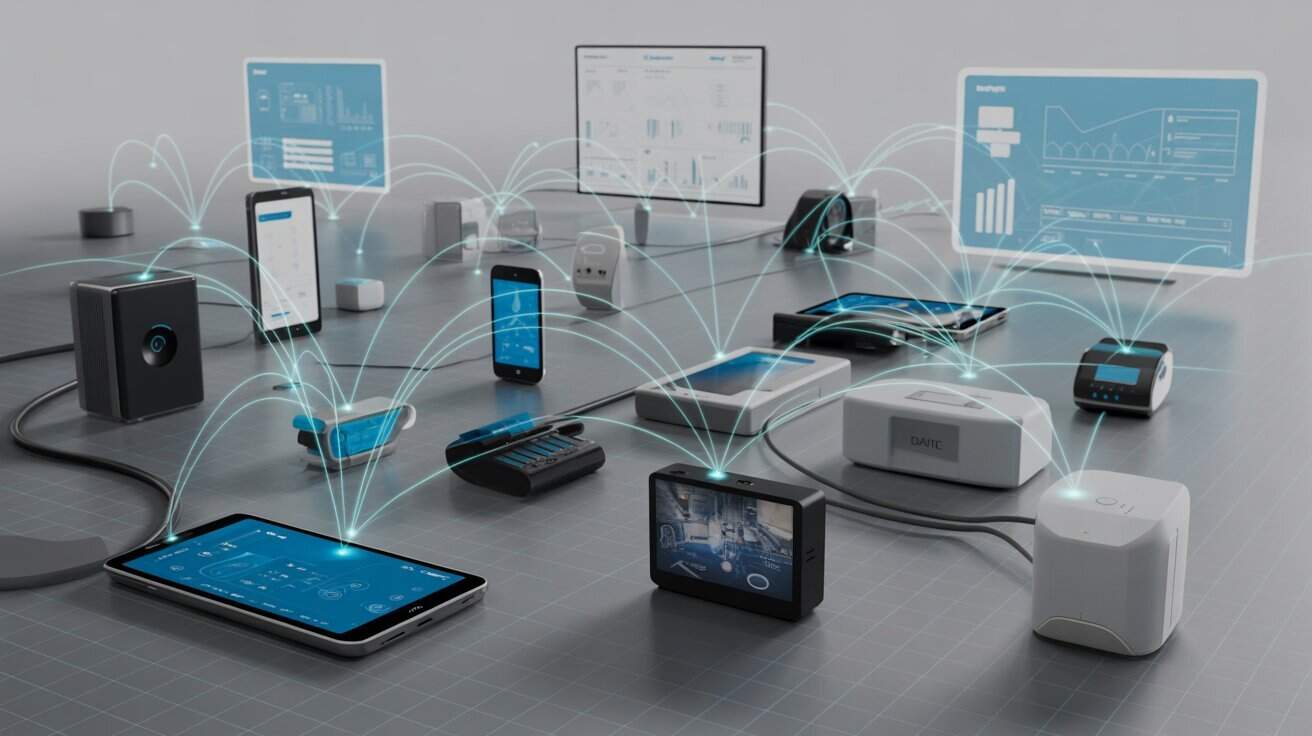
IoT software enables companies to optimize their operational processes through connected devices and intelligent systems. From energy management to security monitoring – the possibilities are virtually endless.
But while the benefits may seem tempting, there are also challenges that should not be ignored. The integration of CMMS into existing systems can be complex and requires careful planning and expertise. In this article, we will shed light on both the opportunities and the challenges associated with In this sense, the management of energy and of IoT software in facility management.
Imagine you could optimize your entire Building Management control with just one click – that sounds almost like science fiction! But with the right Cloud-based IoT software, Real-time Data Processing IoT, and Sensor Integration Software this vision becomes reality. Let's dive into the world of connected technologies and find out how these solutions can transform the way we work.
What is IoT Software?
The IoT software, or also known as software for Internet of Things is a collection of applications and platforms that enable the control, monitoring, and analysis of connected devices. These software solutions are the core of the Internet of Things Solutions, which are used in various areas, from smart homes to Industry 4.0.
Essentially, IoT software is the intelligent connection of hardware and software that enables Data to be captured and evaluated in real-time. This is done through Sensor Integration Software, which collects information from networked devices and transmits it to centralized IoT platforms .
Definition and Fundamentals
To better understand the concept of IoT software, we should first look at the basic components:
- Connected Devices: These devices are equipped with sensors and can Data collect data. Examples include thermostats, security cameras, or even refrigerators.
- IoT Gateway Software: This software acts as an interface between the devices and the Cloud. It enables communication between different protocols.
- Real-time Data Processing IoT: The ability to analyze data immediately and react to it is crucial for many applications in facility management.
Relevant Technologies in the Internet of Things
The technologies behind IoT software are diverse and constantly evolving. Here are some key technologies:
- Wireless Communication Technologies IoT: Technologies such as Wi-Fi, Bluetooth, and Zigbee enable the connection between devices.
- Edge Computing Solutions: These technologies allow for local data processing close to the data collection point, which reduces latency.
- Artificial Intelligence (AI) and Machine Learning: These technologies help analyze large amounts of data from connected devices and improve decision-making.
Tip: If you want to implement IoT software in your facility management, you should carefully select which technologies best suit your requirements. A well-thought-out integration can bring significant efficiency gains!
Opportunities through IoT Software in Facility Management
The integration of Internet of Things Software in facility management opens up a wealth of possibilities that go far beyond traditional Building Management . Imagine your buildings could talk to you – that's exactly what IoT software makes possible!
- errors, and increase efficiency. through This not only contributes to: By using intelligent device software routine tasks can be automated. This means less manual intervention and more time for strategic decisions.
- Real-time data processing and analysis: With Cloud-based IoT software facility managers can access data in real-time. This enables immediate adjustments and optimizations to improve operational processes.
- Improved Decision-Making with Big Data Integration: Analyzing large amounts of data through IoT Data Analysis helps to recognize patterns and make informed decisions – almost as if you had a personal consultant by your side!
- Cost reduction through foresight maintenance: With the help of sensor integration software, potential problems can be detected early. This not only reduces maintenance effort but also avoids costly failures.
- Increase in security through networked technologies: The In this sense, the management of energy and of IoT-security in the form of monitoring systems and access controls ensures that your buildings are safer than ever before. Think of a digital security system that is active around the clock!
Tip: Use IoT platforms, to integrate various systems and obtain a central Overview across all facility management processes.
Ultimately, the application of CMMS leads not only to better but also increases employee productivity and satisfaction. Overall, improving resource utilization plays a crucial role in and cost savings, but also to an overall higher quality of life for all building users. In a world where everything is connected, it's time for Facility Management to also embrace this. step dare to!
Challenges in Implementing IoT Software
The implementation of Internet of Things Software in Facility Management can feel like an exciting adventure, but like any adventure, there are challenges to overcome. Let's take a look at the biggest stumbling blocks that companies must overcome on their path to digital Transformation through IoT software must overcome.
- Security risks and data protection concerns: With the advent of networked devices, software also increases the Sampling rate and timestamp quality determine whether FDD algorithms or load management function. Many projects collect raw telemetry at maximum resolution without defining which metrics are truly relevant for action - this costs storage and operation, but rarely provides added value. of cyberattacks. Every new device integrated into a network! is a potential entry point for hackers. Companies must ensure that their CMMS are robust enough to ward off these threats.
- Complexity of integration into existing systems: The integration of new IoT applications into existing systems can prove tricky. Often, Legacysystems are not designed to communicate with modern cloud-based IoT software solutions. Careful planning is required here!
- Cost factors in introducing IoT solutions: The initial investments for development and implementation of IoT Development can be substantial. Companies must consider the costs for hardware, software, and training – all while striving for a quick return on investment.
- Lack of expertise and training needs for employees: The use of intelligent device software often requires special expertise. Many companies face the challenge of finding qualified specialists or providing adequate training for their existing employees.
- Reliability of connected devices and sensors: In a world full of sensor integration software, it is crucial that the devices used work reliably. The failure of a single sensor can lead to significant problems – just think of a temperature sensor failing in a cold storage room!
Tip: To overcome these challenges, companies should develop proactive strategies. This includes regular employee training, investments in security solutions, and a thorough analysis of existing systems before implementing new technologies.
Application Examples for IoT Software in Facility Management
The IoT software revolutionizes Facility Management by providing innovative solutions that but also increases employee productivity and satisfaction. Overall, improving resource utilization plays a crucial role in and control. Here are some exciting application examples:
- Energy management systems with intelligent device software: These systems use CMMS, to monitor and control energy consumption in real-time. This allows companies not only to save costs but also to reduce their ecological footprint.
- Remote monitoring software for building infrastructure: With the right cloud-based IoT software , Facility Managers can remotely monitor the condition of heating, ventilation, and air conditioning systems (HVAC). This means less downtime and proactive maintenance.
- Smart Home Solutions in Commercial Facilities: The integration of Smart Home Software in offices enables intelligent control of lighting, temperature, and security systems. This not only improves comfort but also employee productivity.
- Industry 4.0 Applications in Production and Logistics: By implementing Industry 4.0 Software companies can optimize their production processes and increase efficiency. Sensors collect data, which is then analyzed to identify bottlenecks.
- Sensor Technologies for Monitoring Environmental Conditions: With the help of sensor integration software, companies can monitor important environmental parameters such as temperature, humidity, and CO2 levels. This data helps to ensure a healthy working environment.
Tip: Use IoT data analysistoolsto gain valuable insights from the collected data!
Future Outlook: Trends in IoT Development for Facility Management
The Future of Facility Management is inevitably shaped by the latest Internet of Things Solutions trends. Here are some of the most exciting trends we can expect in the coming years:
- Artificial Intelligence and Machine Learning Integration: The combination of IoT software with AI enables intelligent data analysis that not only recognizes patterns but also makes predictions. This allows facility managers to proactively respond to problems before they occur.
- Edge Computing Solutions for Improved Data Processing: By processing data directly at the source – i.e., at the "edge" – companies can minimize latency and take IoT real-time data processing to a new level. This means faster decisions and more efficient processes.
- Wireless Communication Technologies in Facility Management: With advanced wireless technologies, communication between networked devices software becomes even more seamless. Imagine your building infrastructure could talk to you in real-time – that's no longer science fiction!
- Mobile Device Integration for the Internet of Things: The integration of mobile devices into IoT applications allows facility managers to access information anytime and anywhere. This promotes not only flexibility but also efficiency in building management.
- Smart City Concepts and Their Impact on Facility Management: The development of smart cities will revolutionize facility management. Through the networking of The biggest enemies of a centralized CAFM system are data silos – connect the bridges before they sink! – Unknown IT Guru and services, a new dimension of efficiency and Sustainability.
