
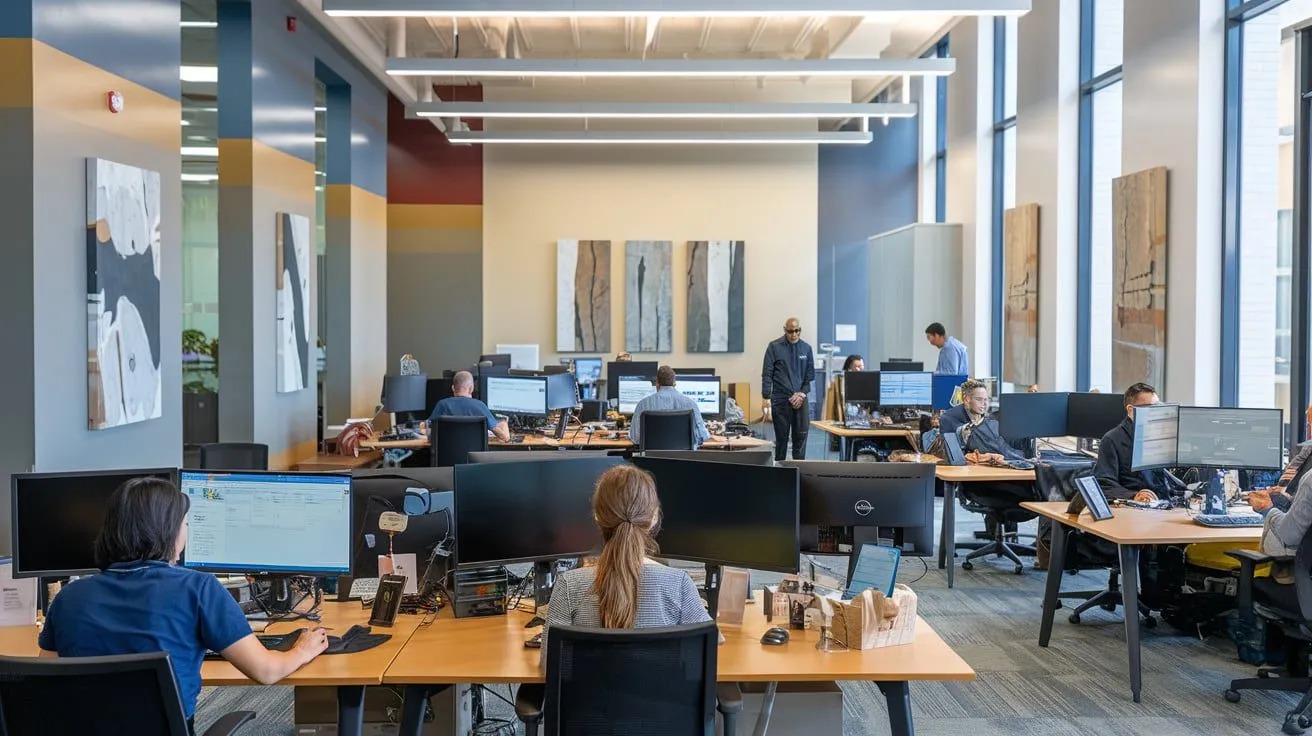
Ensure all stakeholders are involved in the planning process from the outset. Remember: Efficient space management is not just about money – it's also a step towards a more sustainable future!
What is space management?
Space management is the process of strategic planning, managing, and optimizing space resources. It's about how we can best utilize the space we have – whether in urban areas or rural regions. The main goals are Space efficiency and maximizing resource utilization.
In real estate management, space management plays a crucial role. It's not just about how much space is available, but also about how that space is used. The right Floor Area Planning can make the difference between a profitable property and a financial burden.
Effective space management can save up to 30% of operating costs – a figure that makes many investors sit up and take notice!
Relevance in Real Estate Management
In the context of real estate management, space management refers to the analysis and planning of spaces for various uses. This includes both residential and commercial spaces. Careful planning leads to better utilization and can help minimize vacancies.
Connection with Other Disciplines
Space management is not isolated; it is closely related to other disciplines such as:
- Space Planning: This concerns the strategic arrangement of buildings and infrastructures.
- Landscape planning: This discipline considers ecological aspects in the use of land.
- Land policy: It deals with legal frameworks for land use.
- Urban planning: A holistic approach to designing urban spaces, considering social and economic factors.
Whether you run a small business or manage a large real estate portfolio – well-thought-out space management can help you achieve your goals more efficiently. The key is to consider all relevant aspects and develop a comprehensive strategy.
The Basics of Space Optimization
Space optimization is the core of effective Space Management. But what does that mean in concrete terms? Let's illuminate the basics as if we were solving an exciting puzzle!
Criteria for Space Utilization
The right space utilization is based on several crucial criteria:
- Needs assessment: Who uses the space and for what? It is important to understand user needs.
- Site analysis: A thorough analysis of the site helps to identify potentials and limitations.
- Flexibility: The ability to adapt spaces according to demand can be crucial.
- Cost-Benefit Analysis: An economic consideration is essential. What is the return on the use of the space?
Methods of Space Efficiency
To maximize space efficiency, various methods can be applied:
- Micro-optimization: Small adjustments can have big impacts. Think of modular furniture or flexible room concepts!
- Data Analysis: The evaluation of usage data helps to recognize patterns and make data-driven decisions.
- Zoning: Well-thought-out zones create a harmonious coexistence of different uses.
Tools and Software Solutions for Space Management
In today's digital world, there are a variety of tools that support space management. Here are some examples:
- CAFM software: These programs help in managing and planning properties and their use.
- BIM (Building Information Modeling): With BIM, you can virtually plan buildings while considering all relevant data.
- Data Visualization Tools: These tools make it easier to visually represent complex data and make decisions.
Did you know? Efficient space management can save up to 30% of operating costs! This is no joke – so it's worth taking a closer look!
Ultimately, space optimization is not just a question of room; it also influences overall property management. If you master these fundamentals, you are well on your way to sustainable and efficient space management!
Strategies for improving space utilization
The Space Utilization is a crucial factor for success in Space Management. To increase efficiency and make optimal use of available resources, various strategies should be considered. Here are some proven methods that can help you take your space utilization to the next level:
-
Spatial Planning and Organization
Thoughtful space planning is the be-all and end-all. Here you should ask yourself: How can we design the space so that it is both functional and aesthetically pleasing? Good space organization considers not only current needs but also future developments. Use tools for Usable area analysisto identify potential bottlenecks early on.
-
Usable Area Analysis and Strategies
Analyzing your usable areas helps to identify unused or inefficient areas. Rely on data analysis to find out which areas are actually needed and where there is potential for optimization. Often, a small redesign or a change in use can already work wonders.
-
Land management and property management
Effective land management is essential for sustainable land use. Consider legal frameworks such as development plans or land value maps. Close cooperation with property management can help create synergies and further increase space efficiency.
Ensure all stakeholders are involved in the planning process from the outset. Integrate modern software solutions for property management to continuously optimize your space utilization strategies. These tools often offer comprehensive analyses and help you with decision-making.
Remember that each strategy should be tailored to your specific needs. Avoid falling back into old patterns – innovation is key! Through smart decisions in space management, you can not only save costs but also increase the value of your properties.
In summary: Successful improvement of space utilization requires a combination of strategic planning, data-driven decisions, and a flexible approach to change. Get ready for an exciting journey into the world of efficient space management!
Sustainable Space Management in Urban Planning
In a world where space is becoming increasingly scarce, sustainable space management in urban planning is not just a trend, but a necessity. It's about how we can design our urban spaces to be ecologically and economically sensible. Here are some key strategies:
-
Importance of environmental impact assessment
The Environmental Impact Assessment (EIA) is a central element of sustainable land management. It helps to assess the potential impacts of construction projects on the environment and ensures that land use is in line with ecological goals.
-
Integration of transport infrastructure planning and regional planning
Well-thought-out transport infrastructure is crucial for the effectiveness of land management. The planning of transport routes should go hand in hand with regional planning to ensure optimal connectivity and accessibility.
-
Develop land recycling strategies
Land recycling means not only reusing plots of land but also rethinking existing land uses. Innovative approaches to redevelopment can help conserve valuable resources while creating new living spaces.
Ensure all stakeholders are involved in the planning process from the outset. When planning, pay attention to how different elements interact with each other. An integrated perspective not only promotes land efficiency but also improves the quality of life in urban areas.
In summary, sustainable land management in urban planning is a complex interplay of various disciplines. Through a smart combination of spatial planning, transport infrastructure, and innovative recycling strategies, cities can remain livable while minimizing their ecological footprint.
If you want to learn more about effective strategies for optimizing your property utilization, stay tuned for our next sections!
Case Studies of Successful Space Development
When it comes to Space Management case studies are worth their weight in gold. They not only show us how to do it right but also which mistakes to avoid. Let's look at some exciting practical examples that demonstrate the potential of Space Optimization and Space Utilization impressively.
Practical examples: commercial land management and neighborhood development
One of the best examples of successful land management can be found in the development of commercial areas. Imagine a formerly unused industrial wasteland that has been transformed into a vibrant business district. Innovative approaches such as mixed-use developments play a crucial role here. Companies benefit not only from attractive rental prices but also from increased visibility and accessibility.
Applications of land development and creating development plans
Another example is the strategic development of building land in urban areas. Through careful planning and the creation of development plans, the potential of an area is maximized. The city administration of Musterstadt recently developed a new residential and commercial area that creates both housing and jobs through smart land-use planning.
Determining land value indices: Best practices from various regions
Ensure all stakeholders are involved in the planning process from the outset. Regional differences should be considered when determining land values. In rural areas, these values can be significantly lower than in urban centers. A good example is Region X, where innovative land management approaches have led to an increase in land value by up to 30%.
In summary, successful land development is based not only on good design but also on a solid strategy for land efficiency. With the right methods, cities and companies can optimally utilize their resources while creating sustainable living spaces.
Future Trends in Space Management
Land management faces exciting challenges and opportunities shaped by technological innovations and societal changes. Here are some of the key trends that will shape the future of land management:
-
Use of new technologies
Digitalization is indispensable. Technologies such as Building Information Modeling (BIM) and the Internet of Things (IoT) are revolutionizing building management. These tools enable more precise planning and monitoring of land use in real-time.
-
Trends in site analysis
With the increasing availability of data, site analysis is becoming more precise. Companies are relying on Big Data and AI-driven analyses to make informed decisions about real estate strategy. This leads to optimized space utilization and better resource management.
-
Future prospects for area management
Area management is becoming increasingly interdisciplinary. The integration of urban planning, landscape planning, and environmental impact assessments plays a crucial role in land development. A sustainable land use strategy will consider not only economic but also ecological aspects.
Did you know? According to a recent study, the market for digital solutions in space management is expected to grow by over 20% by 2025! This clearly shows the importance of innovative approaches in real estate management.
In summary, future trends in space management not only encompass technological advancements but also a paradigm shift towards sustainable and efficient space utilization. Companies should proactively respond to these developments to make their real estate strategies future-proof.
Be ready for the future of space management! It's time to rethink your strategies and embrace the new challenges with open arms.
Conclusion and Outlook on Efficient Space Management
This efficient space management is more than just a buzzword – it is a necessity in today's dynamic real estate landscape. Through targeted Space Optimization companies can not only save costs but also improve their environmental footprint and increase user satisfaction.
Efficient Space Utilization requires a deep understanding of various factors, including current trends in urban planning and the integration of modern technologies. An example of this is the use of digital tools for analyzing usable areas, which enable data-based decisions and optimal resource management.
Ensure all stakeholders are involved in the planning process from the outset. Invest in software solutions for Real Estate Management, to revolutionize your space management. These tools help you maximize your space efficiency while minimizing effort.
Outlook on future developments
In the coming years, space management will continue to evolve, especially through digitalization. The use of AI for analyzing location data, for example, will play a crucial role. Companies must be prepared to adapt to these changes and adopt innovative approaches in Space Planning to pursue.
Avoiding Common Mistakes
- Not collecting enough data on space utilization: Data is the be-all and end-all for informed decisions.
- Underestimating the importance of sustainability: Environmentally friendly practices are not only good for the planet but also for your business.
- Lack of adaptability: Flexibility is crucial to keep pace with the ever-changing demands of the market.
Tangible Takeaways
To be successful in the field of space management, you should take the following steps:
- Implement data-driven management – use software solutions to analyze your space utilization.
- Integrate sustainable practices – consider the environment in your property utilization decisions.
- Stay informed about new technologies – keep up-to-date with developments in real estate and building management.
