
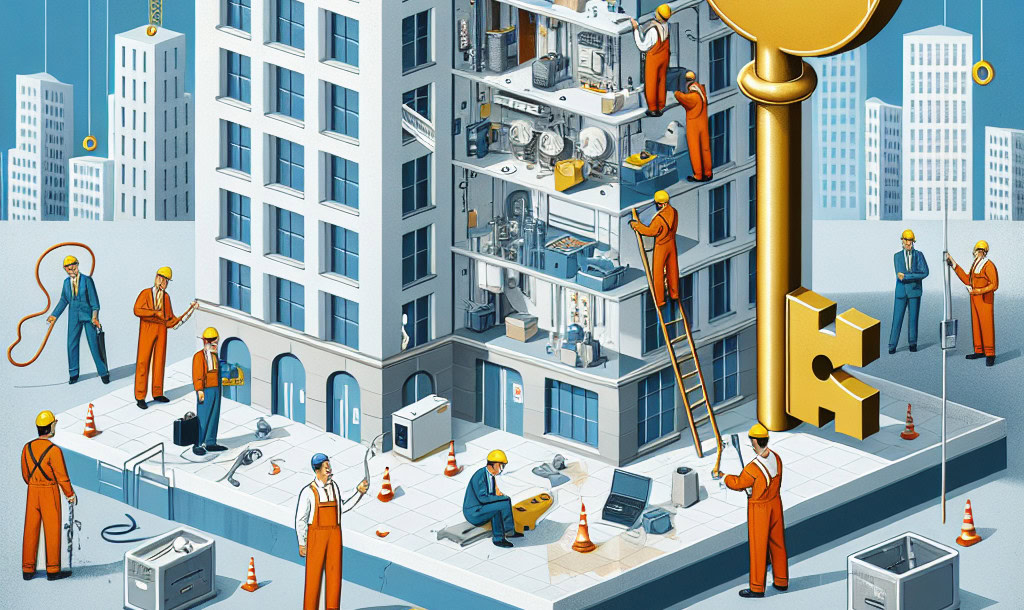
Building maintenance is a central aspect of facility management that is often underestimated. But did you know that preventive maintenance can save up to 30% of maintenance costs? This finding is supported by numerous studies, and it is no longer a secret that a well-thought-out maintenance strategy not only increases the longevity of assets but can also significantly reduce operating costs. Focusing on preventive measures means identifying and rectifying potential problems before they lead to expensive repairs. According to a survey by Facility Management Journal, 65% of companies reported significant cost savings through the use of CAFM software to support their maintenance management processes.
"Preventive maintenance is not just a matter of cost, but an investment strategy in the future of your property."
Implementing a Computer-Aided Facility Management (CAFM) system can help implement this strategy efficiently. Here are some benefits of preventive maintenance:
- Cost-effectiveness: Through early fault detection, major repair costs can be avoided.
- Energy Efficiency: Regular maintenance ensures optimal operating conditions and reduces energy consumption.
- Increased Lifespan: Well-maintained equipment has a longer lifespan and requires fewer replacement investments.
- Employee Satisfaction: A well-maintained work environment improves employee productivity and satisfaction.
Therefore, it is essential for facility managers to use modern tools such as CAFM solutions to optimize their maintenance strategies. Effective maintenance management is not just an additional item in the budget – it is a crucial measure for long-term cost reduction and increased efficiency in property management.
What is Preventive Maintenance?
Preventive maintenance is a strategic approach aimed at ensuring the operational capability of assets and minimizing disruptions in advance. Instead of waiting for problems to occur and taking reactive measures, preventive maintenance invests in regular inspections and maintenance work. This approach allows facility managers to identify potential difficulties early on, thus avoiding costly failures or emergency repairs.
A key element of preventive maintenance is the use of data analysis. Regular checks and systematic collection of operating data provide valuable insights for identifying trends or deviations in asset usage. The use of modern CAFM software significantly simplifies this data analysis and can be automated.
The benefits of a preventive maintenance strategy are manifold:
- Cost reduction: According to a study by the Institute of Electrical and Electronics Engineers (IEEE), companies can reduce their maintenance costs by up to 30% through preventive measures.
- Longer equipment lifespan: Well-maintained systems have a significantly longer lifespan, which reduces the need for new acquisitions.
- Increased operational efficiency: Regular maintenance ensures that equipment operates under optimal conditions, which increases overall performance.
- Better safety standards: Through continuous inspections, the risk of dangerous failures or workplace accidents is significantly reduced.
"Good maintenance practices are like an invisible safety net – they catch you before you fall."
For example, a leading corporate network in facility management reported that by switching to preventive maintenance, their total repair costs were reduced by 35%. This impressively demonstrates the importance of a well-thought-out maintenance strategy for economic success.
In summary: Preventive maintenance is not a one-time project, but a continuous strategy for optimizing building maintenance. The use of CAFM systems not only facilitates the planning and implementation of these measures but also improves the transparency and traceability of all relevant data. Therefore, those who act in time not only protect their real estate investments but also ensure smooth operations in facility management!
Benefits of Preventive Maintenance
The benefits of preventive maintenance are not only theoretical but are impressively demonstrated in practice. A well-thought-out maintenance approach can help facility managers not only save costs but also increase the efficiency of their entire organization. Here are some of the most important benefits that can be achieved through preventive maintenance:
- Cost savings: Statistics show that companies can save up to 40% on maintenance costs through preventive maintenance strategies. This is because major repairs are often avoided before they become necessary.
- Minimizing downtime: A study by Deloitte shows that preventive maintenance can reduce downtime by up to 50%. Less downtime means higher productivity and fewer disruptions to operations.
- Increasing operational safety: Regular inspections and maintenance help ensure that all systems function smoothly. According to a study by the National Safety Council, a proactive maintenance approach can even reduce accidents by up to 30%.
- Improved employee satisfaction: A well-maintained work environment not only promotes safety but also employee satisfaction. A study by the Gallup Institute shows that employees in well-maintained buildings are more productive and motivated.
"Preventive maintenance is like insurance – you pay in advance for the protection of your investments."
A specific example illustrates this: A company in property management reduced its maintenance costs by 25% and simultaneously extended the lifespan of its assets by 20% through the implementation of a comprehensive maintenance program. These success figures underscore the importance of a proactive approach in facility management.
Ultimately, it becomes clear: Investing in preventive maintenance is far more than just a strategic decision – it represents a decisive competitive advantage. Facility managers should therefore increasingly rely on modern technologies such as CAFM software to optimize their maintenance strategies, thereby reducing costs and sustainably improving the quality of their services.
The Role of CAFM in Preventive Maintenance
The role of CAFM in building maintenance management. A Computer-Aided Facility Management (CAFM) system enables facility managers to systematically plan, control, and continuously improve maintenance processes. By using modern CAFM software, companies can efficiently implement preventive maintenance strategies, leading to significant savings and higher operational efficiency.
Here are some specific functions that CAFM software provides within building maintenance:
- Data management: CAFM systems enable centralized management of all relevant data on equipment and buildings. This includes information on maintenance logs, inspection history, and repair needs.
- Maintenance Planning: With automated scheduling tools within CAFM software, facility managers can set and track regular maintenance appointments, minimizing the risk of forgotten inspections or overdue repairs.
- Equipment Monitoring: Modern systems offer functions for real-time monitoring of equipment status. This proactive monitoring allows potential problems to be identified early before they lead to costly failures.
- Cost Analysis: CAFM software supports facility managers in analyzing and monitoring maintenance costs through detailed reports that make budget overruns recognizable early on.
"The best maintenance is the kind that is never needed."
According to a study by the International Facility Management Association (IFMA), companies that use CAFM software report up to 25% reduced maintenance costs. These savings are often the result of improved planning and execution of preventive measures. The integration of such solutions not only leads to cost reductions but also improves the efficiency of overall operations.
A practical example from the industry shows: A leading company in infrastructure management was able to reduce its response time for technical issues by 40% through the use of a comprehensive CAFM system. This impressively demonstrates the impact of modern technologies on building management.
Ultimately, it becomes clear: implementing an effective CAFM system is not just a technological decision – it represents a strategic advantage for companies looking to optimize their building maintenance processes. By investing in modern technologies, facility managers not only protect themselves against unexpected costs but also increase the efficiency of their entire organization. After all: those who act in time not only protect their budget – they also invest in a sustainable future for their properties!
Application Examples for CAFM Solutions in Maintenance
In the world of building maintenance, CAFM solutions play a crucial role in maximizing the efficiency of maintenance processes. More and more facility managers are relying on Computer-Aided Facility Management (CAFM) software to implement preventive maintenance strategies and thus achieve significant cost savings. Here are some application examples of how CAFM solutions can be effectively used in maintenance:
- Maintenance Management: With the help of CAFM software, facility managers can automatically create and manage maintenance plans. These systems enable the planning of regular inspections and maintenance work, significantly reducing the risk of unexpected failures.
- Data Analysis: CAFM systems collect and analyze data on equipment status and performance. Through these analyses, operators can identify patterns that indicate upcoming problems. One study showed that organizations were able to reduce their maintenance costs by up to 25% thanks to such data analyses.
- Energy Monitoring: When using CAFM solutions for building automation, facility managers can monitor and optimize energy consumption. This allows for savings in energy consumption, which not only save money but also contribute to sustainability.
- Staff Communication: Through central information systems, CAFM solutions improve communication between the various teams within an organization. This leads to more efficient processes and faster response times to maintenance requests.
"A well-planned maintenance system is like a well-oiled clockwork – it runs smoothly."
A concrete example illustrates the benefits of CAFM software: A medium-sized company in building management implemented such a system and was able to reduce its response time to maintenance requests by 40%, while simultaneously lowering maintenance costs by 30%. These impressive results demonstrate the value of thoughtful use of technology in facility management.
Therefore, it is essential for facility managers to utilize modern CAFM solutions. These tools not only increase efficiency in building maintenance but also enable long-term cost reduction. Those who invest in preventive maintenance strategies invest in a safe and cost-effective future for their properties!
Challenges in Implementing Preventive Strategies
The implementation of preventive maintenance strategies involves various challenges that facility managers must consider. These challenges can significantly impact the success of maintenance programs and require careful planning as well as the use of appropriate technologies such as CAFM software.
A central obstacle is often resistance to change within the organization. Many employees are accustomed to existing processes and may be skeptical of new methods or technologies. To overcome this skepticism, it is crucial to offer training and workshops that raise awareness of the benefits of preventive maintenance and support employees during the transition.
- Lack of Data Integration: Effective preventive maintenance requires comprehensive data analysis. However, relevant data is often scattered across different systems, making integration and evaluation difficult. The use of CAFM software can remedy this by centralizing all necessary information.
- Implementation Costs: The introduction of new software or technology may initially require significant investment. However, it often quickly becomes apparent that the long-term savings from reduced maintenance costs more than compensate for these initial expenses.
- Resource Management: Facility managers often face the challenge of optimally utilizing limited resources. Clear prioritization of tasks and the use of resource planning tools can be crucial in this regard.
"The greatest danger in life is not reaching it."
A practical example: A company in building management found that a lack of data integration led to inefficient maintenance processes. After implementing a CAFM system, the company was able to centralize its data and achieve significant savings in maintenance costs through better analysis – in this case, up to 20%.
Ultimately, it is essential for facility managers to actively address these challenges. The use of modern CAFM solutions not only offers a way to overcome these hurdles but also an opportunity to optimize the entire maintenance process. Therefore: those who face challenges and act solution-oriented can not only reduce costs but also increase the efficiency of their entire organization!
Future Outlook: Technological Developments in Building Maintenance
The future of building maintenance is increasingly shaped by technological developments that are revolutionizing facility management. The use of Computer-Aided Facility Management (CAFM) software is crucial for improving the efficiency and sustainability of maintenance processes. One of the most prominent trends is the integration of IoT (Internet of Things) into CAFM, enabling real-time monitoring and analysis of building management systems.
"Technology changes not only how we work, but also how we think."
Here are some technological developments shaping the future of building maintenance:
- Predictive Maintenance: Through the use of data analysis and machine learning, facility managers can identify potential problems before they occur. Studies show that predictive maintenance can save up to 20% of maintenance costs.
- Energy Optimization: With intelligent energy management systems, companies can monitor and optimize their energy consumption in real-time. According to a study by the U.S. Department of Energy, companies were able to reduce their energy costs by up to 15% through such systems.
- Drones for Inspection: Drones are gaining popularity for inspecting hard-to-reach areas. They enable quick and cost-effective inspection of roofs or facades without safety risks for employees.
- Artificial Intelligence (AI): AI-supported analyses help to recognize maintenance data and make forward-looking decisions. According to a survey by the Research Institute for Construction Economics, AI can increase efficiency in facility management by up to 30%.
A fascinating example is the company Siemens, which has integrated advanced AI technologies into its CAFM software (the company Brightly was acquired a few years ago). This has enabled them not only to automate their maintenance processes but also to achieve significant cost reductions – according to the manufacturer, up to 15% on an annual basis.
These technological advancements make it clear: Building maintenance is becoming more efficient and preventive. Facility managers must engage with these developments to remain competitive and continuously optimize their maintenance strategies. The use of modern CAFM solutions will prove indispensable for successfully meeting the challenges of the future.
Conclusion: The Path to Cost-Effective Building Management
In summary, it can be stated that the implementation of preventive maintenance strategies within building maintenance can not only significantly reduce costs but also increase efficiency and safety. The benefits are manifold, ranging from reducing unexpected downtimes to improving the lifespan of assets. Facility managers should therefore take advantage of the opportunity to integrate modern CAFM solutions to optimize their maintenance strategies.
"Maintenance is like a good recipe: it requires the right ingredients to achieve a perfect result."
The use of Computer-Aided Facility Management (CAFM) not only enables better planning and execution of maintenance measures but also creates a transparent data foundation that facility managers can access at any time. These systems help to centrally manage and analyze information on asset conditions and maintenance histories.
- Efficient Resource Planning: CAFM systems enable managers to optimally plan maintenance resources and avoid unnecessary costs due to over- or under-supply.
- Identify Savings Potential: The analysis of operational data enables companies to recognize patterns and implement targeted measures for cost reduction.
- Improved Communication: With a CAFM solution, all team members are always on the same page. This significantly reduces delays and improves response times for maintenance requests.
A practical example: A Munich-based SME in building management was able to reduce its maintenance costs by 30% through the targeted use of CAFM software. These savings resulted from a combination of better planning and more effective implementation of preventive measures.
Ultimately, it becomes clear: the path to cost-effective building management leads through preventive maintenance, supported by modern technologies such as CAFM. Facility managers are well advised to consistently pursue this path – because those who invest today can profit tomorrow!
