
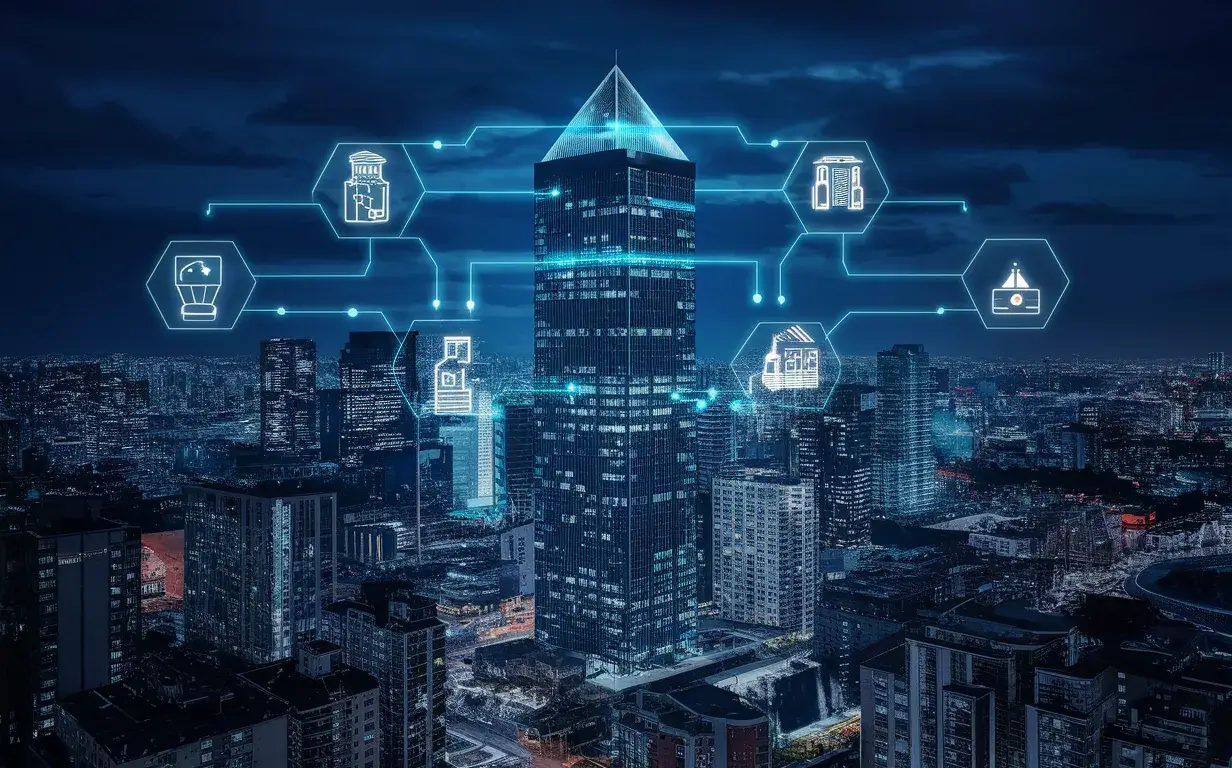
Building automation plays an increasingly important role in the future, as it helps to increase the efficiency and comfort of buildings. By integrating technologies such as sensors, actuators, and control systems, buildings can be intelligently controlled and monitored. This allows for energy savings, reduced operating costs, and a pleasant and safe environment for occupants. In an increasingly networked world, building automation will also help to improve the interoperability of buildings and infrastructure, which in turn will increase the efficiency and sustainability of the entire urban environment.
Building automation will also play an important role in integrating renewable energies into buildings. Through intelligent control of heating, ventilation, and air conditioning systems, building operators can optimize energy consumption and maximize the use of renewable energies such as solar and wind power. Furthermore, building automation will also help to improve building security by enabling the monitoring and control of security systems such as alarm systems and access controls. Overall, building automation will play a key role in improving the efficiency, sustainability, and security of buildings in the future.
Increasing Efficiency through Building Automation
Building automation significantly contributes to increasing building efficiency. Through intelligent control of lighting, heating, ventilation, and air conditioning, energy savings of up to 30% can be achieved. This not only leads to lower operating costs but also to a reduction in CO2 emissions and an improved environmental footprint. Furthermore, building automation enables preventive maintenance of systems, as sensors can provide early warnings of deviations or defects. This helps to minimize downtime and extend the service life of the systems.
Another efficiency gain results from the integration of buildings into the smart grid. By networking buildings with the power grid, peak loads can be avoided and energy consumption can be optimized. This not only contributes to the stability of the power grid but also allows for more efficient use of renewable energies. Overall, building automation leads to a significant increase in building efficiency and thus makes an important contribution to the energy transition.
Increasing Comfort through Building Automation
In addition to increasing efficiency, building automation also significantly contributes to increasing comfort in buildings. Through automatic control of room temperature, humidity, and lighting, a pleasant indoor climate is created, which positively affects the well-being of occupants. Furthermore, building automation allows for individual adjustment of room conditions to user needs, leading to higher satisfaction and productivity.
Another aspect is the integration of smart home technologies into building automation. By networking household appliances, consumer electronics, and security systems, residents can further increase their living comfort. For example, roller shutters, blinds, and awnings can be automatically controlled to optimize the indoor climate and ensure sun protection. Overall, building automation thus significantly contributes to increasing comfort in buildings and providing occupants with a pleasant and safe environment.
Technological Developments in Building Automation
| Technological Developments | In Building Automation |
|---|---|
| IoT | The Internet of Things enables the networking of devices and systems for controlling and monitoring buildings. |
| Energy efficiency | Energy consumption can be optimized through intelligent control systems and sensor technology. |
| Smart home | Integration of Building Automation into private households for controlling lighting, heating, and security systems. |
| Cloud Computing | The use of cloud services enables centralized management and analysis of building data. |
Technological developments in building automation are progressing rapidly and offer ever new possibilities for controlling and monitoring buildings. An important development is the increasing networking of devices and systems via the Internet of Things (IoT). This allows sensors and actuators to communicate with each other and exchange data in real-time, enabling precise control and monitoring.
Another important trend is the integration of artificial intelligence into building automation. Through the use of machine learning algorithms, systems can independently recognize patterns, make predictions, and decisions. This enables adaptive control of systems and continuous optimization of energy consumption.
Furthermore, augmented reality technologies are also gaining importance in facilitating maintenance and repair work on systems. By using AR glasses, technicians on-site can display instructions and information to identify and fix errors more quickly. Overall, technological developments in building automation offer ever new possibilities for increasing efficiency, comfort, and safety in buildings.
Sustainability and Energy Efficiency in Building Automation
Sustainability and energy efficiency are central aspects of building automation. Through intelligent control of heating, ventilation, and air conditioning systems, energy savings of up to 30% can be achieved. This not only contributes to reducing operating costs but also to lowering CO2 emissions and improving the environmental footprint.
Another important aspect is the integration of renewable energies into building automation. Through intelligent control of solar and wind power systems, self-consumption can be maximized and the purchase of conventional electricity reduced. This not only contributes to independence from fossil fuels but also to stabilizing the power grid and promoting renewable energies.
Furthermore, building automation enables preventive maintenance of systems to minimize downtime and extend their service life. This helps to conserve resources and reduce the ecological footprint of buildings. Overall, building automation thus makes an important contribution to sustainability and energy efficiency.
The Role of Artificial Intelligence in Building Automation
Artificial intelligence plays an increasingly important role in building automation. Through the use of machine learning algorithms, systems can independently recognize patterns, make predictions, and decisions. This enables adaptive control of systems and continuous optimization of energy consumption.
Another important aspect is the use of big data analytics to identify optimization potential in buildings. By analyzing large amounts of data, patterns and trends can be recognized to optimize energy consumption and reduce operating costs. Furthermore, artificial intelligence also enables predictive maintenance of systems to minimize downtime and extend their service life.
Furthermore, augmented reality technologies are also gaining importance in facilitating maintenance and repair work on systems. By using AR glasses, technicians on-site can display instructions and information to identify and fix errors more quickly. Overall, artificial intelligence thus plays a central role in increasing efficiency, comfort, and sustainability in building automation.
Challenges and Opportunities for the Future of Building Automation
The future of building automation presents both challenges and opportunities. One challenge is that many older buildings lack the necessary infrastructure to integrate modern automation technologies. Investments in retrofitting and modernization are required here to make the stock of older buildings fit for the future.
Another challenge is the security of networked systems. As more and more devices communicate with each other, the risk of cyberattacks and data misuse also increases. Robust security concepts are needed here to protect sensitive data from unauthorized access.
On the other hand, there are also many opportunities for the future of building automation. Through the use of modern technologies such as artificial intelligence, IoT, and big data analysis, efficiency, comfort, and sustainability in buildings can be further increased. Furthermore, the increasing networking of buildings will contribute to making the urban environment more efficient and sustainable overall.
Overall, exciting times lie ahead for building automation, in which new technologies and concepts will help to make our cities more livable, efficient, and sustainable.
Examples of electronic services
What is Building Automation (BA)?
Building automation (BA) refers to the integration of technologies and systems for controlling, monitoring, and optimizing building functions such as heating, ventilation, air conditioning, lighting, and security.
What are the benefits of Building Automation?
Building automation offers a variety of benefits, including energy savings, improved user comfort, increased security, and more efficient building management.
What technologies are used in Building Automation?
Various technologies are used in building automation, including sensors, actuators, control systems, communication protocols, building management software, and intelligent devices.
What building functions can be controlled by Building Automation?
Building automation can control a variety of building functions, including heating, ventilation, air conditioning, lighting, shading, security systems, access control, and energy management.
How does Building Automation contribute to energy efficiency?
Through automated control and optimization of building functions, building automation can help reduce energy consumption and improve energy efficiency.
What role does Building Automation play in Smart Buildings?
Building automation plays a central role in the area of smart buildings, as it forms the prerequisite for the integration and control of intelligent technologies and systems in buildings.
