Implementation

CAFM-Blog.de | ITIL V3: Effective IT Service Management

ITIL V3: Effective IT Service Management

ITIL V3, also known as IT Infrastructure Library Version 3, is a comprehensive framework for IT Service Management. It was introduced in 2007 and serves as a guide for the effective planning, delivery, and support of IT services in companies. The framework is based on proven practices and processes derived from years of experience and expertise. ITIL V3 emphasizes the delivery of high-quality IT services that meet business requirements while optimizing costs. [...]

ITIL V3: Effective IT Service Management Read more »

CAFM-Blog.de | Improve Your Customer Relationships with SAP CRM

Improve Your Customer Relationships with SAP CRM

Customer relationships are a key factor for business success. Well-maintained customer relationships demonstrably lead to higher customer satisfaction, stronger customer loyalty, and increased revenue. By building long-term relationships, companies can gain customer trust and encourage repeat purchases. Positive customer relationships also favor recommendations, which contributes to acquiring new customers. Therefore, implementing effective strategies for managing and maintaining customer relationships is essential for companies. A proven tool for improving customer relationships is

Improve Your Customer Relationships with SAP CRM Read more »

CAFM-Blog.de | What You Need to Know About Semiconductors

What You Need to Know About Semiconductors

Semiconductors are a class of materials with special electrical properties that lie between those of conductors and insulators. They enable precise control of electric current and are therefore essential for modern electronic applications. The most important semiconductor materials are silicon and germanium, which belong to the fourth main group of the periodic table. The electrical conductivity of semiconductors can be influenced by doping, i.e., the targeted introduction of foreign atoms. This creates n-doped (electron surplus) or p-doped (electron deficiency) semiconductors.

What You Need to Know About Semiconductors Read more »

CAFM-Blog.de | Sustainable Urban Development: The Future of Cities

Sustainable Urban Development: The Future of Cities

Sustainable urban development is a comprehensive concept for the planning and design of cities that considers ecological, social, and economic aspects. The goal is to meet the needs of the present generation without compromising the ability of future generations to meet their own needs. The main goals of sustainable urban development include: Creating environmentally friendly and energy-efficient cities Promoting social justice and inclusion Generating sustainable jobs and economic growth Conserving natural resources and biodiversity This approach aims to improve the quality of life

Sustainable Urban Development: The Future of Cities Read more »

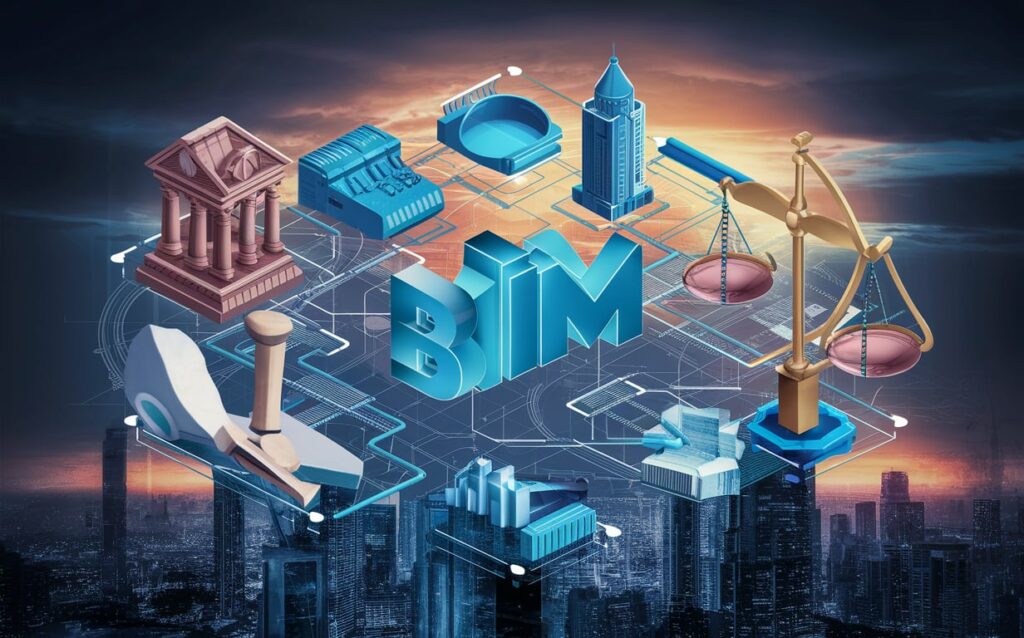
CAFM-Blog.de | Legal Aspects of BIM: What You Should Know

Legal Aspects of BIM: What You Should Know

Building Information Modeling (BIM) is a digital method for planning, creating, and managing buildings. This technology enables the creation of a virtual 3D model that contains all relevant information about a building. The BIM model serves as a central source of information for all parties involved in the construction project and covers the entire lifecycle of a building, from conception through construction to operation and demolition. The implementation of BIM brings various legal

Legal Aspects of BIM: What You Should Know Read more »

CAFM-Blog.de | Service-Oriented Architecture (SOA) - The Future of Enterprise Integration

Service-Oriented Architecture (SOA) – The future of enterprise integration

Service-Oriented Architecture (SOA) is an architectural pattern in software development based on the provision of services. SOA aims to structure applications as modular, reusable, and loosely coupled services. These services communicate with each other via standardized protocols and interfaces. Key characteristics of SOA include: Modularity: Functionalities are divided into independent services. Interoperability: Services can work together across platforms and technologies. Reusability: Services can be used in various applications and contexts. Scalability: Individual

Service-Oriented Architecture (SOA) – The future of enterprise integration Read more »

CAFM-Blog.de | What is GASB 87 Lease?

What is GASB 87 Lease?

The new GASB 87 lease accounting standard is a significant change in accounting for government agencies and public sector organizations. The Governmental Accounting Standards Board (GASB) developed this standard to improve the recognition and reporting of lease agreements in the financial statements of government entities. GASB 87 became effective on December 15, 2019, and has significant implications for the accounting and financial reporting of government organizations. The new standard replaces GASB 13 and introduces essential

What is GASB 87 Lease? Read more »

CAFM-Blog.de | Fundamentals of REST: An Introduction

Fundamentals of REST: An Introduction

REST is an acronym for "Representational State Transfer" and is an architectural style for distributed systems based on the HTTP protocol. It was introduced by Roy Fielding in his dissertation in 2000 and has since become one of the most important approaches for developing web applications. REST enables communication between client and server via standardized interfaces, thereby promoting the scalability, reliability, and maintainability of web applications. REST is based

Fundamentals of REST: An Introduction Read more »

CAFM-Blog.de | Efficient Project Controlling: Successful Project Execution

Efficient Project Controlling: Successful Project Execution

Efficient project controlling is crucial for project success. It enables the monitoring, control, and coordination of all activities within a project. Through project controlling, costs, deadlines, and resources can be effectively monitored and managed to ensure the project is completed within the planned framework. Furthermore, efficient project controlling allows for the early identification of deviations and problems, enabling project managers to take timely countermeasures and

Efficient Project Controlling: Successful Project Execution Read more »

CAFM-Blog.de | Point Cloud: The Future of 3D Surveying

Point Cloud: The Future of 3D Surveying

The emergence of point clouds is closely linked to the development of 3D surveying technologies. In recent decades, surveying technology has evolved significantly, and the introduction of laser scanners and 3D cameras has made it possible to create precise and detailed 3D models of objects and environments. The point cloud is the result of these technologies, where a large number of points in space are captured to create an accurate 3D model. These points contain information

Point Cloud: The Future of 3D Surveying Read more »

CAFM-Blog.de | Myths and Truths about Agile Project Implementation

Myths and Truths about Agile Project Implementation

In recent years, agile project implementation has become increasingly popular. This approach aims to deliver results quickly and adapt to changes. In this blog post, we will discuss some of the myths and truths surrounding agile project implementation. What is agile project implementation? Agile project implementation is an approach that aims to deliver results quickly and adapt to changes. It is a flexible and iterative approach that

Myths and Truths about Agile Project Implementation Read more »

CAFM-Blog.de | Property Management: Tips and Tricks

BIM: Processes, Roles, and Responsibilities

Building Information Modeling (BIM) is an advanced approach to planning, constructing, and managing construction projects. It is a digital representation of the physical and functional aspects of a building. BIM enables stakeholders to capture, manage, and exchange all relevant information about a construction project in a central model. This includes not only geometric data but also information about materials, costs, schedules, and much more. Through the

BIM: Processes, Roles, and Responsibilities Read more »

CAFM-Blog.de | Strategies and Use Cases of BIM in FM

Strategies and Use Cases of BIM in FM

Building Information Modeling (BIM) is an advanced method that enables building data to be captured, managed, and analyzed throughout a building's entire lifecycle. In Facility Management (FM), BIM plays an increasingly important role as it improves the efficiency and effectiveness of managing buildings and facilities. BIM in FM allows facility managers to capture all relevant information about a building in a digital model and

Strategies and Use Cases of BIM in FM Read more »

CAFM-Blog.de | Effective Vulnerability Management: How to Minimize Risks

Effective Vulnerability Management: How to Minimize Risks

Vulnerability management is a critical component of IT security in companies. It deals with identifying, assessing, and mitigating vulnerabilities in the IT infrastructure to reduce potential risks. Through effective vulnerability management, companies can improve their security posture and protect themselves from potential attacks. It is important for companies to be proactive and regularly check their systems for vulnerabilities to identify and fix security gaps before they are exploited by attackers.

Effective Vulnerability Management: How to Minimize Risks Read more »

CAFM-Blog.de | Fundamentals of BIM Implementation: Roadmap

Basics of BIM Implementation: Roadmap

The implementation of Building Information Modeling (BIM) is an important step for companies active in the construction industry. BIM is an innovative method that allows all relevant information about a construction project to be digitally captured, managed, and shared. However, the implementation of BIM requires careful planning and execution to fully exploit the benefits of this technology. In this article, we will examine the various aspects of BIM implementation more closely

Basics of BIM Implementation: Roadmap Read more »

Scroll to Top