
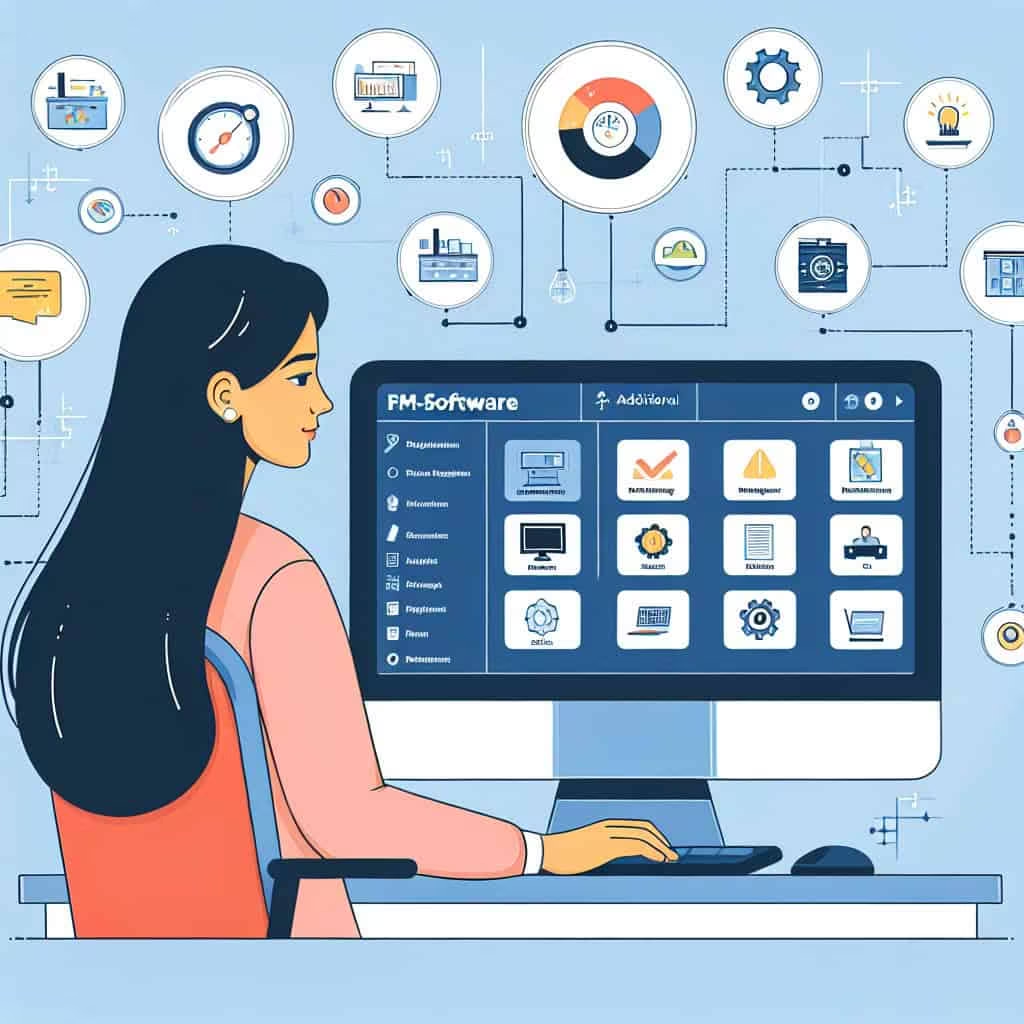
Why is FM Software So Essential?
- Centralized Data Management: FM software allows information about facilities and equipment to be managed in one place, significantly accelerating decision-making processes.
- Cost-effectiveness: Operating costs are significantly reduced through precise maintenance planning and resource optimization.
- Energy Efficiency: Modern systems integrate energy efficiency software to continuously monitor and adjust energy consumption.
Let's take a practical example: A company used maintenance software to manage its air conditioning systems. Through predictive maintenance, they were able to not only extend the lifespan of the equipment but also reduce energy consumption by 20% – a win-win situation for both budget and the environment!
Ultimately, FM software offers more than just administrative functions. It transforms technical building management into a strategic partner for sustainable growth.
"The implementation of digital solutions in facility management leads not only to cost reductions but also to an improved quality of the workplace." – IFMA Report 2021
Would you like to know more about how to maximize the potential of FM software in your company? Visit our detailed articles on selecting and implementing innovative CAFM systems.
Important Functions of FM Software
In the fast-paced world of facility management, a powerful FM software is indispensable. These systems offer a wealth of functions that help facility managers perform their tasks more efficiently. Here are some of the key functions that FM software should provide:
Data-Driven Decision Making
Modern Facility Management Software provides valuable data analyses that support facility managers in making informed decisions. By collecting and analyzing data, companies can, for example, identify and optimize inefficiencies in energy consumption.
Centralized Maintenance Planning
Maintenance software within a CAFM system enables seamless planning and execution of maintenance tasks. This reduces downtime and extends the lifespan of assets. A good example is an automated maintenance calendar that sends reminders for upcoming maintenance activities.
Energy Efficiency and Sustainability
Not to be forgotten is the aspect of Energy Efficiency Software. These modules not only help companies achieve their environmental goals but also significantly reduce operating costs. According to a study by the German Federal Association for Facility Management (GEFMA), targeted energy management strategies could save up to 20% of energy costs (Source: GEFMA, 2020).
Mobile Facility Management
With mobile applications, facility managers can access important information anytime and anywhere. Whether it's viewing a maintenance report during a site visit or being able to react immediately to emergencies – mobility plays a key role.
Space and Room Management Tools
Space Management Software provides detailed insights into the utilization of building resources. This helps optimize space usage and thus supports strategic planning such as relocations or expansions.
- Security management: Plan and document protective measures.
- Operating Cost Management: Create transparency in all financial aspects.
- Data Integration: Easy integration with other enterprise systems for holistic management.
Ultimately, choosing the right FM software depends heavily on a company's specific requirements. If you want to learn more about when a CMMS might be the right tool for your needs, read our article on CMMS as the optimal solution for your business.
Whether it's about building management or technical support – well-implemented FM software sustainably changes the daily work of a facility manager for the better.
Added value of FM software for facility managers
In the dynamic world of facility management, the administration of properties, assets, and resources increasingly requires efficient support from FM software. But what concrete added value does this technology offer facility managers? Let's take a detailed look.
Optimization of Operating Costs
A significant advantage of FM software lies in precise Cost Control. Through automated reports and analyses, facility managers can monitor and optimize operating costs more efficiently. According to a study by Verdantix (2021), companies were able to reduce their operating costs by up to 23% by using modern building management software . This not only reduces expenses but also increases transparency across all financial flows.
Effective Maintenance Planning
Robust maintenance software allows managers to proactively create maintenance plans and thus avoid unexpected failures. This not only prevents costly repair costs but also ensures that systems and machines run smoothly. A prime example is the University of California, whose implementation of a CMMS (Computerized Maintenance Management System) led to a 10% reduction in unplanned downtime.
- Proactive Maintenance: Prevents unplanned downtime and extends the lifespan of assets.
- Data-driven decision-making: Use historical data to optimize future maintenance cycles.
Energy Efficiency and Sustainability
Energy-saving measures are not only good for the planet but also for the company's budget. Comprehensive energy efficiency software helps identify potential savings and enables managers to integrate sustainable practices into daily work. According to a survey by the German Federal Environment Agency, building management processes using intelligent software solutions could reduce energy consumption by up to 15%.
Time Savings Through Automation
One of the most underestimated benefits is time savings through automation. Instead of pursuing manual processes, many tasks such as space management or contract management can be efficiently automated. This gives facility managers more time for strategic tasks – or perhaps even a cup of coffee in the afternoon without a guilty conscience. 😉
These added values impressively underscore why the integration of FM software is an indispensable component of modern facility management solutions. Through the combination of cost efficiency, sustainability, and process optimization, it supports managers in maintaining an overview of complex structures – with minimal effort and maximum effect.
Practical Application Examples
Digitalization in the facility management industry is constantly advancing. But what does it look like in practice? FM software offers numerous Advantagesthat support facility managers in their daily work. Here are some examples:
1. Efficient Maintenance Planning in Building Management
In a large office building in Munich, the facility management team implemented FM software to optimize maintenance work. Through automated maintenance planning and documentation, unplanned downtime was reduced by up to 30%, which not only lowered operating costs but also increased tenant satisfaction.
2. Sustainable Resource Management
A company from Hamburg used FM software to improve its sustainable practices. With integrated energy efficiency tools, the company was able to reduce its energy consumption by 15% by identifying and optimizing inefficient systems. These measures contributed significantly to achieving the company's sustainability goals.
- Smart Reporting: Automated reports provide precise data on energy savings, thus facilitating strategic planning.
- Real-time monitoring: IoT sensors enable continuous monitoring and adjustment of energy consumption patterns.
3. Optimization of Room Management
In a university campus, inefficient use of space was common. By using FM software, free spaces could be better managed and allocated, leading to better utilization and ultimately making expensive new buildings unnecessary.
"Thoughtful space management not only saves costs but also promotes the satisfaction of all users." – CAFM Blog
4. Improved Security Management Process
For a hospital, safety is of the highest priority. A tailor-made FM software solution helped to automate and improve the safety management process. Thanks to real-time notifications of safety-relevant incidents, the response time could be significantly reduced, which strengthened the trust of patients and employees.
These application examples impressively show how versatile FM software can be used in different industries to optimize processes and create added value.
Future Prospects of FM Software
The world of facility management is facing a digital transformation that goes far beyond traditional boundaries. The FM software is developing rapidly and brings with it numerous innovative functions that make life easier for facility managers while offering sustainable benefits.
1. The Role of Automation in Facility Management
Automation is a key trend significantly influencing the future of facility management solutions. Intelligent systems can take over routine tasks, from maintenance planning to resource management. This not only significantly reduces manual effort but also minimizes human errors.
- Operating Cost Management: Automated processes can reduce operating costs by up to 30%.
- Building Maintenance: Predictive maintenance systems can reduce downtime by up to 50%.
2. Cloud-based FM Software Solutions
With the increase of SaaS (Software as a Service), as described in our article about SaaS Benefits , FM software is becoming more accessible and flexible. Cloud-based solutions enable managers to access important data anytime and anywhere, which is particularly advantageous for mobile facility management.
According to a study by the market research company Gartner, around 70% of all new FM system implementations will be cloud-based by 2025. This clearly shows the trend towards digitalization and mobility in property management.
3. IoT in Facility Management
The Internet of Things (IoT) plays a central role in modern building infrastructures. Sensors continuously monitor environmental conditions such as temperature and air quality, thus enabling precise adjustments to improve energy efficiency. For example: A smart building management system can reduce energy consumption by around 20% by automatically controlling heating, ventilation, and air conditioning systems.
Ultimately, the future of FM software will be shaped by integration – one platform for all needs: from contract management to maintenance planning. This enables seamless management of all aspects of facility management in a single, user-friendly interface.
In short, the future prospects are both promising and exciting – perhaps we should all get a digital backpack, because the journey has just begun!
Conclusion: An Investment in the Future of Building Management
With rapid digitalization and continuous development of Facility Management Software the implementation of CAFM systems is more than just a technical advancement; it is a strategic investment in the future of property and building management. But why is that?
Future-proofing through technology: Modern FM softwaresolutions are not just tools for managing building data, but also platforms that promote innovation and efficiency. By using IoT in facility management, facility managers can utilize real-time data on space occupancy or energy efficiency to make informed decisions.
- Energy Efficiency: According to a study by the International Energy Agency (IEA), buildings could save up to 30% on energy costs by using smart technologies.
- Operating Cost Management: Digitalization enables precise planning and tracking of maintenance and operating costs, which leads to significant cost savings in the long run.
- User-Friendliness: Modern CAFM platforms are characterized by intuitive user interfaces that minimize training effort and increase user acceptance.
"The best technologies are those that allow people to become better." This philosophy is also reflected in the integration of cloud-based FM software solutions, mobile facility management apps, and automated processes. They enable managers to focus on value-adding tasks such as strategic resource management or sustainability initiatives.
Benefits for Companies
Companies that invest in comprehensive facility management solutions today not only secure their competitiveness but also create measurable added value for all stakeholders. Automation in facility management not only simplifies the daily work of facility managers but also demonstrably improves the satisfaction of all user groups, from tenants to investors.
In summary, it can be said: Those who invest in FM software now are investing in a smart and sustainable future of building management – a future with less stress and more success!
