
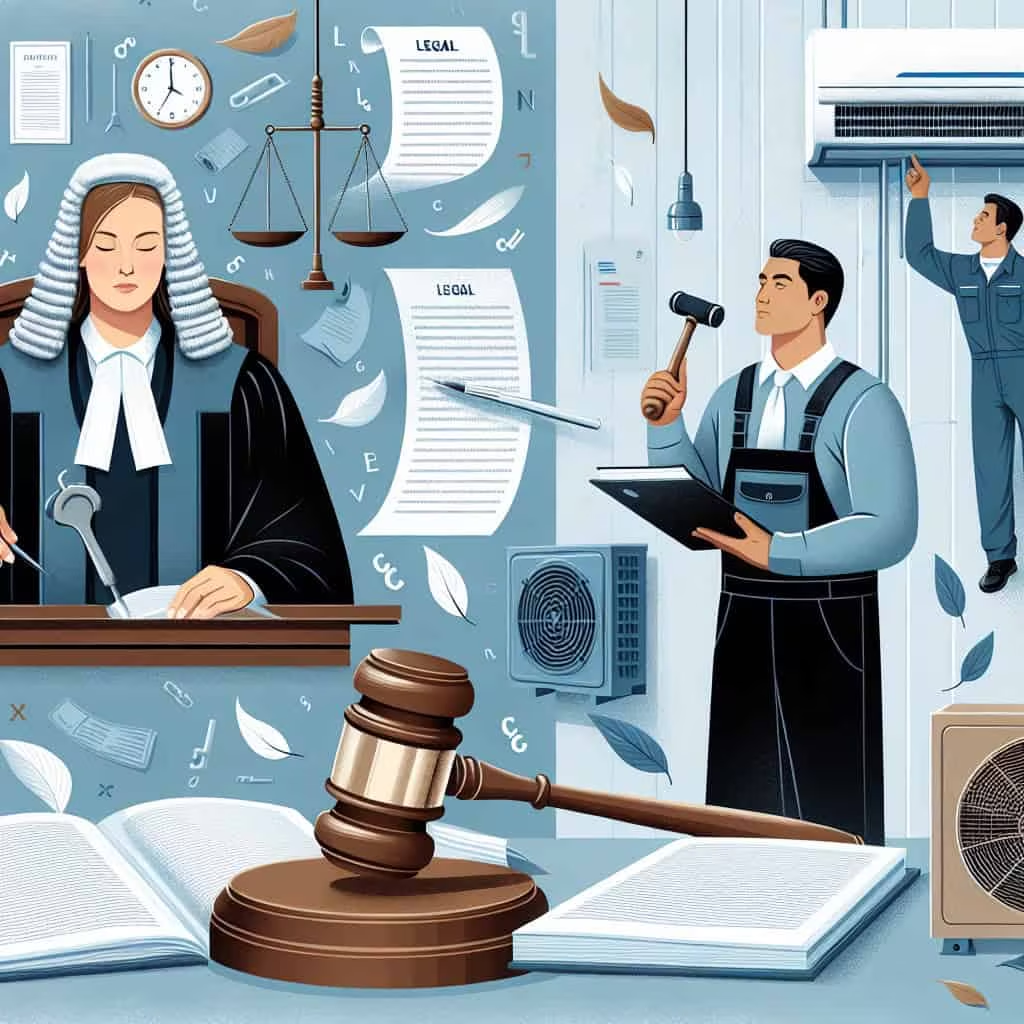
In facility management, legal aspects are of central importance, especially when it comes to topics such as Exculpation and debt relief The challenges resulting from the responsibility for buildings and infrastructures require a deep understanding of the laws as well as precise evidence to be able to successfully defend oneself in the event of claims or liabilities. This is where the exculpatory evidence comes into play: a crucial element that enables facility managers to demonstrate their innocence and ward off potential accusations.
The legal framework in German facility management represents a complex landscape where the presumption of innocence is not just theoretical. Clients and partners expect their service providers to handle all legal obligations transparently and responsibly. Therefore, to avoid any breach of duty of care, it is important for facility managers to be well-informed about possible legal risks and the corresponding strategies for discharge.
The Art of Legal Relief
Effective defense in the sense of exculpation requires more than just a vague claim of 'not being guilty.' It demands clear evidence and a solid understanding of the principle of justification. Factors such as the absence of proof of guilt or strategic methods of shifting blame play a significant role in how facility managers can strengthen their position.
- Delegating Responsibility: Sometimes the solution lies in outsourcing tasks to specialized service providers, which not only expands one's own scope of action but also minimizes potential liability risks.
- Preventive measures: Through proactive risk mitigation strategies, one can not only prevent legal problems but also strengthen trust in one's own service framework.
- Legally secured declarations of innocence: These are of crucial importance for maintaining the moral integrity of your organization.
Instead of getting caught in a web of blame or even resorting to cover-up strategies – which are, of course, ethically questionable – facility managers should focus on transparency. A clear approach to communication and action not only promotes trust from partners and clients but also significantly reduces the risk of legal disputes.
'In the world of facility management, proactive communication is often the key to avoiding legal pitfalls.'
Ultimately, our goal in facility management is not only to bear responsibility but also to fulfill it with integrity and expertise. Through sound knowledge of exculpation and related legal principles, we can not only secure our own position but also contribute to building a positive image of our entire sector. Every step towards more transparent practices counts – both for our own success and for the trust of our clients.
What does exculpation mean in facility management?
Exculpation in facility management refers to the legal discharge from responsibilities and potential liabilities. It involves proving that one cannot be held responsible for certain damages or omissions despite existing obligations. This topic is gaining increasing importance as facility managers today operate in a complex legal environment that presents constant challenges.
To understand the essence of exculpation, it is helpful to consider some key concepts:
- Discharge of debt: The ability to deny responsibility or guilt. This often requires documented evidence or witnesses who can confirm that all necessary measures have been taken.
- Exculpatory evidence: A crucial aspect in providing evidence. Facility managers must be able to prove that they have taken the necessary precautionary measures to prevent potential problems.
- Justification: To successfully exculpate themselves, facility managers must not only assert their innocence but also be able to show that they are acting in accordance with the law.
In the German legal system, the presumption of innocence applies: everyone is considered innocent until proven otherwise. This principle is not only a central component of criminal law but also finds application in facility management. It is the responsibility of facility managers to actively defend this presumption of innocence and secure their actions through careful documentation and transparent communication.
The Importance of Documentation
One of the keys to exculpation is the complete documentation of all measures taken. Whether it's maintenance logs or certificates of completed safety inspections – everything should be well-documented. These documents serve as proof for the discharge and help to clearly present one's own position.
Furthermore, facility managers should consider regular training in legal knowledge and liability avoidance. A sound understanding of legal frameworks and potential risks can be crucial for a successful defense in case of claims.
'Good preparation is half the battle – even in law!'
Ultimately, a clear strategy for exculpation not only leads to better legal security but also has positive effects on the working atmosphere within the company. Proactive measures create an environment in which employees have confidence in their decisions – which ultimately benefits the entire company.
In summary: Exculpation in facility management means more than just avoiding blame; it's about actively and transparently living responsibility while building a strong foundation of trust with clients and partners. The better prepared one is and the clearer one communicates, the more likely one is to prove one's innocence – and thus secure the integrity of one's company.
Legal Basis of Exculpation
The legal foundations of exculpation in facility management are complex and require a deep understanding of the relevant laws and their practical application. A central principle is the presumption of innocence, which states that a person is presumed innocent until proven guilty. These principles are not only important for criminal law but also significantly influence the daily work of facility managers.
The Role of Exculpatory Evidence
A crucial element in exculpation is the proof of exoneration. Facility managers must be able to prove that they have taken all necessary measures to prevent damage. This can be achieved through:
- detailed documentation of maintenance work and inspections,
- Evidence such as photos or witness statements, and
- the implementation of regular training on safety and liability avoidance.
Clearly formulated procedures for risk assessment and preventive measures are also of great importance. If damage occurs, managers must be able to act quickly to show that everything possible has been done to prevent it.
Disclaimer and Responsibility
In many cases, a disclaimer of liability, which is clearly communicated in advance, can help avoid legal problems. Facility managers should ensure they have clear contracts with service providers that define responsibilities clearly. It is important to:
- Clarity on scope of services: What exactly is expected?
- Defined liability scenarios: Who is liable for what?
- Regular Reviews: Contracts should be regularly reviewed for their currency.
But beware: a disclaimer of liability does not protect against gross negligence or intentional misconduct. Therefore, continuous training in legal responsibility is essential.
"A smart facility manager knows: Prevention is better than cure – especially when it comes to legal disputes."
Moral Integrity and Transparency
Ultimately, exculpation is not just about legal aspects; moral integrity also plays a crucial role. A transparent approach to challenges and the honest admission of mistakes can often achieve more than any legal strategy. The ability for self-reflection and the pursuit of continuous improvement build trust with customers and partners.
Remember: Every legal tool has its limits; often, interpersonal relationships can make the decisive difference. An open ear for your employees' concerns can not only identify potential problems early on but also contribute to fostering a positive corporate culture.
Therefore, facility managers should always strive not only to comply with legal requirements but also to uphold ethical standards – because at the end of the day, it is not just the result that counts, but also the way to get there.
In summary, exculpation in facility management requires an integrated understanding of both legal foundations and moral obligations towards all stakeholders. With careful evidence management and a clear focus on transparency, facility managers can prove their innocence while leaving a positive impression.
Practical Applications in Facility Management
In facility management, the practical application of exculpation plays a crucial role in effectively mastering both legal and operational challenges. Here are some strategies and approaches that facility managers can implement to strengthen their legal position while simultaneously increasing the efficiency of their processes.
1. Implementation of a proactive Risk Management
A well-thought-out risk management is essential for identifying potential hazards early and counteracting them. Facility managers should:
- Regular risk analyses: These analyses help to identify potential weaknesses in the infrastructure or operational processes.
- Establish preventive measures: The introduction of maintenance plans and inspection protocols ensures that problems are resolved before they escalate.
- Conduct training for employees: Regular further training measures in the area of safety and liability contribute to employee awareness.
2. Use of Digital Tools for Documentation
The documentation of all processes is a crucial factor in exculpation. The use of modern CAFM software can significantly simplify the management of these documents:
- Centralized database: All relevant information such as maintenance reports, safety inspections, and training documents should be stored centrally.
- Real-time updates: Mobile applications allow changes to be documented immediately, which increases traceability.
- Collaboration with service providers: A good CAFM solution also allows external service providers to contribute relevant information – this keeps the team constantly informed.
One of the great advantages of these software solutions lies in their ability to provide efficient proof in cases of liability. If everything is documented seamlessly, facility managers can more easily prove their innocence in accusations.
3. Promoting Ethical Standards
In addition to legal aspects, it is important for facility managers to anchor an ethical foundation within the company. This can be achieved through:
- Culture of transparency: Open communication about errors and challenges builds trust between employees and management.
- Upholding moral integrity: Decisions should not only be based on legal requirements but also on a high ethical standard.
"Ethical conduct in facility management not only promotes client trust but also strengthens team spirit within the company."
4. Collaboration with Legal Advisors
To minimize legal uncertainties, facility managers should work closely with legal advisors. Involving legal experts offers the following benefits:
- Clarity on legal obligations: Legal expertise helps to correctly interpret and apply all relevant laws.
- Rapid responsiveness to challenges: In the event of liability claims, immediate legal assistance can be sought.
Whether it concerns specific contracts or general compliance requirements – good cooperation with lawyers is worth its weight in gold!
Ensure Sustainable Success
Ultimately, it is about developing a sustainable strategy for facility management. By acting proactively and considering all aspects of exculpation – whether legal or ethical in nature – facility managers create the foundation for a thriving operational climate and satisfied customers.
Transparent action combined with solid evidence not only sets standards within the company; it also contributes to positively influencing the reputation of the entire sector.
Are you ready for a fresh start? With a clear focus on exculpation, you lay the foundation for the long-term success of your company in facility management!
Challenges in Providing Evidence
Providing proof within the scope of exculpation presents facility managers with diverse challenges that are both legal and practical in nature. One of the central difficulties is that the requirements for proof of exoneration are often very high and require precise and comprehensive documentation. Incorrect or insufficient proof can quickly lead to a reversal of the burden of proof, where responsibility shifts to the facility manager.
Complexity of Evidence
Imagine having to prove that your organization has taken all necessary safety precautions – that sounds easier than it actually is! The reality is often multifaceted:
- Diversity of evidence: Photos, reports, witness statements – all these forms may be necessary to convey a clear perspective. But what happens if evidence is missing?
- Time-based deadlines: Often, the deadlines for submitting evidence are very short. Facility managers must therefore work efficiently and be well-organized.
- Collaboration with various stakeholders: Cooperation with external service providers or third parties can become complicated – not everyone is interested in making their responsibilities transparent.
The Challenge of Documentation
One of the biggest problems in providing proof is the seamless documentation of all relevant activities. This is where beginners often make mistakes: You think you are well prepared, and then crucial documents are missing. To counteract this, facility managers should consider the following strategies:
- Establishing a digital documentation system: The use of suitable CAFM software can help to centrally collect all necessary data and make it available at any time.
- Regular Reviews: Maintenance plans should not just exist; they must also be regularly checked for their currency. Documents should be kept alive!
- Staff training: The entire team should be aware of the importance of correct records and the consequences that can result from insufficient documentation.
Consider Human Factors
In addition to technical aspects, the human component also plays a crucial role in proving innocence. Mistakes happen – that's human! Here are a few points to consider:
- Setting ethical standards: An open and honest working atmosphere promotes trust among employees and reduces the likelihood of cover-up strategies due to fear or uncertainty.
- Receiving criticism constructively: Mistakes should not be punished; instead, a learning process should be established.
"The path to innocence often leads through well-maintained documentation and proactive communication!"
Ultimately, it is essential for facility managers to be aware of the challenges in proving innocence and to take proactive steps. By establishing clear processes, conducting training, and utilizing modern technologies, they can strengthen their position and better protect themselves against potential liability claims.
Remember: The better your preparations, the easier it will be for you to prove your innocence – both for your company and for the trust of your customers!
Legal Security and Future Developments
Legal protection in facility management is gaining increasing importance as the requirements for exculpation and discharge of liability are constantly rising. In a world where legal risks are omnipresent, it is essential for facility managers not only to understand the current legal system but also to prepare for future developments.
Technological advancements and their implications
With the advent of new technologies such as the Internet of Things (IoT) and intelligent building management systems, facility managers are challenged to address the associated legal issues. While these technologies offer numerous advantages in terms of efficiency and cost reduction, they also bring new liability questions. Exemplary aspects include:
- Data responsibility: The collection and processing of user data requires a high level of data protection knowledge. Facility managers must ensure that all data is handled in accordance with the General Data Protection Regulation (GDPR).
- Liability for technical failures: If IoT devices fail or have security vulnerabilities, facility managers can be held responsible. A clear demarcation of responsibilities in contracts is crucial here.
- Cybersecurity measures: Given the increase in cyberattacks, facility managers should take proactive measures to implement IT security standards and ensure that the protection of relevant systems is guaranteed.
Legal developments in the European space
The legal situation in facility management is strongly influenced by European directives. Future developments could include the following trends:
- Compliance with sustainability standards: The EU is planning stricter regulations on sustainable construction and operation. Facility Managers should already be preparing to develop corresponding compliance strategies.
- Extended liability: With an increasing focus on environmental protection and social responsibility, new legal regulations could emerge that expand the responsibilities of Facility Managers.
- Promotion of transparency requirements: The EU could introduce future laws requiring transparent communication about maintenance work and safety results – both towards customers and supervisory authorities.
Ethical considerations in a changing environment
In addition to the legal framework, the ethical dimension also plays a significant role in the future of facility management. Requirements for moral integrity and transparency are not only expected by customers but increasingly also by legal authorities:
- Customer loyalty through integrity: A transparent approach to errors or challenges can strengthen trust and foster long-term customer relationships.
- Corporate culture of responsibility: A corporate culture that promotes ethical conduct has a positive impact on the working atmosphere and minimizes risks from negligent actions.
Ultimately, technological innovations and legal changes are reshaping the landscape of facility management. In this dynamic environment, facility managers must be flexible and continuously educate themselves. By actively engaging with challenges and developing proactive solutions – whether through modern software solutions or continuous training – they can not only strengthen their legal position but also make a valuable contribution to the sustainable development of their company.
Therefore, the conclusion is: The future of facility management will be exciting! Those who are ready now for innovative approaches to legal protection will not only be pioneers – they will also navigate through life more successfully!
