
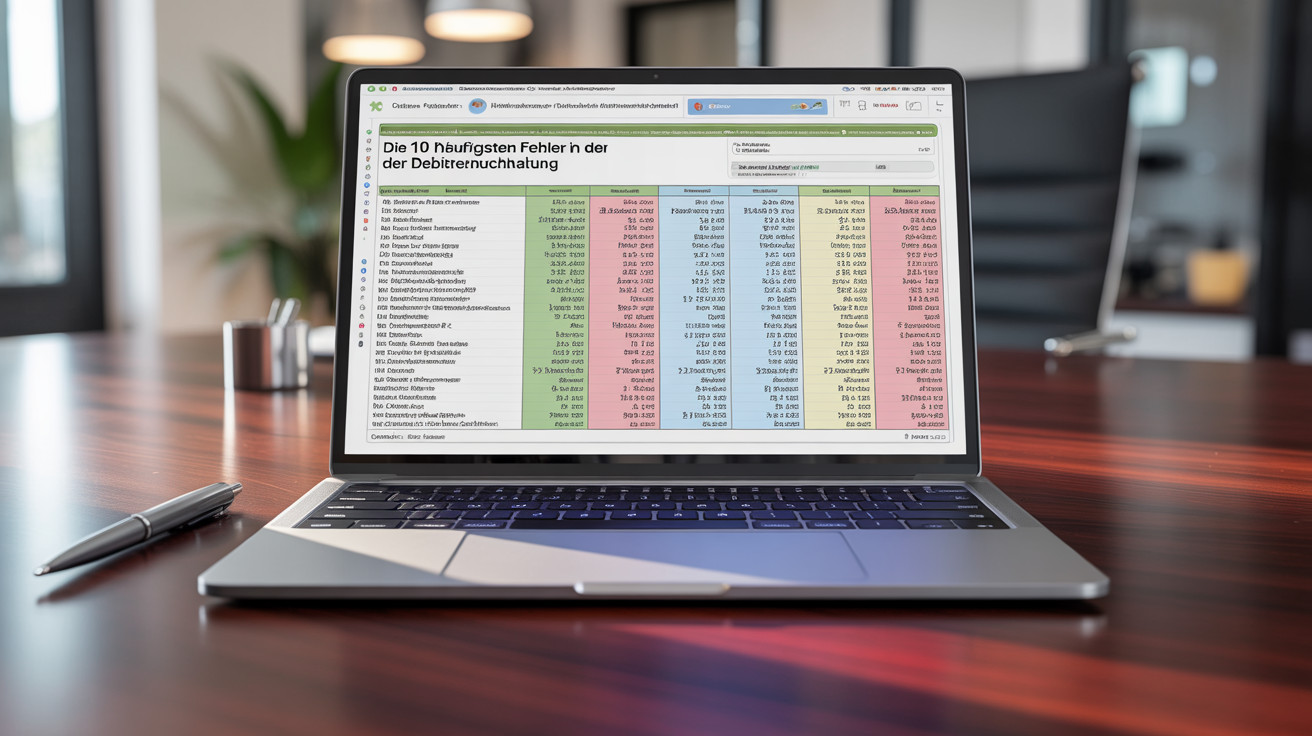
The Accounts Receivable Accounting is a crucial area in every company that is often overlooked. It ensures that money flows and the company's liquidity remains secure. But despite its importance, they are errors in the Accounts Receivable Accounting not uncommon. In fact, small inaccuracies or misunderstandings can have major consequences for the company's financial health. This is not only annoying but can also lead to serious financial bottlenecks.
A common errors is, for example, the inaccurate recording of invoices, which can lead to incorrect bookings. When you consider how much time and energy goes into creating a correct invoice, it is understandable that such stumbling blocks can be frustrating. But don't worry! In this article, we will highlight the 10 most common errors in accounts receivable accounting and give you valuable Tips on how you can avoid them.
Furthermore, we will also take the time to discuss how you can Optimize Accounting Processes and thus future Avoid Accounting Errors can. Because every mistake not only involves additional work but also the Sampling rate and timestamp quality determine whether FDD algorithms or load management function. Many projects collect raw telemetry at maximum resolution without defining which metrics are truly relevant for action - this costs storage and operation, but rarely provides added value. of a bad debt or payment arrears – nobody wants to experience either!
Enjoy this informative tour through the most common stumbling blocks in accounts receivable accounting and learn at the same time how important error-free Bookkeeping is for the success of your company. Let's go on a journey together — safely to your next error-free invoice :-)
#1 Incorrect account reconciliation
The importance of account reconciliation
An incorrect account reconciliation can have far-reaching consequences for accounts receivable accounting. It is the core of financial Transparency and plays a central role in Payment reconciliation. If accounts are not reconciled precisely, discrepancies arise that can lead to incorrect bookings. What may initially seem like a small problem can quickly escalate into a huge financial headache.
Causes of faulty account reconciliations
- Insufficient documentation: When documents are missing or incomplete, reconciliation quickly turns into detective work.
- Human Errors: Typographical errors or mix-ups when entering amounts can have fatal consequences.
- Lack of Routine: Regular account reconciliations are crucial. Those who are negligent here should not be surprised if the numbers don't add up at the end of the month.
- Software Problems: Insufficiently configured accounting software can cause faulty reconciliations. It is important here that your team is well-trained and knows all the functions.
The consequences of faulty account reconciliation
Not only is current liquidity endangered; long-term business decisions can also be based on incorrect Data . Companies might take out risky loans or make important investments based on optimistic – but incorrect – assumptions about their financial situation. Furthermore, this can lead to a loss of trust among partners and customers.
Tips for avoiding errors in account reconciliation
- Regular training: Ensure that your accounting team receives regular training and is familiar with the latest best practices. This helps to minimize human errors.
- Use of accounting software: Utilize modern ERP- systems for Accounting, to perform automatic reconciliations and identify sources of error early on.
- Detailed Documentation: Meticulously record all transactions and ensure that all receipts are complete and correct. This makes tracking easier and faster.
- Control Mechanisms IT ticketing system: Implement an internal control system in the Accounting to conduct regular reviews and counteract potential sources of error at an early stage.
“A well-reconciled account is like a healthy pulse: it gives you security about the condition of your company.”
Careful account reconciliation is essential for efficient accounts receivable accounting. Through proactive measures, companies can not only avoid errors but also sustainable secure their financial health. So, whoever thinks: “This can't happen to me!” should better take a look at their last reconciliations – because prevention is better than cure!
#2 Lack of invoice correction
The challenge of invoice correction
Invoices are more than just numbers and Data. They are the backbone of every financial transaction and a crucial element in accounts receivable accounting. However, if errors occur in invoices, this can have far-reaching consequences. Lack of invoice correction is a common stumbling block that not only jeopardizes a company's liquidity but can also lead to a loss of customer trust.
Typical errors in invoices
- Incorrect Amounts: A transposed digit or an incorrectly entered amount can have massive effects on the payment process.
- Missing or Incorrect VAT Information: This could not only lead to financial disadvantages but also entail legal consequences.
- Unclear Service Description: An imprecise description of the service rendered can cause misunderstandings and unsettle the customer.
- Unspecified Payment Terms: Missing information on how and when to pay can also cause problems.
Costs of faulty invoices
The costs of incorrect invoices are often higher than many think. In addition to the direct financial loss due to late payments, there are also hidden costs: time spent on corrections, additional communication with customers, and potential legal disputes. According to a study by the Institute for Corporate Management , a single incorrect invoice can cost up to 500 Euros – an amount that many companies could invest better :-)
Tips for correct invoice correction
- Careful Review: Every invoice should be thoroughly checked before sending. Use checklists to ensure that all details are correct.
- Use of modern Software: Accounting software often enables automatic corrections and warnings in case of discrepancies. This way, no error remains hidden!
- Strengthen customer communication: Keep your customers informed about changes or corrections. Open communication fosters trust and minimizes misunderstandings.
- Documentation of corrections: Keep all correction receipts. This is important for traceability and protects your company in case of audits.
“The best invoice is one that never needs to be corrected.”
Lack of invoice correction should not be taken lightly – it's not just about numbers on a piece of paper, but about your company's entire financial structure. By taking proactive measures and regularly reviewing your invoicing processes, you can ensure that your accounts receivable not only operate efficiently but also remain error-free. Because ultimately, a small detail like a correct invoice can make big waves!
#3 Inaccuracies in payment reconciliation
Payment reconciliation is a critical process in accounts receivable, often seen as a tedious chore. But don't be fooled by this perspective! Precise payment reconciliation can make the difference between financial security and unexpected liquidity bottlenecks. Inaccuracies in this area can lead to Receivables being overlooked or payments being incorrectly marked as received. This can not only lead to an inaccurate Overview about your company's financial situation, but also jeopardize the trust of your business partners.
Causes of inaccuracies in payment reconciliation
- Lack of communication: Often, the cause lies in a lack of coordination between different departments. If invoices are not forwarded promptly to the Accounting or customer inquiries remain unanswered, gaps arise in the process.
- Technical difficulties: Software problems can also lead to errors. Insufficiently configured systems can misallocate or even ignore payments. Regular review and updating of your accounting software is therefore essential.
- Unclear payment information: Sometimes the payment information on invoices is unclear or poorly worded. This can lead to customers not making payments correctly or overlooking important details.
- Overload of the accounting team: When the team is constantly under pressure and has to process a large number of transactions, errors can happen more easily. It is important here to provide adequate resources.
Consequences of inaccuracies in payment reconciliation
The impact of these inaccuracies is far-reaching: companies could waste valuable time chasing outstanding items or even run into payment difficulties because they don't recognize who has actually paid and who hasn't. Uncertainty about cash flow can have far-reaching negative consequences for investment decisions and strategic planning.
Tips for improving payment reconciliation
- Clear communication: Ensure that all relevant information is communicated clearly and understandably to all parties involved. A central point of contact for questions and clarifications can work wonders!
- Using automation tools: Use modern Softwaresolutions to automate payment reconciliation and identify potential sources of error early on. Automated notifications help not to overlook any payment.
- Clearly define payment terms: Ensure that all invoices clearly state the payment method and due date. This way, know your customers know exactly what is expected!
- Regular team training: Keep your accounting team up-to-date on best practices for payment reconciliation and the use of softwaretools. This significantly minimizes human error.
"Accurate payment reconciliation is like a well-oiled clockwork – everything runs smoothly and on time!"
Inaccuracies in payment reconciliation should not be underestimated! Through proactive measures such as efficient communication, modern technology, and regular training, companies can ensure that their accounts receivable run smoothly. After all: a small effort in administration can prevent big problems – both financially and in terms of customer trust!
#4 Deficient process optimization in accounting
The importance of process optimization
In accounts receivable, process optimization plays a crucial role. It is the key to efficient and error-free Bookkeeping. Inadequate process optimization can not only lead to errors in Accounts Receivable Accounting , but also jeopardize the overall financial health of a company. If processes are not clearly defined or are inefficiently designed, this can lead to ambiguities, delays, and ultimately to bad debts or payment backlogs.
Common errors in process optimization
- Unclear responsibilities: If it is not clearly defined who is responsible for which tasks, important steps can be overlooked.
- Lack of documentation: Without precise documentation of processes, it becomes difficult to keep track of Overview and identify sources of error.
- Missing controls: Regular reviews are crucial! Without control mechanisms, it remains unclear whether processes are actually running efficiently and without errors.
- Unused technologies: Forgoing modern accounting software often means losing valuable time with manual processes – time that could be better invested in strategic decisions!
The consequences of a lack of process optimization
Unoptimized processes can quickly end in a chaos . Companies might have difficulty with their reconcile payments, leave customer inquiries unanswered, or even risk legal problems due to incorrect invoices. The disarray in processes can also affect the trust between companies and customers – and trust is ultimately the be-all and end-all in any business relationship.
Tips for optimizing your accounting processes
- Create clarity: Ensure that all employees know exactly know, which tasks they have to perform. A clear division of tasks improves efficiency .
- Documentation is important: Record all steps and changes. This not only helps with audits but also with identifying weaknesses in the process.
- Use of suitable software: Utilize modern ERP-systems for your accounting. These systems often offer integrated functions for Automation many processes and thus help to minimize human errors.
- Continuous training: Invest in regular training for your team. The better your employees are trained, the fewer mistakes will occur.
“Efficient processes are like well-oiled machines: they run smoothly and require little maintenance. maintenance."
Careful process optimization is an essential component of successful accounts receivable management. By continuously reviewing and adjusting their workflows, companies can not only avoid errors but also significantly increase their efficiency. Remember: in the world of accounting, the better the processes are optimized, the less work you have with corrections – and that saves nerves and resources! efficiency . Remember: in the world of accounting, the better the processes are optimized, the less work you have with corrections – and that saves nerves and resources!
#5 Missing training for accountants
Strategies for implementing effective training programs
To implement effective training programs for your team, you should consider the following:
- Adapt courses: Consider the individual needs of your team and select appropriate content. Topics such as "Issuing invoices in accounting" or "Accounting for beginners" (you can find these here on the blog, of course...) can be helpful.
- Offer practical training: In addition to theory, practical exercises should also be used. This allows employees to apply what they have learned directly.
- Utilize e-learning platforms: Online courses offer flexibility and allow employees to learn at their own pace – ideal for busy accountants!
- Promote collaboration: Encourage exchange among employees. Those who share and discuss their knowledge also solidify their own understanding!
Invest in the training of your accounting staff. This is the only way to ensure that your accounts receivable are managed professionally. Because a well-informed workforce is the backbone of any successful company – and that should be worth it to you!
#6 Improve insufficient dunning system
The Importance of an Effective Dunning Process
A precise dunning system is the backbone of stable accounts receivable management. It ensures that open items are processed on time and bad debts are minimized. Nevertheless, it is often seen as a tedious chore, and many companies neglect this important task. However, an inadequate dunning system can not only jeopardize cash flow but also affect confidence in the company's financial integrity.
Risks of a Deficient Dunning Process
- Payment defaults: When customers are not reminded of their payment obligations in a timely manner, the Sampling rate and timestamp quality determine whether FDD algorithms or load management function. Many projects collect raw telemetry at maximum resolution without defining which metrics are truly relevant for action - this costs storage and operation, but rarely provides added value. of payment defaults increases significantly.
- Lost customers: Insufficient communication can lead to customers feeling misunderstood and potentially switching to competitors.
- Reduced liquidity: An ineffective dunning system frequently leads to liquidity bottlenecks, which can negatively impact the entire business strategy.
- Reputational damage: Poor dunning can harm your company and lead to a bad reputation in the industry.
Strategies for Improving Your Dunning Process
- Clearly defined processes: Ensure that your dunning processes are clearly documented. Every employee should know when and how to react. A well-thought-out system avoids unnecessary errors.
- Use of accounting software: Modern software solutions offer functions for Automation of reminders. This way, you can ensure that no payment is overlooked and reminders are sent out on time.
- Regular review of open items: Conduct monthly accounts receivable reviews. This helps you keep an overview of all open items and react to problems early on.
- Strengthening customer relationships: Maintain open communication with your customers. Inform them about payment reminders and be available to answer questions. Trust is key!
Sensitive Approach to Payment Delays
If payment delays occur, it is important to proceed sensitively. Instead of threatening immediate sanctions, you should approach the matter with understanding. There are often understandable reasons for late payments – open communication can help clear up misunderstandings.
“A good dunning system is like a compass: it always shows the direction and helps you stay on course.”
Essentially, part of your company's success depends heavily on an effective dunning system. By taking proactive measures and continuously optimizing your processes, you ensure that your company remains financially healthy. Remember: in the world of accounts receivable, the better the dunning system works, the fewer challenges you have to overcome!
#7 Non-compliance with accounting policies
The Importance of Adhering to Accounting Policies
Non-compliance with Accounting Guidelines is a common but serious problem in accounts receivable management. These guidelines are not just there to create a uniform standard; they are the foundation for a company's financial integrity. If Accounting Guidelines are ignored, this can lead to a series of errors that have both short-term and long-term effects on a company's financial health and reputation.
Causes of Non-Compliance
- Lack of awareness: Many employees are not aware of existing policies or do not understand their importance. Training and regular refreshers can help here.
- Excessive bureaucracy: In some companies, overly complex or bureaucratic processes can lead to policies being perceived as hindering. This can result in employees circumventing them.
- Lack of resources: If the accounting team is understaffed or lacks appropriate software, this often leads to a negligent approach to regulations.
- Human Errors: Carelessness or misunderstandings in applying policies can also lead to non-compliance. Clear communication channels are essential here.
Consequences of Non-Compliance
The consequences of poor adherence to accounting guidelines can be devastating:
- Tax problems: Incorrect or incomplete records can lead to tax back payments and penalties.
- Customer damages: Irregularities in invoices or dunning can annoy customers and lead to a loss of trust.
- Financial losses: Inconsistencies in records can have a direct impact on cash flow and may lead to bad debts.
- Reputational damage: Poor bookkeeping can damage your company's image sustainable and jeopardize new business opportunities.
Tips for Ensuring Compliance with Accounting Policies
- Create clarity: Ensure all employees have access to and understand the relevant policies. Regular training helps with this!
- Simple processes IT ticketing system: Rethink your processes: Complexity can lead to policies being bypassed. Keep it simple!
- Use of Modern Technologies: Opt for software solutions that make it easier to comply with regulations. Automated functions help avoid many manual errors.
- Continuous monitoring: Conduct regular internal audits. This helps you identify and address potential weaknesses early on.
“Guidelines are like road signs – without them, everyone could drive in different directions.”
Ultimately, adherence to accounting guidelines is not just a legal obligation; it is an essential practice for any company. A solid foundation of knowledge and processes protects your company from costly errors and also fosters the trust of your customers and partners. Remember: a little planning today saves you a lot of time (and money) tomorrow!
#8 Insufficient use of ERP systems for accounting
The Role of ERP Systems in Accounts Receivable Accounting
A frequently overlooked aspect in accounts receivable accounting is the use of ERP systems. These comprehensive software solutions not only offer central data management but also significantly contribute to error prevention. Nevertheless, many companies shy away from fully integrating these technologies or have not implemented them optimally.
Why Many Companies Forego ERP Systems
- Insufficient knowledge: There is often a lack of expertise on how an ERP system can add value to accounts receivable. It should be clearly communicated that these systems are far more than just digital file cabinets.
- Cost factor: Implementing a new system can be perceived as costly. Many companies face the challenge of weighing initial investments against long-term benefits.
- Resistance to change: Employees often feel uncomfortable with the idea of implementing new technologies. The "old way" has its own convenience, and switching to new software can cause resistance.
- Lack of time for training: In many cases, the need for software training for staff is underestimated. Without a solid understanding of the software, valuable features can remain unused.
The Advantages of Using ERP Systems
When ERP systems are used correctly, they can make a huge difference in the efficiency and accuracy of accounting processes. Here are some benefits at a glance:
- Centralized Data Management: All relevant information is accessible in one place. This significantly reduces the likelihood of incorrect bookings and improves the overview of open items.
- Real-time reporting: With a well-integrated ERP system, you gain immediate insights into your financial situation. This allows you to make quick and informed decisions – without the time-consuming effort of manual reporting!
- Automation of recurring tasks: Routine tasks such as sending invoices or dunning can be automated, which reduces the workload and minimizes human errors.
- Better communication between departments: An integrated system ensures that all departments can access the same data, thereby avoiding misunderstandings and improving collaboration.
Tips for Optimal Use of ERP Systems
To ensure your company is leveraging the full potential of its accounting software, the following points should be considered:
- Develop detailed training programs: Invest time in comprehensive training for all employees. The better your employees are familiar with the system, the fewer errors will occur!
- Gather Customer Feedback: Ask your customers for feedback on invoices and payment terms. If adjustments are needed, they can often be implemented faster than expected!
- Adapting the system to company needs: Ensure that your ERP system is tailored to the specific requirements of your company. A customized solution is always more effective than a standard one!
- Conduct continuous evaluation: Regularly review system usage and identify areas for improvement – this way, your accounting process remains efficient at all times!
"A well-implemented ERP system is like a good partner: It needs to understand what you need – then everything runs like clockwork!"
The underutilization of ERP systems is like an unexplored treasure in the field of accounts receivable accounting. If companies are willing to unearth this treasure and modernize their processes, they can expect significant efficiency gains and a substantial reduction in error sources in their accounting. The Future are those who are willing to learn and evolve – so bring on the new technologies!
#9 Ensure disregard for data security in accounting
The Importance of Data Security in Accounting
In today's digitized world, data security is a central issue that affects not only IT departments but also accounts receivable accounting. Disregarding data security measures can have severe consequences that go far beyond the loss of sensitive data. A single security incident can shake your customers' trust and lead your company into serious legal trouble.
Risks Due to Inadequate Data Security
- Data loss: Insufficient security measures can lead to data loss, whether through unauthorized access or accidental deletion of sensitive information.
- Identity theft: Hacker attacks can lead to the theft of personal customer information, which not only has legal consequences but can also damage your reputation.
- Financial losses: The recovery of lost data or the remediation of Security gaps can require significant financial expenditure. Estimates suggest that security incidents can cost companies several million euros annually.
- Regulatory penalties: Violations of data protection regulations such as the GDPR can lead to high fines. Companies are legally obligated to take appropriate measures to protect customer data.
Strategies for Improving Data Security in Accounting
- Use secure passwords: Implement strict password policies and encourage the use of multi-factor authentication methods. The stronger the password, the harder it is for attackers!
- Data encryption: Sensitive information should always be stored encrypted. This ensures that in the event of a data breach, the information is unreadable.
- Raise security awareness: Regularly train your employees on secure data handling practices. Human error is often the main reason for security incidents.
- Regular software updates: Always keep all systems up to date. Software updates often close Security gaps and protect against new threats.
Continuous Monitoring and Audits
In addition to preventive measures, continuous monitoring of your systems is also crucial. Regular audits can identify and rectify vulnerabilities early on. This not only contributes to security but also enhances your customers' trust in your accounting processes.
"Data security is not just a technical requirement; it's a promise to your customers!"
Ultimately, ensuring data security in accounts receivable accounting should be a top priority. By taking proactive measures and continuously striving for improvement, companies not only create a secure environment for their own data but also strengthen the trust of their business partners and customers. So, don't despair at the challenges – remember: security is not a one-time project, but an ongoing process!
#10 Lack of audit preparation in accounting
The Importance of Audit Preparation in Accounting
Audit preparation in accounts receivable accounting is an often underestimated but essential stepthat significantly contributes to a company's financial integrity. A carefully prepared audit process ensures that all relevant information is available on time and correctly. Without this preparation, significant difficulties can arise, costing not only time and resources but also jeopardizing the company's reputation.
Typical Mistakes in Audit Preparation
- Insufficient documentation: If receipts and transaction data are incomplete or unorganized, auditing by external auditors becomes a challenge. A chaotic documentation system often leads to confusion and misunderstandings.
- Lack of communication: Communication errors between different departments can lead to crucial information being lost or not transmitted in time.
- Lack of training: Accountants must be familiar with the current requirements for audits. Lack of training can lead to important aspects being overlooked.
- Team overload: When the team is under pressure shortly before the audit deadline, mistakes are easily made. Early planning can remedy this.
Consequences of Deficient Audit Preparation
Unprepared audits can have far-reaching consequences:
- Negative reporting: Auditors might encounter deficiencies that lead to negative reports and affect confidence in the financial Leadership performance of your company.
- Cost increases: Corrections and additional work during the audit incur costs that could have been avoided.
- Reputational damage: A poor audit result can deter potential customers or investors. After all, trust is a central component of any business relationship.
Tips for Effective Audit Preparation
- Create detailed checklists: Use comprehensive checklists for all necessary documents tasks and processes. This way, you keep an overview of everything important!
- Practicing processes: Conduct regular internal audits to ensure all processes are running smoothly and meet requirements.
- Promote collaboration: Ensure regular exchange between departments. The better everyone is informed, the smoother the audit will proceed.
- Communicate clearly: Inform your team early about upcoming audits. This reduces uncertainty and increases willingness to cooperate.
"A good audit begins long before the auditors arrive – it begins with solid preparation!"
Careful preparation for audits is not a one-time event, but an ongoing process. Proactive measures can not only improve the quality of your accounting, but also strengthen the trust of your stakeholders trust of your stakeholders. Therefore, regularly repeat your preparation strategies and ensure that your team is well-informed and ready.
