
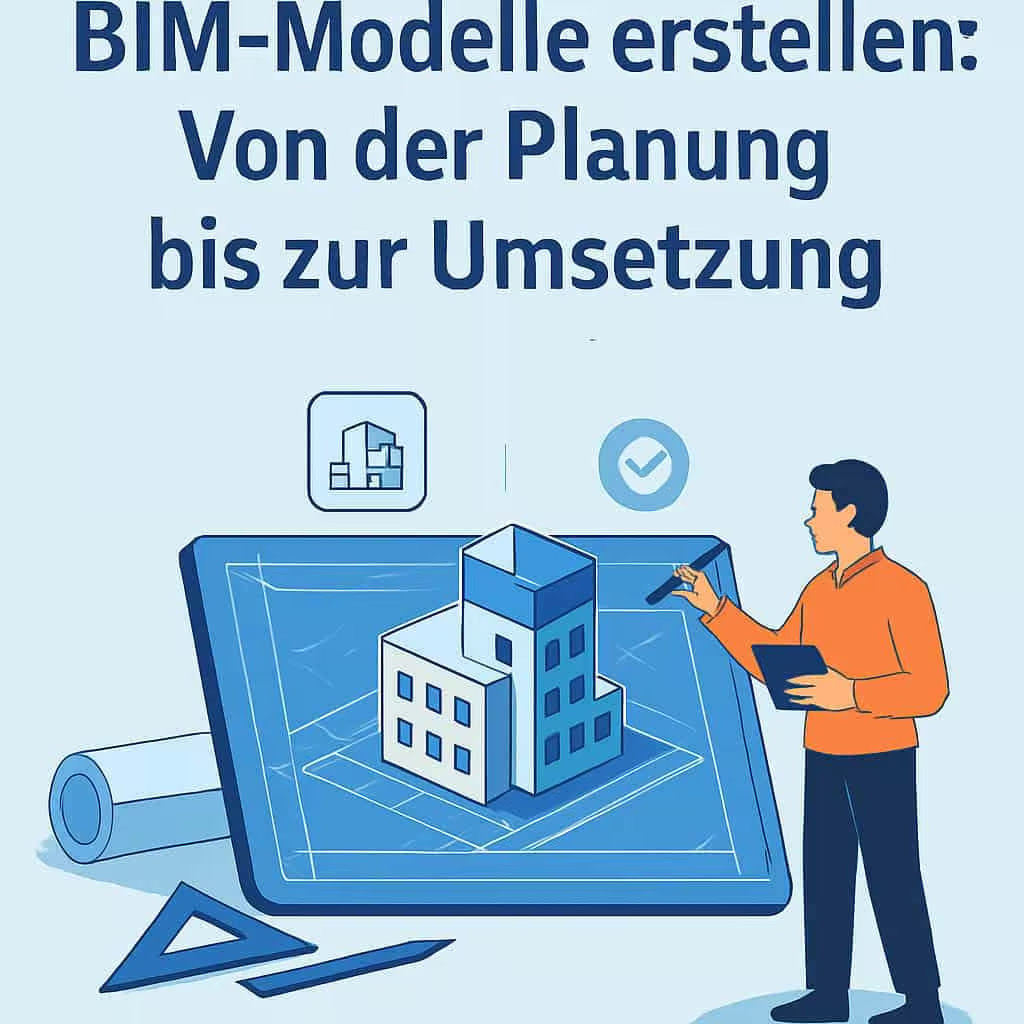
According to a study by McKinsey, the use of BIM technology can make the construction process up to 30% more efficient. This is a real game-changer (warning: a typical consultant buzzword, but we are at McKinsey) for the industry.
Another fascinating aspect of BIM modeling is digital twins. These virtual copies of real buildings enable continuous monitoring and maintenance in real-time. This allows defects to be identified and rectified early on – in line with proactive planning and execution.
Overall, BIM modeling not only provides an overview of the entire project but also deeper insights into specific details. This leads to improved decision-making and ultimately to higher quality construction projects.
What is a BIM model?
A BIM Model (Building Information Modeling) is far more than just a digital 3D model of a building. It is a comprehensive digital representation of all aspects of a structure, integrating information about geometry, materials, schedules, and costs. Imagine having not just a floor plan, but a living document that is updated throughout the entire lifecycle of a building.
The BIM Modeling revolutionizes the way architects, engineers, and contractors collaborate. By using BIM Software , all parties can work in a collaborative environment. This means fewer misunderstandings and faster project implementation.
Did you know? Studies show that projects with BIM technology can be completed up to 30% faster than traditional methods!
The Components of a BIM Model
- Geometric Data: The physical form of the building in 3D.
- Building Data: Information about materials, components, and their properties.
- Cost and Time Planning: Integrations for budgeting and time management.
- Collision checkManagement: Automated checking for conflicts between different trades.
- Use of digital twins: Real-time data integration for monitoring building operations.
One of the biggest advantages of BIM is the possibility of digital construction planning. Instead of relying on paper plans, architects and engineers can create and test their designs in a virtual environment. This not only fosters creativity but also reduces costly errors during the construction phase.
Application Examples for BIM Models
- Construction process optimization: Precise planning allows for better resource management.
- Quick adjustments: Design changes can be immediately reflected in the model.
- Collaboration between disciplines: Engineers and architects work seamlessly together on an integrated model.
Ultimately, a BIM model is not just a tool for the individual professional; it is a platform for all stakeholders in the construction industry. Implementing a well-thought-out BIM Strategy, coupled with the right building modeling tools, can significantly improve the entire process from planning to implementation.
In summary: A well-designed BIM model is like a car's navigation system – it guides you safely through complex decisions in the construction process and helps you reach your goal efficiently!
The Phases of BIM Modeling
The BIM Modeling is a dynamic process that unfolds in several phases. Each phase has its own goals and challenges to overcome. Here we take a look at the three main phases: the planning phase, the design phase, and the implementation phase.
1. Planning Phase
In the first phase, the foundation for the entire project is laid. This involves defining requirements and developing initial concepts. The use of BIM Software enables precise digital construction planning, where all relevant information is collected and structured.
2. Design Phase
Once planning is complete, the design phase begins. In this phase, the BIM Model is elaborated in detail. Architects use specialized architectural software to create a precise 3D model. Aspects such as sustainable construction and efficient space utilization also come into play here.
3. Implementation Phase
The final phase is the implementation of the project. Here, the digital model is translated into reality. With the help of 4D BIM simulations timelines can be visualized and processes optimized, resulting in effective construction process optimization.
Ensure all stakeholders are involved in the planning process from the outset. Ensure that all stakeholders communicate and collaborate effectively in the different phases of the project. Collaborative planning is crucial for the success of a BIM project.
BIM Software and Its Functions
Choosing the right BIM Software is crucial for the success of any construction project. These software solutions offer a variety of functions that make BIM Modeling more efficient and effective. Here are some of the most important functions you should consider when choosing your BIM software:
- 3D modeling in construction: The ability to create realistic 3D models helps architects and engineers visually represent complex designs.
- Clash detection: This feature identifies potential conflicts between different building elements before they occur in the real world.
- Digital construction planning: Integrated planning tools allow project teams to create schedules and manage resources efficiently.
- BIM documentation: Automated documentation features facilitate the creation of reports and plans throughout the entire construction process.
- 4D BIM Simulations: This function allows for the visualization of temporal sequences in a 3D model, which significantly improves project coordination.
- Collaborative Planning: Cloud-based solutions enable all project participants to collaborate and exchange information in real-time.
- Construction process optimization: Intelligent modeling solutions help analyze the entire construction process and identify optimization potential.
Ensure all stakeholders are involved in the planning process from the outset. Make sure your BIM software also supports CAD to BIM conversion. This greatly facilitates the transition from traditional CAD systems to modern BIM solutions!
Comparison of Different BIM Software Solutions
Not all BIM software solutions are created equal. Here is a brief comparison of some popular options on the market:
| BIM Software | Core functions | Target group |
|---|---|---|
| Revit | Clash detection, documentation, 3D modeling | Architects and engineers |
| BIMx | Real-time access to models, presentation tools | Construction managers and clients |
| Navisworks | Clash detection, scheduling (4D), project management | Construction project manager |
The choice of the right software can therefore have a significant impact on the success of your project. Use these features to improve your own BIM strategy and optimize your digital construction planning!
Collaborative Planning with BIM
Collaborative planning with a BIM Model is like a big team game where every player contributes their strengths to achieve the best result. In the world of BIM Modeling this means that various stakeholders – from architects and engineers to contractors – collaborate in a digital space to create an integrated building model.
Stakeholders and Their Roles
- Architects: They design the concept and create the initial drafts of the BIM model.
- Engineers: They add technical details, such as structural engineering and building services, and ensure everything functions smoothly.
- Contractors: They are responsible for implementation and bring practical experience to the planning.
- Site Managers: They coordinate all participants and monitor the project's progress.
Advantages of Collaboration in Virtual Construction Projects
Collaborative planning offers numerous advantages:
- Real-time Coordination: All participants have access to the latest information and can implement changes immediately.
- Clash detection: Problems are identified and resolved early before they can cause delays on the construction site.
- Efficient Resource Planning: Digital construction planning allows for better management of material and time resources.
- Sustainability: Optimized planning processes can also minimize the ecological footprint of a project.
Collaborative planning with BIM technology revolutionizes the construction process. It not only promotes efficiency but also the quality of results. Companies that use these methods report a significant reduction in costs and time spent!
Ultimately, collaborative planning with a BIM model is not just a trend – it is a necessity in the modern architecture and construction industry. If you are not yet part of this digital revolution, it is high time! Consider how you can develop your own BIM strategy to stay one step ahead of the competition.
BIM Strategy and Implementation in the Company
The development and implementation of a BIM Strategy is crucial for the successful use of BIM models within a company. A well-thought-out strategy allows you to fully leverage the benefits of BIM Modeling and significantly increase efficiency in the construction process.
Developing an Effective BIM Strategy
To develop an effective BIM strategy, companies should consider the following steps:
- Goal definition: Set clear goals, such as improving collaboration or reducing costs.
- Needs analysis: Determine your company's specific requirements and which BIM software is best suited.
- Training and further education: Invest in training for employees to ensure everyone involved is familiar with BIM technology.
- Promote Collaboration: Create an environment that supports collaborative planning and facilitates the exchange of information between the various stakeholders.
Steps to Implement BIM in Construction Management
Once the strategy is defined, it's time for implementation. Here are some steps for effective implementation:
- Select BIM software: Select suitable BIM Softwarethat meets your requirements and allows for seamless integration into existing processes.
- Ensure data integration: Ensure that all relevant data from existing systems can be integrated into the new BIM system.
- Conduct pilot projects: Start with smaller projects to gain experience and adapt processes before moving on to larger projects.
- Continuous Improvement: Use feedback from projects for continuous optimization of your BIM processes and strategies.
Ensure all stakeholders are involved in the planning process from the outset. Clear documentation of all processes and results is crucial for the long-term success of your BIM implementation. This not only helps in tracking progress but also in training new employees.
Ultimately, the successful implementation of a BIM strategy is an ongoing process. It requires commitment, adaptability, and a clear vision for the future of construction with digital twins. With the right strategy, companies can not only increase their efficiency but also pursue innovative approaches such as sustainable construction with BIM technologies.
Use of Digital Twins in Construction
Digital twins are the new black gold in construction. They make it possible to BIM Model not only create but also manage and optimize. By integrating real data into a virtual model, architects and engineers can react to changes in real-time and increase the efficiency of the entire construction process.
But what exactly are digital twins? Imagine having a digital copy of a building that combines all physical properties and operational data in an interactive 3D model. This technology is not only useful for planning but also for the operation and maintenance of buildings. Here are some of the key benefits:
- Real-time updates: Through sensors and IoT technologies, digital twins can be constantly updated, enabling precise monitoring of construction progress.
- Optimization of resources: With the help of BIM Software resources can be planned and deployed more efficiently.
- Clash detection: Digital twins facilitate the identification of conflicts in the design before they occur in the real world, thus avoiding costly rework.
- Operations management: After completion, the model can be used to manage the building by serving as a central platform for all relevant data.
Ensure all stakeholders are involved in the planning process from the outset. To fully exploit the potential of digital twins, companies should develop a comprehensive BIM Strategy strategy that encompasses both planning and operation.
One of the biggest misconceptions about digital twins is that they are only useful for large projects. In fact, smaller construction projects also benefit enormously from this technology. Whether it's a single-family home or an office building – with the right software, all projects can be designed more efficiently.
Application Examples
Let's take a large infrastructure project, for example, like the expansion of an airport. Here, digital twins can help to play through different scenarios – for instance, how changes in the schedule or unexpected weather conditions might affect construction. With precise 4D BIM simulation such scenarios can be realistically represented and analyzed.
In short: Digital twins are revolutionizing the construction industry! They not only offer a clear overview of the current status of a project but also enable proactive planning for future challenges. So, anyone who is still hesitating should urgently consider how this technology can be integrated into their own processes.
Clash Detection and Defect Tracking in BIM Models
The Clash detection in BIM models is like the digital chess game of construction planning. This ensures that all elements of a structure work together harmoniously without getting in each other's way. One can imagine that there is nothing worse than discovering during construction that the water pipes run through the load-bearing walls – a classic case of "Oops, we should have clarified that beforehand!"
By using BIM Software planners and engineers can identify these problems early on. The software simulates the different components of a building in a 3D environment and identifies potential conflicts.
How Does Clash Detection Work?
Clash detection typically occurs in several steps:
- Data Integration: All relevant data is integrated into the BIM model from various sources.
- Clash detection: The software performs an analysis and identifies collisions between different trades.
- Reporting: The results are summarized in clear reports, so all stakeholders are informed.
- Solution Finding: Solutions are developed within the team to resolve the identified problems.
Defect Tracking via BIM Platforms
Defect tracking is also crucial. This is the process of documenting and tracking defects throughout the entire construction phase. Digital platforms can be used to quickly record defects and forward them to the responsible parties. This not only ensures better communication among project participants but also more efficient problem-solving.
BIM allows users to mark defects directly in the model and add comments. It's like a digital sticky note for architects and engineers! This way, everyone stays up-to-date on the status of defect rectification.
Advantages of Clash Detection and Defect Tracking
- Cost savings: Avoidance of expensive rework through early problem detection.
- Time Savings: Faster decision-making thanks to clear communication about defects.
- Quality improvement: Higher quality of the final product through systematic error prevention.
Ultimately, the combination of clash detection and defect tracking is an essential part of successful BIM planning. It not only ensures a smooth process during construction but also contributes to long-term quality assurance – because sustainable construction begins in the planning phase!
Construction Process Optimization Through Intelligent Modeling Solutions in Construction
The construction process optimization is a crucial aspect for increasing efficiency and quality in construction. Through the use of intelligent modeling solutions, especially the BIM Modeling, all phases of a construction project can be significantly improved.
Imagine you are the director of a major film. Without a good script and precise planning, the final product will likely be chaotic and disorganized. The same applies to construction: solid BIM planning ensures that all parties involved are on the same page and misunderstandings are avoided.
Benefits of Intelligent Modeling Solutions
- Clash detection: With BIM software, potential conflicts between different trades can be identified and resolved as early as the planning phase.
- Automated construction documentation: By using BIM systems, documentation is automated, saving time and resources.
- Sustainability: Intelligent modeling solutions enable more precise planning, leading to more sustainable construction methods.
- Cost Transparency: Digital construction planning offers a clear overview of costs and resources, minimizing budget overruns.
Application Examples
One of the best examples of effective BIM use in construction is the 'One World Trade Center' project in New York. Here, the use of 4D BIM simulations not only optimized the schedule but also significantly increased safety during construction.
Ensure all stakeholders are involved in the planning process from the outset. When selecting BIM software, companies should ensure that it supports integrated building models to guarantee seamless digital project coordination.
Implementation Challenges
Despite all the advantages, there are also challenges in implementing intelligent modeling solutions. A common hurdle is resistance to change within the company. Many employees are accustomed to traditional ways of working and require training to familiarize themselves with new technologies.
Future Outlook
The future of construction clearly lies in digital transformation. With advancing technologies such as artificial intelligence and machine learning, the optimization of construction processes will become even more efficient. The integration of digital twins will also help buildings to be better managed after their completion.
Conclusion: The Future of Construction with BIM Technology
The future of construction undeniably lies in BIM technology. With the advancing BIM Modeling the entire construction process is being revolutionized. From planning through execution to maintenance – everything is made more efficient through digital twins and integrated building models.
A decisive advantage of BIM models is the capability for collaborative planning. Architects, engineers, and contractors can access the same data in real-time, which reduces misunderstandings and increases efficiency. Imagine all parties working on a large puzzle, where everyone sees the picture in real-time and works on their part. The result? A smoother construction process.
Key Takeaways:
- BIM Software enables more precise planning and implementation.
- Digital Twin Models offer a realistic representation of the project throughout its entire lifecycle.
- 4D BIM simulations help with temporal planning and conflict identification before construction begins.
Even though many companies are still hesitant to take the leap to full BIM integration, it is becoming increasingly clear that those who do have a clear competitive advantage. The ability for automated construction documentation through BIM systems and the easy execution of clash detection in BIM models are just a few examples of the benefits of this technology.
Last but not least, the topic of sustainability cannot be neglected. With the right approaches, BIM can help to use resources more efficiently and promote sustainable construction. Through precise planning tools, materials can be better utilized and waste minimized – a win-win for everyone involved!
In summary, the future of construction with BIM technology is not just a vision – it is already a reality. Those who invest now and equip themselves with solid BIM Strategy will benefit in the long run. So grab your architectural planning software and get ready for the digital revolution in construction...
