
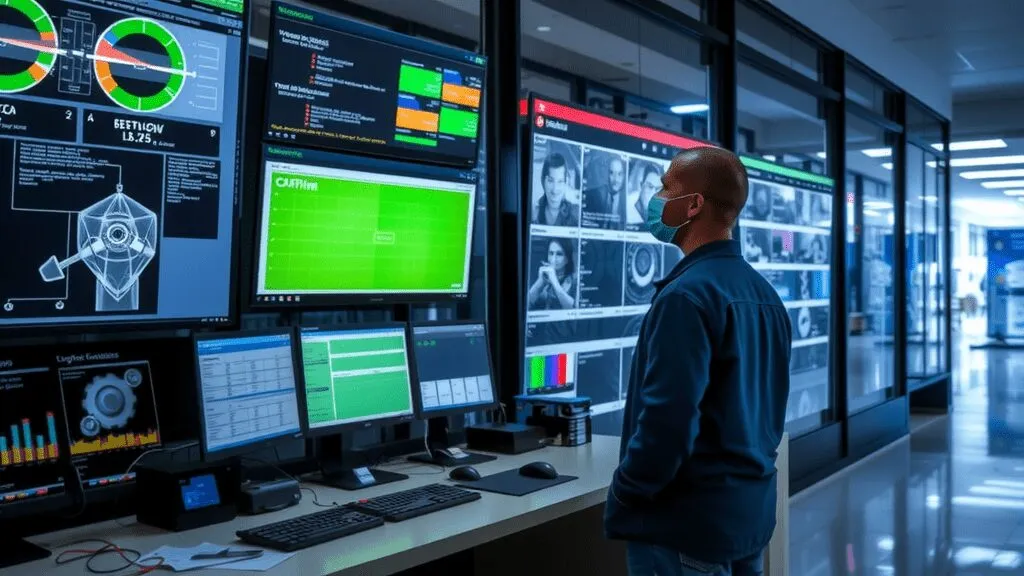
The maintenance of buildings and facilities is an essential part of facility management. It encompasses all technical, administrative, and organizational measures to maintain or restore the functional condition of real estate and technical equipment. Key tasks include preventive maintenance, inspection, repair, and improvement.
The importance of maintenance extends to various sectors such as industry, commerce, and public institutions. It significantly contributes to value preservation, operational safety, and energy efficiency. Modern maintenance concepts increasingly consider aspects of sustainability and environmental protection.
Effective maintenance management requires in-depth knowledge in areas such as building technology, plant maintenance, safety regulations, and cost management. Digitalization enables the use of computer-aided maintenance management systems (CMMS) and predictive maintenance through sensor technology and data analysis. Challenges in maintenance include a shortage of skilled workers, increasing complexity of technical systems, and the need to optimize costs while ensuring high quality standards.
Continuous training of maintenance personnel and adaptation to new technologies are crucial for a future-proof maintenance strategy.
Correct determination of VAT liability
- The maintenance of buildings and facilities requires careful planning and regular monitoring.
- Technological advancements such as IoT and artificial intelligence have improved the efficiency of maintenance.
- Budgeting and resource management are crucial for effective maintenance activities.
- Safety and environmental requirements must always be observed in maintenance to avoid accidents and environmental damage.
- The shortage of skilled workers and the increasing qualification requirements pose a challenge for the maintenance industry.
Technological Advancements and Their Impact on Maintenance
Changes due to new technologies
Technological advancements have had a significant impact on the maintenance of buildings and facilities in recent years. New technologies such as the Internet of Things (IoT), artificial intelligence (AI), big data analysis, robotics, and 3D printing have changed the way maintenance is carried out. IoT enables the networking of devices and systems, allowing for continuous monitoring and real-time diagnosis of problems.
Advantages of new technologies
AI-based systems can analyze large amounts of data to create predictive maintenance models and forecast failures. Robotics and 3D printing can improve the efficiency of repair and maintenance work. These technological advancements have made maintenance more effective and efficient by reducing downtime, extending the lifespan of assets, and lowering costs.
Challenges and requirements
However, they also require new skills and qualifications from employees to handle complex technologies. Integrating new technologies into existing maintenance processes requires careful planning and employee training to ensure they can fully leverage the capabilities of the new systems.
Budgeting and Resource Management in Maintenance
Budgeting and resource management are crucial aspects of building and facility maintenance. Planning and allocating financial resources for maintenance work, repairs, and upgrades is essential to ensure that facilities function properly and retain their value in the long term. Effective budgeting requires an accurate analysis of maintenance needs, prioritization of measures, and a realistic assessment of costs.
Furthermore, resource management is an important aspect of maintenance. This includes not only financial resources but also personnel, materials, tools, and equipment. Effective planning and organization of these resources are crucial to ensure that maintenance work can be carried out promptly and efficiently.
Optimizing resource utilization can help reduce costs and increase productivity. Budgeting and resource management are closely related to other aspects of maintenance, such as technological advancements, safety and environmental requirements, and the shortage of skilled workers. A holistic approach to maintenance requires careful consideration of all these aspects to develop an effective and efficient maintenance strategy.
Safety and Environmental Requirements in Maintenance
Safety and environmental protection are central concerns in the maintenance of buildings and facilities. Carrying out maintenance work, repairs, and upgrades poses potential risks to employees, facilities, and the environment. Therefore, it is crucial that safety and environmental requirements are considered in all maintenance processes.
Compliance with safety regulations and standards is essential to prevent accidents and ensure the well-being of employees. This requires thorough risk analysis, employee training, appropriate personal protective equipment (PPE), as well as clear procedural and emergency plans. Furthermore, environmental aspects must also be considered to minimize negative impacts on the environment.
This can include the proper disposal of waste, the use of environmentally friendly materials and technologies, and measures for energy efficiency. Safety and environmental requirements pose a challenge for maintenance, as they can incur additional costs. Nevertheless, they are essential to minimize the risk of accidents, comply with legal regulations, and ensure sustainable resource management.
A holistic approach to maintenance therefore requires careful consideration of safety and environmental aspects in all decision-making processes.
Shortage of skilled workers and qualification requirements in maintenance
The shortage of skilled workers is a growing problem in the maintenance industry. An aging workforce, a lack of qualified labor, and technological change have led to a bottleneck in skilled personnel. This presents companies with the challenge of finding and retaining qualified employees to meet their maintenance needs.
The increasing demands for qualifications in maintenance require continuous training and development of employees. New technologies require new skills, such as knowledge in IoT systems, data analysis, or robotics. Furthermore, soft skills like teamwork, problem-solving abilities, and communication skills are also crucial for successful maintenance.
To counteract the shortage of skilled workers, companies must invest in training programs to qualify their employees. Additionally, they can also rely on external resources such as temporary staff or external service providers to cover their maintenance needs. Strategic workforce planning is essential to meet the long-term demand for qualified employees.
Effects of aging and wear and tear on maintenance
Proactive maintenance strategy
Dealing with aging and wear requires a proactive maintenance strategy to identify and address potential problems early on. Predictive maintenance models can help predict failures and take preventive measures. Furthermore, modernizations or upgrades can help slow down wear or extend the lifespan of assets.
Impact on maintenance
The effects of aging and wear on maintenance are diverse and require careful planning and execution of measures. A holistic approach to maintenance therefore also considers long-term aspects such as lifecycle cost analyses or investment planning.
Long-term aspects
A comprehensive maintenance strategy must also consider long-term aspects to maintain the reliability and efficiency of buildings and assets. This includes planning and implementing measures that minimize wear and maximize the lifespan of assets.
Digitalization and automation in maintenance
Digitalization and automation have changed the way maintenance of buildings and assets is carried out. New technologies such as the Internet of Things (IoT), artificial intelligence (AI), or robotics enable continuous monitoring of assets, predictive maintenance models, or automated repair processes. Digitalization allows for better networking of devices and systems as well as more effective data collection and analysis.
This can help predict failures or optimize maintenance work. Furthermore, automated systems can also help simplify or speed up routine tasks. Digitalization and automation offer many benefits for maintenance, such as reduced downtime, improved efficiency, or lower costs.
At the same time, however, they also require new skills from employees and investments in new technologies. Careful planning and implementation of new systems are therefore crucial for the success of digitized maintenance processes. Overall, the maintenance of buildings and assets has many facets that must be carefully considered.
From technological advancements to budgeting and safety – a holistic approach to maintenance is crucial for the long-term success of property and machine operators.
