Administration

CAFM-Blog.de | Improve Your Customer Relationships with SAP CRM

Improve Your Customer Relationships with SAP CRM

Customer relationships are a key factor for business success. Well-maintained customer relationships demonstrably lead to higher customer satisfaction, stronger customer loyalty, and increased revenue. By building long-term relationships, companies can gain customer trust and encourage repeat purchases. Positive customer relationships also promote recommendations, which contributes to acquiring new customers. Therefore, implementing effective strategies for managing and maintaining customer relationships is essential for companies. A proven tool for improving customer relationships is the [...]

Improve Your Customer Relationships with SAP CRM Read more »

CAFM-Blog.de | Data Management and Information Models: Digital Twins

Data Management and Information Models: Digital Twins

Data management and information models are central elements in the modern digital landscape. The exponentially growing amount of data generated by companies and organizations requires efficient strategies for data management, storage, and analysis. Information models function as structured representations of data and information, enabling the capture and understanding of complex relationships and connections between different data elements. Data management includes the systematic organization, storage, and management of data to ensure effective use. This

Data Management and Information Models: Digital Twins Read more »

CAFM-Blog.de | Relevant Technologies and Applications of BIM: An Overview

Relevant Technologies and Applications of BIM: An Overview

Building Information Modeling (BIM) is an innovative method for the digital representation and management of construction projects. It is a three-dimensional, data-rich model that captures all relevant information of a building or infrastructure throughout its entire lifecycle. BIM integrates geometric, technical, functional, and economic data into a single digital model. The application of BIM enables improved collaboration among all project stakeholders, including architects, engineers, contractors, and facility managers. Through

Relevant Technologies and Applications of BIM: An Overview Read more »

CAFM-Blog.de | Legal Aspects of BIM: What You Should Know

Legal Aspects of BIM: What You Should Know

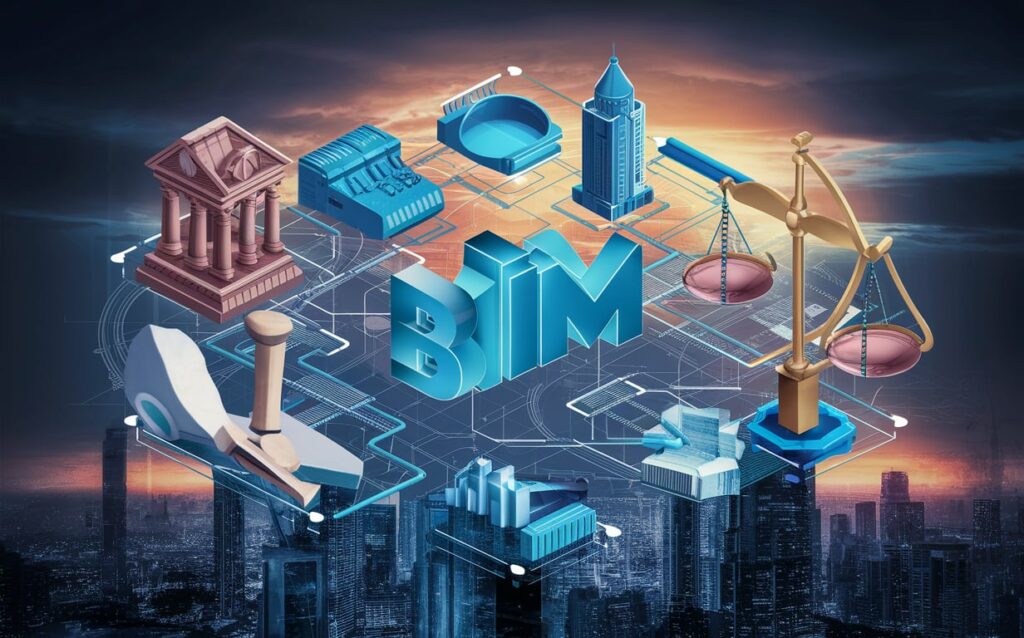
Building Information Modeling (BIM) is a digital method for planning, creating, and managing buildings. This technology enables the creation of a virtual 3D model containing all relevant information about a building. The BIM model serves as a central source of information for all parties involved in the construction project and covers the entire lifecycle of a building, from conception through construction to operation and demolition. The implementation of BIM brings various legal

Legal Aspects of BIM: What You Should Know Read more »

CAFM-Blog.de | Real Estate Profit Center Accounting and Economic Efficiency in FM

Real Estate Profit Center Accounting and Economic Efficiency in FM

Real estate profit center accounting is a central tool in facility management for evaluating the economic efficiency of properties. It enables a transparent presentation of a property's costs and revenues, facilitating informed decisions. The calculation considers various types of costs, including maintenance, operating, administrative, and financing costs. These are contrasted with revenues from rental income, ancillary cost settlements, and other sources. As a controlling instrument, real estate profit center accounting serves to analyze and optimize the profitability of properties. In an environment of rising

Real Estate Profit Center Accounting and Economic Efficiency in FM Read more »

CAFM-Blog.de | CAFM Software: Digital Transformation in Building Management

Efficient Property Management: Tips and Tricks

Efficient property management is essential for the optimal operation of residential and commercial properties. It coordinates all aspects of real estate management, including maintenance, repairs, tenant communication, and budgeting. Professional management preserves property value and increases tenant satisfaction. Furthermore, it ensures compliance with legal and regulatory requirements and minimizes potential liability risks. Effective property management is based on careful planning and organization. Its tasks include managing rental agreements and monitoring incoming payments.

Efficient Property Management: Tips and Tricks Read more »

CAFM-Blog.de | Service-Oriented Architecture (SOA) - The future of enterprise integration

Service-Oriented Architecture (SOA) – The Future of Enterprise Integration

Service-Oriented Architecture (SOA) is an architectural pattern in software development based on the provision of services. SOA aims to structure applications as modular, reusable, and loosely coupled services. These services communicate with each other via standardized protocols and interfaces. Key characteristics of SOA are: Modularity: Functionalities are divided into independent services. Interoperability: Services can work together across platforms and technologies. Reusability: Services can be used in various applications and contexts. Scalability: Individual

Service-Oriented Architecture (SOA) – The Future of Enterprise Integration Read more »

CAFM-Blog.de | Strategies and use cases of BIM in FM

AIA and BAP: Requirements for Effective BIM Execution

The American Institute of Architects (AIA) and the Building Owners and Managers Association International (BOMA) have jointly developed the AIA BIM Protocol (AIA E202-2008) to standardize the use of Building Information Modeling (BIM) in construction projects. The AIA BIM Protocol is a guide that defines the responsibilities and requirements for the use of BIM in construction projects. It defines the processes required for the creation, management, and use of BIM models

AIA and BAP: Requirements for Effective BIM Execution Read more »

CAFM-Blog.de | Property Management: Tips and Tricks

BIM: Processes, Roles, and Responsibilities

Building Information Modeling (BIM) is an advanced approach to the planning, construction, and management of construction projects. It is a digital representation of the physical and functional aspects of a building. BIM enables stakeholders to capture, manage, and exchange all relevant information about a construction project in a central model. This includes not only geometric data but also information about materials, costs, schedules, and much more. Through the

BIM: Processes, Roles, and Responsibilities Read more »

CAFM-Blog.de | Strategies and use cases of BIM in FM

Strategies and Use Cases of BIM in FM

Building Information Modeling (BIM) is an advanced method that allows building data to be captured, managed, and analyzed throughout the entire lifecycle of a building. In Facility Management (FM), BIM plays an increasingly important role as it improves the efficiency and effectiveness of managing buildings and facilities. BIM in FM enables facility managers to capture all relevant information about a building in a digital model and

Strategies and Use Cases of BIM in FM Read more »

CAFM-Blog.de | Efficient Document Management System (DMS) for Companies

Efficient Document Management System (DMS) for Companies

A Document Management System (DMS) is a software solution that supports companies in efficiently managing, organizing, and archiving their documents. A DMS enables companies to centrally store and manage their paper-based and digital documents. Various types of documents such as text documents, spreadsheets, presentations, emails, images, and videos can be stored in a DMS. By using a DMS, companies can quickly and easily find, edit, and

Efficient Document Management System (DMS) for Companies Read more »

CAFM-Blog.de | Property Management: Tips and Tricks

Property Management: Tips and Tricks

Property management plays a crucial role in managing real estate and land. It encompasses a variety of tasks that ensure the property is managed properly and retains its value. These include renting out properties, maintaining and repairing buildings, complying with regulations and laws, accounting, and communicating with tenants and owners. Effective property management can help increase the value of the property,

Property Management: Tips and Tricks Read more »

CAFM-Blog.de | BIM Formats Explained: What You Need to Know About IFC and COBie

BIM Formats Explained: What You Need to Know About IFC and COBie

If you work in the architecture, engineering, or construction industry, you may have encountered terms like BIM, IFC, and COBie. But what do these acronyms mean and why are they important for building design and construction? This article explains the basics of BIM formats, especially IFC and COBie. We will discuss their purposes, advantages, and limitations, and how they work together in BIM projects. Gain comprehensive

BIM Formats Explained: What You Need to Know About IFC and COBie Read more »

CAFM-Blog.de | Basics of BIM Implementation: Roadmap

BIM Implementation Fundamentals: Roadmap

The implementation of Building Information Modeling (BIM) is an important step for companies operating in the construction industry. BIM is an innovative method that allows all relevant information about a construction project to be digitally captured, managed, and shared. However, the implementation of BIM requires careful planning and execution to fully leverage the benefits of this technology. In this article, we will examine the various aspects of BIM implementation more closely.

BIM Implementation Fundamentals: Roadmap Read more »

CAFM-Blog.de | Facility Management vs. Building Management: Typical Characteristics Compared

Facility Management vs. Building Management: Typical Characteristics in Comparison

Facility Management is a holistic management approach aimed at optimizing the efficiency and productivity of buildings and facilities. This includes the management and maintenance of buildings, infrastructure, equipment, and services to ensure they meet user needs. The areas of responsibility in Facility Management include planning, construction, maintenance, cleaning, security, energy supply, environmental management, and property management. The goal is to reduce operating costs

Facility Management vs. Building Management: Typical Characteristics in Comparison Read more »

Scroll to Top