Kubernetes

CAFM-Blog.de | The Future of Cloud Technology: Innovation and Growth

The future of cloud strategies

Cloud strategies are a central component of modern corporate IT. They enable companies to optimize their IT infrastructure, reduce costs, and react more flexibly to market demands. By using cloud services, companies can improve their agility and scalability, as well as increase their operational efficiency. Cloud technology offers access to innovative solutions such as artificial intelligence, machine learning, and big data analytics. These technologies enable companies to remain competitive and unlock new business opportunities. [...]

The future of cloud strategies Read more »
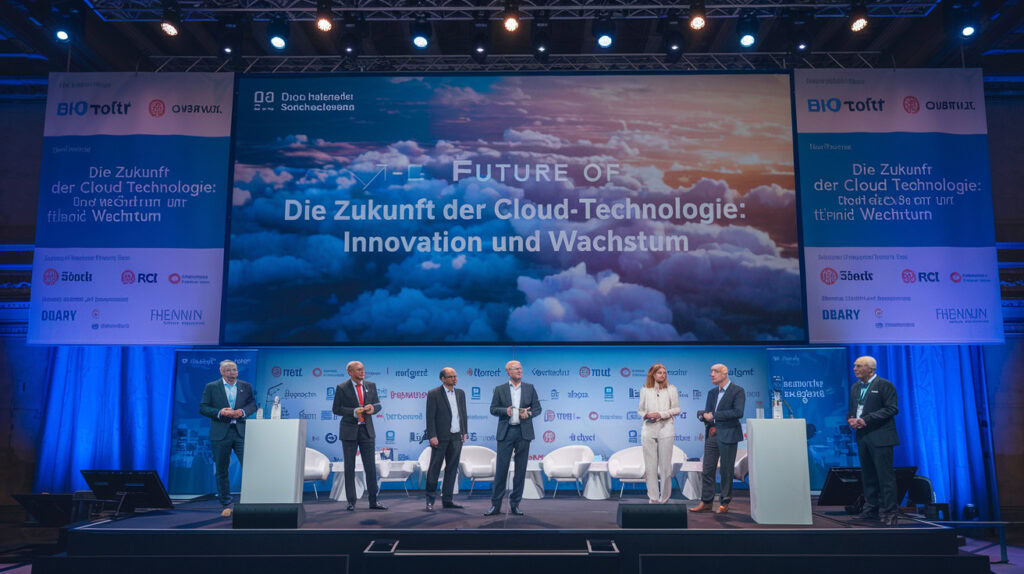
CAFM-Blog.de | The Future of Cloud Technology: Innovation and Growth

The Future of Cloud Technology: Innovation and Growth

Cloud technology has evolved significantly since its beginnings in the 1960s. Originally, it was based on the concept of "time-sharing," where multiple users could access a central computer simultaneously. In the 1990s, the development of virtual machines led to the ability to run multiple operating systems on a single physical computer, forming the basis for modern cloud infrastructure. Today, cloud technology encompasses a wide range of services, including Infrastructure as

The Future of Cloud Technology: Innovation and Growth Read more »

CAFM-Blog.de | What are Containers in Software Development?

What are containers in software development?

Containerization is a technology for isolating applications and their dependencies in standardized units called containers. This method enables consistent deployment and scaling of software regardless of the underlying infrastructure. Containers are lightweight, portable, and autonomous units that ensure fast and uniform deployment of applications in different environments. The advantages of containerization include: 1. Consistent execution environment: Applications run in a standardized environment, independent of the host infrastructure. 2.

What are containers in software development? Read more »

CAFM-Blog.de | The Future with Cloud-Native Applications

The Future with Cloud-Native Applications

Cloud-native applications are software solutions specifically designed for the cloud that optimally leverage the capabilities of cloud infrastructure. They are designed for operation in a dynamic and scalable environment and are characterized by high flexibility and agility. Unlike traditional applications developed for on-premise data centers, cloud-native applications are designed to fully exploit the benefits of cloud services such as automatic scaling, high availability, and elastic resource utilization. The development of cloud-native applications is often based

The Future with Cloud-Native Applications Read more »

CAFM-Blog.de | Container Technologies: Efficiency and Flexibility in Application

Container Technologies: Efficiency and Flexibility in Application

Container technologies have undergone significant development in recent years. These technologies enable the execution of applications and their dependencies in isolated environments, leading to improved portability and scalability. Compared to traditional virtual machines, containers share the host's operating system, reducing resource requirements. This characteristic makes them particularly suitable for the use of microservices and the orchestration of applications in cloud environments. Docker, one of the best-known container platforms,

Container Technologies: Efficiency and Flexibility in Application Read more »

CAFM-Blog.de | The Advantages of Kubernetes for Companies

The Benefits of Kubernetes for Businesses

Kubernetes is an open-source platform for orchestrating container applications. It was originally developed by Google and is now managed by the Cloud Native Computing Foundation. Kubernetes automates the deployment, scaling, and management of containerized applications across various infrastructures. The platform offers numerous features, including: Automatic scaling: Adjusting resources based on workload Load balancing: Distributing network traffic across multiple instances Self-healing: Automatically restarting or replacing faulty containers Rollout and rollback:

The Benefits of Kubernetes for Businesses Read more »

Scroll to Top