costs

CAFM-Blog.de | Legal Aspects of BIM: What You Should Know

BIM Strategy for Public Administration: A Guide

The introduction of Building Information Modeling (BIM) in public administration is a crucial advancement for more efficient and sustainable planning of construction and infrastructure projects. BIM is a digital method for comprehensive capture, management, and exchange of all project-relevant information. This includes geometric data as well as details on materials, costs, and schedules. Due to their central role in the planning and implementation of infrastructure projects, it is essential for public administration to leverage the potential […]

BIM Strategy for Public Administration: A Guide Read more »

CAFM-Blog.de | The best investment properties: How to invest smartly

The Best Investment Properties: How to Invest Smartly

Investment properties are assets acquired primarily for the purpose of generating rental income and capital appreciation. They offer investors several potential advantages: Regular Income: Through rental, investment properties generate continuous cash flows, typically in the form of monthly or quarterly rental payments. Potential for Appreciation: Real estate can increase in value over the long term, which can lead to capital gains upon sale. Tax Advantages: Property owners can claim various tax depreciation and deductions, which can reduce the overall tax burden. Inflation Hedge: Rental prices and

The Best Investment Properties: How to Invest Smartly Read more »

CAFM-Blog.de | Comparison of Windows and Linux Servers: Which is Better?

Comparison of Windows and Linux Servers: Which is Better?

Windows and Linux are two widely used operating systems for server applications. Windows Server, developed by Microsoft, is specifically designed for enterprise networks and offers features such as Active Directory for central user management, Remote Desktop Services for remote access, and extensive security and management tools. Linux is an open-source operating system based on Unix, characterized by high stability, security, and adaptability. It is frequently used in web servers, database servers, and other enterprise infrastructures. Windows Server is characterized by

Comparison of Windows and Linux Servers: Which is Better? Read more »

CAFM-Blog.de | Benefits of Cloud Technology: Efficiency and Flexibility

Benefits of Cloud Technology: Efficiency and Flexibility

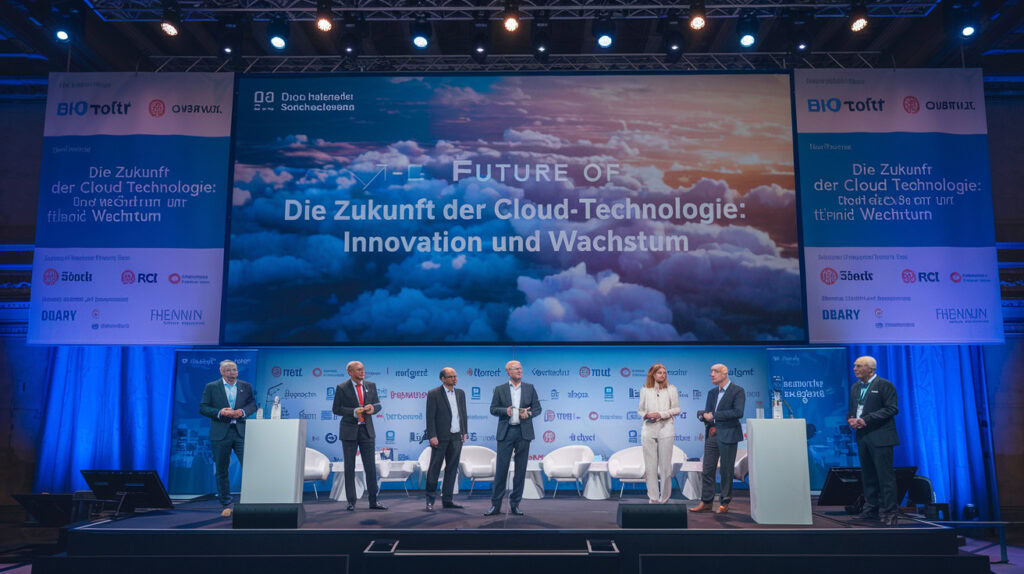
Cloud technology has rapidly evolved in recent years and has become an essential element in the corporate landscape. Cloud computing enables organizations to store and use their data and applications over the internet, rather than relying on local servers or individual devices. This technology offers numerous advantages, including cost efficiency, flexibility, scalability, and enhanced security standards. Cloud technology has fundamentally changed the way companies operate and is expected to continue to do so in the future

Benefits of Cloud Technology: Efficiency and Flexibility Read more »

CAFM-Blog.de | Fix and Flip Real Estate: Renovate and Sell Successfully

Fix and Flip Real Estate: Renovate and Sell Successfully

The property search is a complex process that requires careful planning and research. First, investors should define their specific requirements regarding location, size, amenities, and property type. A thorough market analysis of the target region is essential for making informed decisions. Real estate agents and online platforms can be valuable resources for property searches. When selecting a property, it is important to consider long-term perspectives. This includes assessing future developments in the neighborhood, infrastructure projects, and

Fix and Flip Real Estate: Renovate and Sell Successfully Read more »

CAFM-Blog.de | Efficient Urban Processes with CAFM Integration

Efficient Facility Services with CAFM Software

Facility services are an integral part of modern business management. They encompass a wide range of services aimed at ensuring the functionality, safety, and efficiency of buildings and work environments. Core tasks include building management, cleaning, security, catering, and waste disposal. Outsourcing these services to specialized providers allows companies to focus on their core competencies. At the same time, it ensures that the infrastructure is professionally maintained and operated. This contributes to

Efficient Facility Services with CAFM Software Read more »

CAFM-Blog.de | Efficient Urban Processes with CAFM Integration

Efficient Urban Processes with CAFM Integration

Computer Aided Facility Management (CAFM) is an integrated management system to support the planning, administration, and control of buildings and technical facilities. It combines database technology with CAD systems and other software applications to optimize facility management processes. CAFM systems capture and manage extensive data on buildings, facilities, areas, inventory, and processes. Typical functions include: – Space management and room planning – Maintenance and upkeep – Energy management – Cleaning management – Relocation management – Contract management – Cost controlling Through the

Efficient Urban Processes with CAFM Integration Read more »

CAFM-Blog.de | Efficient Urban Processes with CAFM Integration

Digital Transformation: Digitization Strategies in German Companies

Digital transformation has become a central topic for companies in Germany in recent years. In an increasingly interconnected world where technological innovations are advancing at a rapid pace, it is essential for companies to adapt to these changes. Digital transformation encompasses not only the implementation of new technologies but also the fundamental redesign of business models, processes, and corporate culture. For German companies, which are traditionally strong in their

Digital Transformation: Digitization Strategies in German Companies Read more »

CAFM-Blog.de | Challenges in BIM Implementation in Administration

Why CAFM Software Isn't Worth It (Or Is It)?

CAFM software (Computer Aided Facility Management) is a specialized software solution for facility management. It supports facility managers in the efficient management of resources such as buildings, plants, real estate, and workplaces. The software offers various functions, including maintenance management, space planning, inventory management, and energy management. CAFM systems are typically modular, giving companies the flexibility to implement only the modules relevant to their needs. This software is an essential tool for facility managers because it

Why CAFM Software Isn't Worth It (Or Is It)? Read more »

CAFM-Blog.de | Challenges in BIM Implementation in Administration

Challenges in BIM adoption in administration

The implementation of Building Information Modeling (BIM) in public administration presents a complex challenge that requires in-depth knowledge of the technology and its application possibilities. BIM is a digital representation of the physical and functional characteristics of a building. This method enables comprehensive planning, control, and management of construction projects throughout their entire lifecycle. In the context of public administration, this includes the phases of planning, construction, operation, and

Challenges in BIM adoption in administration Read more »

CAFM-Blog.de | Modernizing Administration with CAFM

Administrative Modernization with CAFM

Computer Aided Facility Management (CAFM) is an integrated software solution for managing real estate and technical facilities. It includes various functions such as resource management, maintenance planning, space management, and operating cost recording. CAFM systems enable centralized data management and process optimization in facility management. The use of CAFM software leads to simplification and increased efficiency of administrative processes. This results in time and cost savings as well as increased productivity. Through systematic planning of maintenance and upkeep measures, availability can also be improved

Administrative Modernization with CAFM Read more »

CAFM-Blog.de | The Future with Edge Computing

The Future with Edge Computing

Edge computing is a concept in information technology that moves data processing and analysis closer to the location where the data is generated. Instead of sending data to remote data centers, processing takes place directly at the edge of the network, close to the end devices or sensors. This enables faster data processing and reduces the volume of data to be transmitted. This technology is particularly important in areas that require real-time processing and low latency, such as Industry 4.0, Internet of Things

The Future with Edge Computing Read more »

CAFM-Blog.de | Sustainable Corporate Goals: ESG in Focus

Sustainable Corporate Goals: ESG in Focus

ESG stands for Environmental, Social, and Governance and refers to the three central areas of sustainability in companies. These factors play a crucial role in the development and implementation of sustainable corporate goals. Companies that consider ESG criteria integrate ecological and social aspects into their business strategy and focus on responsible corporate governance. This enables them to create long-term value, minimize risks, and improve stakeholder relationships. ESG criteria serve as a framework for

Sustainable Corporate Goals: ESG in Focus Read more »

CAFM-Blog.de | The Power of Big Data: How Data Shapes the Future

The Power of Big Data: How Data Shapes the Future

Big Data refers to the processing and analysis of data volumes that cannot be managed by conventional data processing methods due to their size, complexity, and growth rate. This data comes from various sources such as social media, business transactions, the Internet of Things (IoT), and industrial systems. Big Data is often characterized by the "3 Vs": Volume (data quantity), Velocity (speed of data generation and processing), and Variety (diversity of data formats). The analysis of Big Data enables companies

The Power of Big Data: How Data Shapes the Future Read more »

CAFM-Blog.de | Hyper-automation for FM Service Providers

Hyper-automation for FM service providers

Hyper-automation is a significant concept in Facility Management (FM) that has gained increasing relevance in recent years. This concept aims to optimize processes, reduce costs, and increase efficiency. By using hyper-automation, FM service providers can automate recurring tasks and deploy their resources more effectively. The implementation of hyper-automation enables FM companies to react faster to changing requirements and improve service quality for customers.

Hyper-automation for FM service providers Read more »

Scroll to Top