
maintenance

CAFM-Blog.de | GEFMA Guidelines: Practical Guide to FM Standards and Implementation

GEFMA Guidelines: Practical Guide for FM Standards and Implementation

Ever since I've been involved in CAFM projects, the same question keeps coming up: How do I truly integrate GEFMA guidelines into ongoing standard implementations without them becoming a mere paper tiger? This short article is aimed at FM managers and CAFM project leaders in medium to large companies who are facing exactly this challenge. I'll show how GEFMA guidelines can be made practically mappable into CAFM processes – from requirements and data models to governance and proof of compliance. Concrete

GEFMA Guidelines: Practical Guide for FM Standards and Implementation Read more »

CAFM-Blog.de | BMS in Facility Management: More Than Just Technology in the Background

BMS in Facility Management: More Than Just Technology in the Background

A modern Building Management System (BMS) has long been more than just the central control center for heating, ventilation, or lighting. It is the technical backbone of building operations and directly influences how efficiently, transparently, and smoothly a building runs. BMS becomes particularly exciting in conjunction with CAFM systems. Then it's no longer just about control technology, but about reliable operational data, better maintenance decisions, and significantly clearer control over the entire life cycle. The actual added value therefore arises

BMS in Facility Management: More Than Just Technology in the Background Read more »

CAFM-Blog.de | CMMS Explained: How Modern Maintenance Systems Reduce Downtime

CMMS Explained: How Modern Maintenance Systems Reduce Downtime

Downtime in industry and facility management is a real money drain. Modern Computerized Maintenance Management Systems (CMMS) promise a solution and bring order to daily chaos. In practice, a good CMMS is far more than just a digital software list for maintenance appointments. It functions as a central nervous system where work orders, inventory, and the entire maintenance history converge comprehensibly. Many companies are finally replacing their isolated Excel spreadsheets with these systems and creating

CMMS Explained: How Modern Maintenance Systems Reduce Downtime Read more »

CAFM-Blog.de | CAFM Software is Indispensable — Despite All Resistance

CAFM Software is Indispensable — Despite All Resistance

TL;DR: CAFM software (Computer-Aided Facility Management) demonstrably increases efficiency in building operations — it reduces operating costs, minimizes downtime, and provides transparency regarding space, maintenance cycles, and resources. Nevertheless, implementation often fails in many organizations not due to technology, but because of institutional stubbornness, data anxiety, and the underestimated influence of Mr. Krause from building services. Let me start with a statement I will immediately regret: The skeptics are not always wrong. CAFM systems are

CAFM Software is Indispensable — Despite All Resistance Read more »

CAFM-Blog.de | IWMS vs. CAFM: When an Integrated Workplace Management System is Worthwhile

IWMS vs. CAFM: When an Integrated Workplace Management System is Worthwhile

When deciding between classic CAFM and a fully integrated solution, the question often arises whether an IWMS justifies the additional effort. This post provides clear decision rules, quantifiable criteria, as well as typical cost and ROI parameters, and shows when an integrated workplace management system makes economic sense for space management, energy consumption optimization, and integrations with HR, ERP, and BMS. At the end, you will find an actionable checklist for evaluation, piloting, and implementation. Key takeaway for decision-makers Key takeaway: An IWMS is worthwhile

IWMS vs. CAFM: When an Integrated Workplace Management System is Worthwhile Read more »

CAFM-Blog.de | What Does CAFM Mean? An Understandable Introduction for Facility Managers

What Does CAFM Mean? An Understandable Introduction for Facility Managers

What does CAFM actually mean? In this post, we clarify what CAFM really is today and why it is becoming crucial for facility managers. You will receive a practical definition, an overview of key modules such as asset management, maintenance, and space management, as well as clear distinctions from IWMS and EAM. At the end, we outline a pragmatic evaluation and implementation roadmap with initial quick wins. CAFM Meaning and Core Concepts CAFM stands for Computer Aided Facility Management and

What Does CAFM Mean? An Understandable Introduction for Facility Managers Read more »

CAFM-Blog.de | Create Maintenance Plan: Step-by-Step Template for Facility Management

Create a Maintenance Plan: Step-by-Step Template for Facility Management

Good maintenance planning reduces costs, increases availability, and makes budgets predictable. In this post, you will learn practically how to create a maintenance plan – with a step-by-step template, specific fields, and implementation tips that can be directly transferred to common CAFM systems. You will learn how goals, asset scope, maintenance types, schedules, and key figures come together to make maintenance measurable. 1. Goal Definition and Scope of the Maintenance Plan The starting point for the maintenance plan is a clear goal definition and the

Create a Maintenance Plan: Step-by-Step Template for Facility Management Read more »

CAFM-Blog.de | CAFM: Niche in a Billion-Euro Environment

CAFM: Niche in a Billion-Euro Environment

The German FM market has an annual turnover of well over 80 to 90 billion euros and is growing moderately, somewhere around 3 percent per year. CAFM software and related solutions occupy a comparatively small but strategic niche within this market – typically, the pure software and SaaS revenue for Germany is located in the low to mid-three-digit million euro range, supplemented by consulting, implementation, and managed services. This is attractive to investors because

CAFM: Niche in a Billion-Euro Environment Read more »

CAFM-Blog.de | IFC Standards Explained: Data Exchange for CAFM and BIM Projects [Pset]

IFC Standards Explained: Data Exchange for CAFM and BIM Projects [Pset]

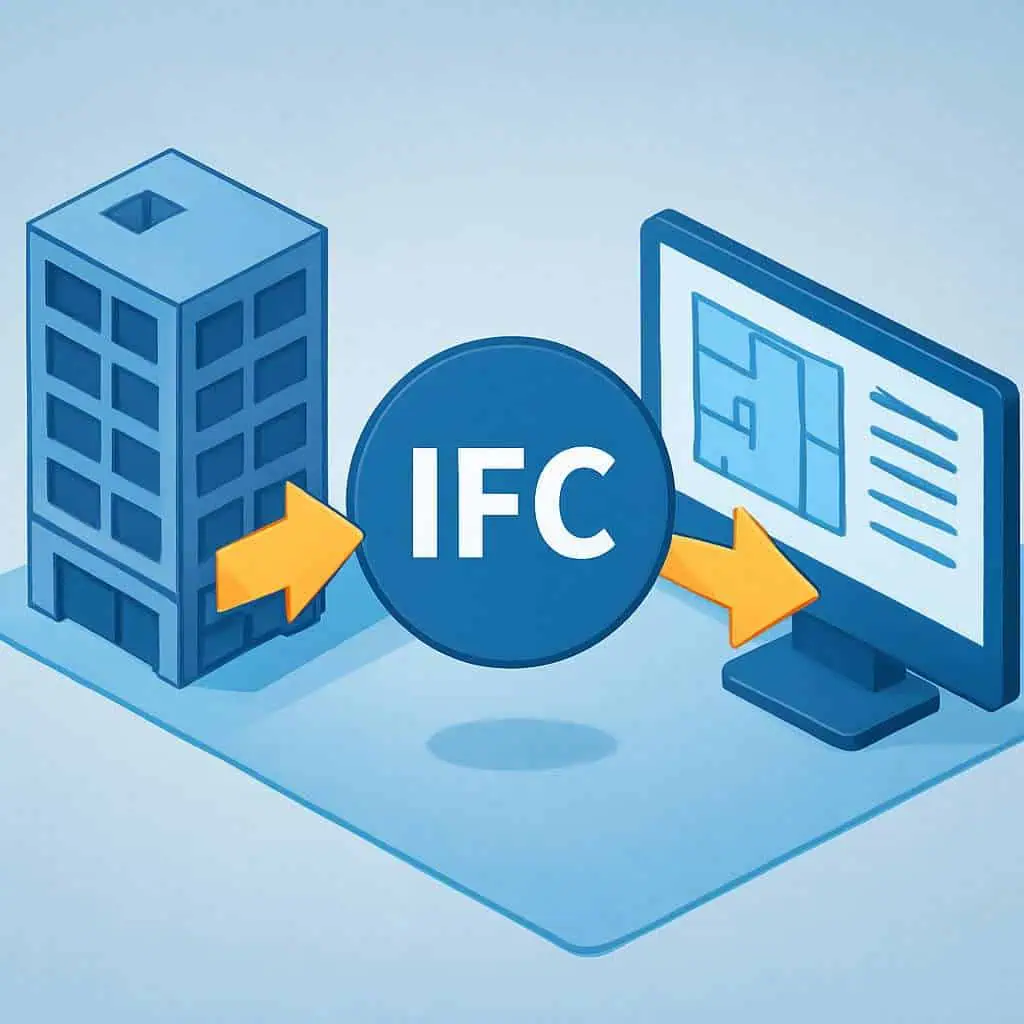
Today I'm trying to explain what the IFC standard means and how it makes data exchange between BIM models and CAFM systems openly interoperable. It's about data formats, property sets, and what workflows are typically needed, and how to plan a robust IFC-based integration strategy. Practical examples and recommended tools like Revit, Archicad, Solibri, IfcOpenShell, or BIMcollab show concrete implementation steps for CAFM and BIM projects. IFC Fundamentals and Relevance for CAFM and BIM The

IFC Standards Explained: Data Exchange for CAFM and BIM Projects [Pset] Read more »

CAFM-Blog.de | CAFM Data Graveyards: Not a Software Problem, but an Organizational Problem

CAFM Data Graveyards: Not a Software Problem, but an Organizational Problem

In facility management, we like to talk about digitalization, CAFM, IWMS, and the 'digital twin.' We are less keen to talk about how we actually handle our data. And that's precisely the problem. We don't have a software problem in the CAFM environment. We have an organizational and cultural problem in handling data. The nice narrative: Everything integrated, everything available When you look at presentations from CAFM and IWMS providers, our world sounds simple: Consistent

CAFM Data Graveyards: Not a Software Problem, but an Organizational Problem Read more »

CAFM-Blog.de | IWMS vs. CAFM: When an IWMS Makes Sense and What Advantages It Offers

IWMS vs. CAFM: When an IWMS Makes Sense and What Benefits It Offers

When portfolios grow and locations are globally distributed, CAFM is often no longer sufficient – then an IWMS becomes relevant. A fundamental distinction begins in the daily operations of the FM organization. IWMS refers to an integrated platform that combines Real Estate, Asset Management, Maintenance, Space Management, and Sustainability in a common database, often requiring ERP integration. CAFM, on the other hand, remains predominantly operations-oriented: space planning, maintenance, simple asset management, and room resource optimization, typically without deep enterprise integration (although the boundaries

IWMS vs. CAFM: When an IWMS Makes Sense and What Benefits It Offers Read more »

CAFM-Blog.de | Building a Maintenance Manual Correctly: Content, Templates, and Digital Implementation

Building a Maintenance Manual Correctly: Content, Templates, and Digital Implementation

A well-structured maintenance manual standardizes maintenance processes, reduces the risk of failures, and makes compliance traceable. In this guide, you will learn how to structure content meaningfully, which templates are truly useful, and how the manual can be digitally implemented in CAFM environments – with specific fields, workflows, and best practices. We also provide practical examples, implementation steps, and tips on governance, versioning, and audit trails so you can get started immediately. Maintenance Manual in the CAFM Context: Purpose, Benefits, and Target Audiences In the CAFM context

Building a Maintenance Manual Correctly: Content, Templates, and Digital Implementation Read more »

CAFM-Blog.de | BIM Processes in Building Operations: How BIM is Changing Maintenance

BIM Processes in Building Operations: How BIM is Changing Maintenance

BIM processes are increasingly determining how maintenance is planned, controlled, and documented. This article explains in a practice-oriented way which process steps (as-built maintenance, asset tagging, COBie/IFC data transfer), which requirements for BIM software, and which integration patterns with CAFM and IoT are necessary. You will receive an actionable roadmap, technical specifications for data interfaces, as well as recommendations on data quality, responsibilities, and KPIs, so that BIM implementation in operations does not fail due to interfaces or unusable data. 1 Strategic Relevance of BIM in Building Operations BIM processes do not change

BIM Processes in Building Operations: How BIM is Changing Maintenance Read more »

CAFM-Blog.de | Comparing Facility Management Software: Features, Prices, and Decision Support

Compare Facility Management Software: Features, Prices, and Decision Support

Choosing the "right" facility management software often determines costs, operational reliability, and the actual implementation effort. This practical guide shows which functions really count, which pricing models are common, and how to accurately calculate the Total Cost of Ownership (TCO). In the end, you will receive a weighted evaluation matrix, an RFP checklist, and a shortlist recommendation for typical use cases and company sizes. 1 Market Overview and Current Trends in the Facility Management Software Market Brief Finding: The market for

Compare Facility Management Software: Features, Prices, and Decision Support Read more »

CAFM-Blog.de | Property Management Software: Solutions for Real Estate and Facility Managers

Property Management Software: Solutions for Real Estate and Facility Managers

A property management software often determines today how efficiently buildings are operated, rents are managed, and maintenance is organized. This article explains in a practice-oriented way which core functions are relevant, how property management software differs from CAFM and IWMS, which providers in the DACH and international markets are worth considering, and which selection, integration, and data protection criteria truly matter. With a clear checklist, implementation roadmap, and KPIs, facility managers and IT managers receive concrete steps for a

Property Management Software: Solutions for Real Estate and Facility Managers Read more »

Scroll to Top