Error

CAFM-Blog.de | Efficient Building Management with Software

Efficient Building Management with Software

Efficient building management is a central aspect for the optimal operation of buildings and facilities. It includes the systematic management and maintenance of real estate, the effective use of resources, and ensuring a comfortable and safe environment for users. A well-structured building management demonstrably leads to cost savings while simultaneously increasing the productivity and well-being of building users. The introduction of modern building management software enables the automation of processes, the centralization of data […]

Efficient Building Management with Software Read more »

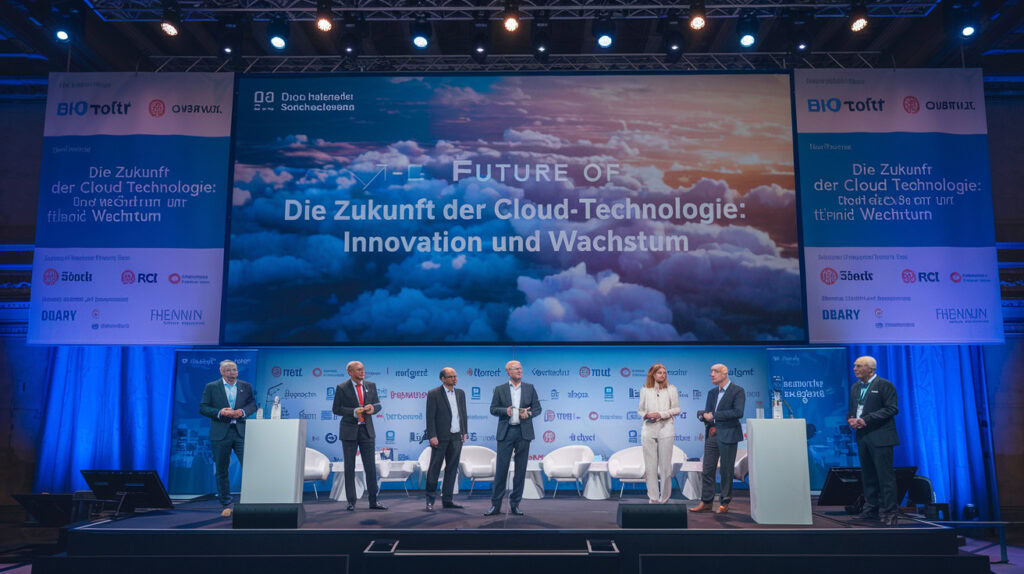
CAFM-Blog.de | The Future of Cloud Technology: Innovation and Growth

The Future of Cloud Technology: Innovation and Growth

Cloud technology has evolved significantly since its beginnings in the 1960s. Originally, it was based on the concept of "time-sharing," where multiple users could access a central computer simultaneously. In the 1990s, the development of virtual machines led to the ability to run multiple operating systems on a single physical computer, forming the basis for modern cloud infrastructure. Today, cloud technology encompasses a wide range of services, including Infrastructure as

The Future of Cloud Technology: Innovation and Growth Read more »

CAFM-Blog.de | Microsoft Azure: Risk Without Qualified Knowledge

Microsoft Azure: Risk without qualified knowledge

In today's digital landscape, Microsoft Azure stands out as a powerful cloud platform that can help businesses, including those supported by the federal government, reach new heights. But: Utilizing its capabilities without the right expertise can lead to significant security risks. This article explores the benefits of Microsoft Azure, the potential pitfalls of using it without in-depth knowledge, and how proper certification can protect your company's data. Additionally,

Microsoft Azure: Risk without qualified knowledge Read more »

CAFM-Blog.de | Successful Project Communication: Tips and Tricks

Successful Project Communication: Tips and Tricks

Project communication is a central factor for the success of a project. It fulfills several important functions: Information dissemination: Ensuring that all participants have relevant project information. Creating clarity: Avoiding misunderstandings and ambiguities. Promoting collaboration: Supporting effective cooperation between team members. Conflict resolution: Providing mechanisms for managing disagreements. Maintaining motivation: Sustaining the commitment and motivation of project participants. Stakeholder management: Managing the expectations and needs of all interest groups. Building trust: Strengthening the

Successful Project Communication: Tips and Tricks Read more »

CAFM-Blog.de | What Does an Operational Audit Mean?

Risks and Opportunities of Low-Code/No-Code Platforms

Low-code/no-code platforms are development tools that enable the creation of applications with minimal or no manual programming. These technologies aim to accelerate the development process and reduce the dependence on extensive programming knowledge. Low-code platforms offer a visual development environment where users can create applications by assembling pre-built components. No-code platforms go further, enabling application creation without any programming knowledge through the use of templates and visual tools. These platforms have

Risks and Opportunities of Low-Code/No-Code Platforms Read more »

CAFM-Blog.de | Efficient CAFM software implementation

Efficient CAFM Software Implementation

The implementation of CAFM software (Computer Aided Facility Management) is an important step towards optimizing facility management in companies. CAFM systems enable efficient management of buildings, facilities, and resources. They support the planning, control, and monitoring of facility management processes. The main benefits of CAFM software include: 1. Process optimization: Automation and standardization of workflows 2. Cost savings: More efficient resource utilization and maintenance planning 3. Improved compliance: Adherence to regulations and safety standards 4. Data-driven decision-making: Comprehensive

Efficient CAFM Software Implementation Read more »

CAFM-Blog.de | Digital Transformation in Facility Management

Digital Transformation in Facility Management

Digital transformation has had a profound impact on all economic sectors in recent years, including facility management. The integration of digital technologies in this area enables companies to optimize their operational processes, achieve cost savings, and increase efficiency. Through the use of IoT devices, big data analytics, artificial intelligence, and automated processes, facility managers can capture and analyze real-time data to make informed decisions and improve the performance of their facilities. Digital transformation promotes

Digital Transformation in Facility Management Read more »

CAFM-Blog.de | Organizational Negligence 2025 in FM: How to Avoid It?

Organizational Negligence 2025 in FM: How to Avoid It?

In the complex world of facility management, organizational negligence (or prior organizational failure, or even 'just' organizational carelessness) can have far-reaching consequences that go beyond immediate physical damage. From potential property damage and personal injury to long-term damage to a company's reputation, the risks are high. This article examines what organizational negligence (because that is at least the accusation in question…) means, what types of damage can occur, and effective

Organizational Negligence 2025 in FM: How to Avoid It? Read more »

CAFM-Blog.de | What are the advantages of CAFM regarding efficiency and overall equipment effectiveness?

What are the benefits of CAFM regarding efficiency and overall equipment effectiveness?

Computer Aided Facility Management (CAFM) is a concept for supporting facility management through the use of information technology. CAFM systems integrate various functions such as space management, maintenance, energy management, and resource planning into a central software solution. The goal is to optimize the management and operation of buildings and technical facilities. CAFM systems enable a holistic view of facility management processes. They offer functions for capturing, managing, and evaluating building and facility-related data. This allows for:

What are the benefits of CAFM regarding efficiency and overall equipment effectiveness? Read more »

CAFM-Blog.de | Data Migration: Tips and Tricks

Data Migration: Tips and Tricks

Data migration is a complex process for transferring data between different systems or platforms. This procedure is of great importance in many companies and is often carried out as part of IT projects such as system changes, database consolidations, or software updates. The successful execution of a data migration requires careful planning and preparation. Various data types must be considered, including structured data in databases, unstructured data in file systems, and legacy data from older systems. A key aspect

Data Migration: Tips and Tricks Read more »

CAFM-Blog.de | Facility Management 4.0: Digital Transformation in Building Management

Digital Incident Management in Claims Processing

Digital incident management is a central element of modern damage processing in various industries. It includes the systematic recording, processing, and dissemination of information on damage events and incidents using digital technologies and systems. In the past, the documentation and processing of such data were predominantly done in paper form, which often led to delays and inaccuracies. The implementation of digital incident management systems enables companies to significantly increase efficiency and optimize their damage processing processes, for example in

Digital Incident Management in Claims Processing Read more »

CAFM-Blog.de | Effective DevOps Practices for Successful Software Development

Effective DevOps Practices for Successful Software Development

DevOps is a methodology in software development that promotes the integration of development (Development) and IT operations (Operations). The goal is to accelerate the software development process and improve the quality of software products. Core elements of DevOps include automation, continuous integration and delivery (CI/CD), and constant monitoring. DevOps strives for close collaboration between development and operations teams to break down silos and enable more efficient ways of working. By implementing DevOps practices, companies can

Effective DevOps Practices for Successful Software Development Read more »

CAFM-Blog.de | The Advantages of Microservices Architecture

The Advantages of Microservices Architecture

Microservices architecture is a software development approach where an application is designed as a collection of small, independent services. Each service fulfills a specific business function and communicates with other services via defined interfaces. In contrast to monolithic architectures, this approach allows for greater flexibility, scalability, and maintainability. Characteristic features of microservices architecture include: Independent development and deployment of services Loose coupling between services Possibility to use different technologies per service Improved fault isolation and

The Advantages of Microservices Architecture Read more »

CAFM-Blog.de | Use Cases for Low-Code and No-Code Platforms

Use Cases for Low-Code and No-Code Platforms

Low-code and no-code platforms are innovative technologies for application development that simplify and accelerate the development process. Low-code platforms enable the creation of applications with minimal manual programming effort, while no-code platforms can be used entirely without programming. These technologies are gaining increasing importance in the business world as they increase efficiency and reduce development costs. The platforms offer user-friendly interfaces with drag-and-drop functionality, pre-built components, and integrations with other systems. This also enables employees without extensive

Use Cases for Low-Code and No-Code Platforms Read more »

CAFM-Blog.de | Efficiently Manage Commercial Real Estate

Manage Commercial Real Estate Efficiently

The efficient management of commercial real estate is a key factor for the sustainable success of real estate investments. Professional commercial property management ensures optimal property utilization, maximizes rental income, and minimizes operating costs. Furthermore, it significantly contributes to the long-term preservation and increase of the property's value. In a competitive market environment, this is of particular importance for investors and owners seeking to optimize their returns. The scope of tasks for efficient commercial property management includes various areas:

Manage Commercial Real Estate Efficiently Read more »

Scroll to Top