Digitisation

Efficient financial planning with a focus on CAFM, IT and management. Expert knowledge, market innovations and innovative solutions.

The basics of e-balance sheets: what every company should know

The electronic balance sheet, also known as the e-balance sheet, is a topic that challenges SMEs in particular every year ("What was that again, Mr Müller, with the e-bill?"). Companies are faced with the challenge of meeting the requirements of the digital transformation. And the e-balance sheet is a central component of this process. It enables the efficient and error-free preparation and submission of annual financial statements in a digital format. At least in terms of the idea. [...]

The basics of e-balance sheets: what every company should know Read more »

Innovative digital solutions for facility management and IT.

Mandatory e-invoices: what companies need to know in 2025

The e-invoicing obligation, which will come into force in Germany from 2025, is a significant step towards digitalisation and increased efficiency in accounting. Companies need to prepare for this new legal regulation now in order to avoid potential penalties or delays in payment transactions. The 2025 e-invoicing obligation not only affects large companies, but also smaller businesses that work with public sector clients. According to the EU directive on e-invoices, electronic invoices will be mandatory from 2025,

Mandatory e-invoices: what companies need to know in 2025 Read more »

Modern building with digital control and networked facility management.

How digital twins are revolutionising the building life cycle

At a time when digitalisation is finding its way into all areas of life, the introduction of digital twins is playing an increasingly important role in building management. Digital twins are virtual replicas of physical buildings and provide a deeper insight into the entire building life cycle. From the planning phase through to utilisation and maintenance, they offer a wide range of benefits that not only increase efficiency but can also significantly reduce life cycle costs. This technology is not only revolutionising

How digital twins are revolutionising the building life cycle Read more »

Modern facility management with IT and automation.

Digitalisation in the German healthcare sector

Digitalisation has initiated a far-reaching change in the German healthcare system in recent years. It enables more efficient patient care, improves communication between players in the healthcare sector and promotes the development of innovative treatment methods. Digital technologies allow medical data to be recorded, processed and analysed more quickly, leading to better diagnostics and treatment. The introduction of electronic patient records, telemedicine and digital health applications has the potential to significantly improve the quality of medical care.

Digitalisation in the German healthcare sector Read more »

Technology, IT & Management.

Digital transformation in Germany: opportunities and challenges

The digital transformation has become a key issue in Germany in recent years, affecting not only companies but also society as a whole. At a time when technological innovations are advancing at a rapid pace, it is crucial for Germany to adapt to these changes. The digital transformation involves not only the implementation of new technologies, but also a fundamental change in the way companies

Digital transformation in Germany: opportunities and challenges Read more »

Industrial production with automated machines and robots.

The challenges of digitalisation in Germany

Digitalisation has become a key driver of growth and competitiveness in the German economy. Companies of all sizes are increasingly integrating digital technologies to optimise processes, increase efficiency and develop innovative business models. In a globalised economy with rapidly changing markets and customer needs, digital transformation has become essential. German industry, particularly in areas such as mechanical engineering and automotive production, is increasingly implementing technologies such as the Internet of

The challenges of digitalisation in Germany Read more »

User-friendly Google Maps layout for building details and facility management.

CAFM is like Google Maps for buildings

CAFM, or computer-aided facility management, is an indispensable tool in modern facility management. It helps companies to manage their buildings efficiently, optimise costs and promote sustainability. In this article, you will learn everything you need to know about CAFM software, its applications and benefits. What is CAFM? CAFM is the acronym for Computer-aided Facility Management, a technology with a revolutionary impact on the world of facility management. This digital support

CAFM is like Google Maps for buildings Read more »

Detailed 3D modelling of a building on several monitors.

Efficient BIM projects in public administration

Building Information Modelling (BIM) has become increasingly important in public administration in recent years. BIM is a digital method for the integrated planning, execution and management of buildings. In public administration, the efficient utilisation of resources and the on-time and on-budget execution of projects are of particular importance. BIM enables the integration of all relevant information of a construction project in a digital model, which facilitates collaboration between the parties involved.

Efficient BIM projects in public administration Read more »

Man analyses digital city maps and data on a large screen.

IT Planning Council: Strategic planning for IT development

The IT Planning Council is a central coordination body for information technology in Germany's public administration. It was founded in 2010 and consists of representatives from the federal government and the 16 federal states. Its main tasks include the strategic planning and management of IT development and the promotion of digitalisation in the public sector. The IT Planning Council develops common standards and guidelines to improve the interoperability and efficiency of IT systems at federal, state and local level. It meets

IT Planning Council: Strategic planning for IT development Read more »

Construction workers installing steel reinforcement on an outdoor construction site.

Real estate project development

Property project development is a multi-layered process that involves the systematic planning, development and realisation of property projects. This process involves several phases, including location analysis, market research, architectural planning, financing structuring and marketing strategy. As an integral part of the property sector, project development makes a significant contribution to the creation of new residential and commercial space. Successful property project development requires in-depth knowledge in various areas. This includes an in-depth understanding of the property market and knowledge of building regulations,

Real estate project development Read more »

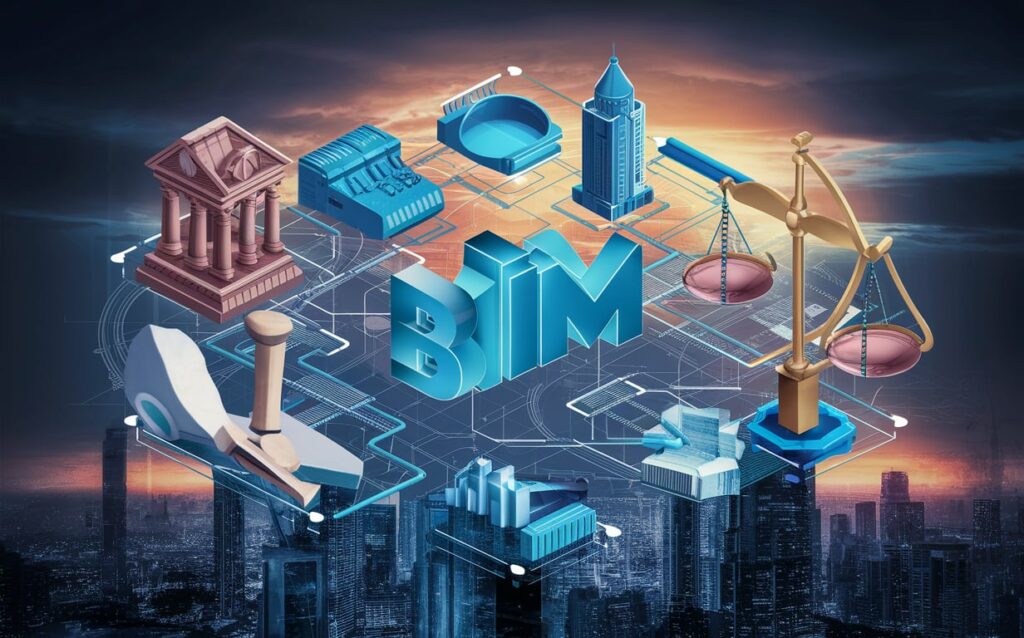
Illustration of the legal aspects of Building Information Modelling (BIM) with buildings and law.

BIM strategy for public administration: a guide

The introduction of Building Information Modelling (BIM) in public administration is a decisive step forward for more efficient and sustainable planning of construction and infrastructure projects. BIM is a digital method for the comprehensive recording, management and exchange of all project-relevant information. This includes geometric data as well as information on materials, costs and schedules. Due to its central role in the planning and implementation of infrastructure projects, it is essential for public administration to realise the potential of BIM.

BIM strategy for public administration: a guide Read more »

Futuristic city with sustainable, green buildings and skyscrapers.

Efficient management with CAFM software

Computer Aided Facility Management (CAFM) software is a technological solution for optimising facility management processes in companies. This software enables the centralised administration of various facility management tasks, including room and space management, maintenance, relocation management and energy management. CAFM systems offer a range of functions and modules for effective resource utilisation and cost reduction. By integrating data and processes, CAFM software helps companies to manage their property efficiently and increase productivity. The implementation of CAFM software in

Efficient management with CAFM software Read more »

Several monitors show a CAFM user interface for facility management.

Why CMMS? Digitalisation for efficient maintenance

Digitalisation has fundamentally changed the maintenance industry in recent years. One key aspect is the digital recording and management of all relevant data and information. This significantly increases the transparency and traceability of maintenance and repair work. Digitalisation also enables more efficient planning and control of maintenance processes, which leads to improved plant availability and safety. The use of digital tools such as Computerised Maintenance Management Systems (CMMS) optimises work processes and promotes

Why CMMS? Digitalisation for efficient maintenance Read more »

Modern digital solutions for maintenance in buildings and systems.

Why is the digitalisation of maintenance important?

Optimising maintenance efficiency is a key factor for companies to maximise the performance of their production facilities and reduce downtimes. One effective method of increasing efficiency is the integration of maintenance management software. This enables systematic planning, monitoring and documentation of maintenance activities. By using such systems, companies can rationalise their maintenance processes and increase overall productivity. Another approach to improving efficiency is the implementation of preventive maintenance strategies. These are aimed at

Why is the digitalisation of maintenance important? Read more »

Mann observes server and monitoring systems in the data centre.

What are the challenges of maintaining buildings and systems?

The maintenance of buildings and facilities is an essential part of facility management. It comprises all technical, administrative and organisational measures to maintain or restore the functional condition of properties and technical facilities. The main tasks include preventive maintenance, inspection, repair and improvement. The importance of maintenance extends to various sectors such as industry, commerce and public facilities. It contributes significantly to value retention, operational safety and energy efficiency. Modern maintenance concepts take into account

What are the challenges of maintaining buildings and systems? Read more »

Businesswoman checks documents for contract management.

Efficient contract management according to §2b UStG

The introduction of Section 2b of the German Value Added Tax Act (UStG) has a significant impact on contract management in legal entities under public law. This paragraph regulates the VAT treatment of services provided by legal entities under public law. In contract management, this means that public law entities must review their activities for their VAT relevance. This applies in particular to services that are provided within the scope of public authority, as well as co-operations between public institutions. The correct

Efficient contract management according to §2b UStG Read more »

Developers work in a modern office with a view of a futuristic city.

The future of low-code/no-code platforms

Low-code/no-code platforms are innovative development environments that enable the creation of applications without extensive programming knowledge. These platforms utilise visual development tools and pre-built components to simplify and speed up the development process. Low-code platforms automatically generate most of the code, while no-code platforms do not require any manual programming at all. Users can create complex applications using intuitive drag-and-drop functions and modular building blocks. The use of low-code/no-code platforms has increased significantly in recent years. They offer companies the opportunity to

The future of low-code/no-code platforms Read more »

Scroll to Top