DevOps

CAFM-Blog.de | The Future of Cloud Technology: Innovation and Growth

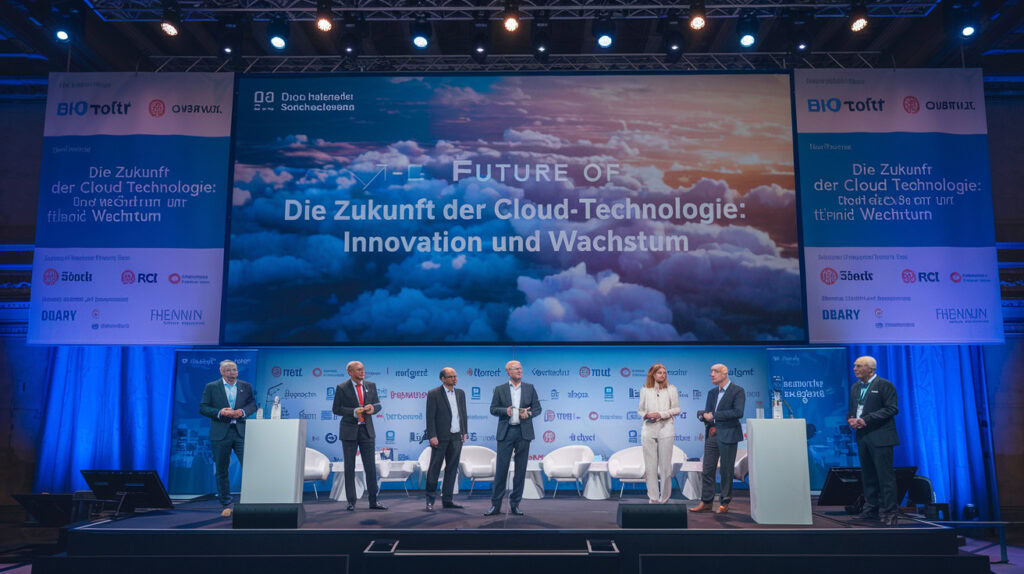
The Future of Cloud Technology: Innovation and Growth

Cloud technology has evolved significantly since its beginnings in the 1960s. Originally, it was based on the concept of "time-sharing," where multiple users could access a central computer simultaneously. In the 1990s, the development of virtual machines led to the ability to run multiple operating systems on a single physical computer, forming the foundation for modern cloud infrastructure. Today, cloud technology encompasses a wide range of services, including Infrastructure as […]

The Future of Cloud Technology: Innovation and Growth Read more »

CAFM-Blog.de | What are Containers in Software Development?

The Future of Low-Code/No-Code Platforms

Low-code/no-code platforms are innovative development environments that enable the creation of applications without extensive programming knowledge. These platforms use visual development tools and pre-built components to simplify and accelerate the development process. Low-code platforms automatically generate a large portion of the code, while no-code platforms operate entirely without manual programming. Users can create complex applications using intuitive drag-and-drop functions and modular building blocks. The use of low-code/no-code platforms has increased significantly in recent years. They offer companies the opportunity to

The Future of Low-Code/No-Code Platforms Read more »

CAFM-Blog.de | Effective DevOps Practices for Successful Software Development

Effective DevOps Practices for Successful Software Development

DevOps is a methodology in software development that promotes the integration of development (Development) and IT operations (Operations). The goal is to accelerate the software development process and improve the quality of software products. Core elements of DevOps include automation, continuous integration and delivery (CI/CD), and constant monitoring. DevOps strives for close collaboration between development and operations teams to break down silos and enable more efficient ways of working. By implementing DevOps practices, companies can

Effective DevOps Practices for Successful Software Development Read more »

CAFM-Blog.de | What are Containers in Software Development?

What Are Containers in Software Development?

Containerization is a technology for isolating applications and their dependencies into standardized units called containers. This method enables consistent deployment and scaling of software regardless of the underlying infrastructure. Containers are lightweight, portable, and autonomous units that ensure fast and uniform deployment of applications in different environments. The benefits of containerization include: 1. Consistent execution environment: Applications run in a standardized environment, independent of the host infrastructure. 2.

What Are Containers in Software Development? Read more »

CAFM-Blog.de | The Future with Cloud-Native Applications

The Future with Cloud-Native Applications

Cloud-native applications are software solutions specifically designed for the cloud that optimally leverage the capabilities of cloud infrastructure. They are designed for operation in a dynamic and scalable environment and are characterized by high flexibility and agility. Unlike traditional applications developed for on-premise data centers, cloud-native applications are designed to fully exploit the advantages of cloud services such as automatic scaling, high availability, and elastic resource utilization. The development of cloud-native applications is often based

The Future with Cloud-Native Applications Read more »

CAFM-Blog.de | Container Technologies: Efficiency and Flexibility in Application

Container Technologies: Efficiency and Flexibility in Application

Container technologies have undergone significant development in recent years. These technologies enable the execution of applications and their dependencies in isolated environments, leading to improved portability and scalability. Compared to traditional virtual machines, containers share the host's operating system, reducing resource requirements. This characteristic makes them particularly suitable for the use of microservices and the orchestration of applications in cloud environments. Docker, one of the best-known container platforms,

Container Technologies: Efficiency and Flexibility in Application Read more »

CAFM-Blog.de | Jenkins and DevOps Tools for Continuous Integration

Jenkins and DevOps Tools for Continuous Integration

Software development has undergone a significant transformation in recent years, with the implementation of DevOps methodologies playing a key role in this evolution. DevOps is a concept that promotes cooperation between development and IT operations teams, with the goal of accelerating software delivery and optimizing quality. A central element of DevOps is continuous integration, which ensures regular integration of code changes into a common repository. Jenkins, a widely

Jenkins and DevOps Tools for Continuous Integration Read more »

CAFM-Blog.de | ITIL V3: Effective IT Service Management

ITIL V3: Effective IT Service Management

ITIL V3, also known as IT Infrastructure Library Version 3, is a comprehensive framework for IT service management. Introduced in 2007, it serves as a guide for the effective planning, delivery, and support of IT services within organizations. The framework is based on best practices and processes derived from years of experience and expertise. ITIL V3 emphasizes the delivery of high-quality IT services that meet business requirements while optimizing costs.

ITIL V3: Effective IT Service Management Read more »

Scroll to Top