User

CAFM-Blog.de | Optimal Use of IFC Files: The Best Viewer Tools

Optimally Utilizing IFC Files: The Best Viewer Tools

If you've ever wondered how to open and optimally use IFC files, you've come to the right place. In this article, we will explore the best IFC file viewers that will help you visualize and edit 3D models in IFC format. The use of IFC files is not just a trend in the construction industry, but a necessity. These files enable architects, engineers, and contractors to plan and execute their projects more efficiently. But [...]

Optimally Utilizing IFC Files: The Best Viewer Tools Read more »

CAFM-Blog.de | BIM Viewer Tools Compared: How to Find the Best Solution

BIM Viewer Tools in Comparison: How to Find the Best Solution

BIM viewers (especially free ones) have become an indispensable tool for architects, engineers, and construction managers. But what exactly makes a BIM viewer so important? Imagine you are an architect planning a new building. You can't just use simple 2D plans; you need a solution that allows you to view complex 3D models to get a clear idea of the final product. However, choosing the right BIM viewer can be overwhelming.

BIM Viewer Tools in Comparison: How to Find the Best Solution Read more »

CAFM-Blog.de | 5 Benefits of Open Source CAFM Software You Should Know

5 Benefits of Open Source CAFM Software You Should Know

Welcome to the fascinating world of Open Source Software and CAFM :-) If you're wondering what it is and why it might be important for your facility management, you've come to the right place. In this post, we'll highlight the five most important benefits of Open Source CAFM software that you absolutely need to know. But before we dive into the details, let's take a brief look

5 Benefits of Open Source CAFM Software You Should Know Read more »

CAFM-Blog.de | The importance of IT security

Are cloud-based CAFM solutions really secure?

In an era where cloud-based solutions are gaining increasing importance, the question arises about the security of these technologies in the field of Computer Aided Facility Management (CAFM) software. While innovative CAFM software providers offer undeniable advantages in terms of flexibility and cost savings, concerns regarding data protection and security cannot be overlooked. According to a Gartner survey, 70% of respondents indicated that they have security concerns regarding cloud-based solutions, which highlights the

Are cloud-based CAFM solutions really secure? Read more »

CAFM-Blog.de | How do I implement CAFM software in my company?

How do I implement CAFM software in my company?

Implementing CAFM software in your company can mean a decisive improvement for your facility management. Appropriate planning, choosing the right software, and involving the relevant stakeholders are essential for successful implementation. In this post, we will highlight the essential steps you should consider when implementing a CAFM solution. Step 1: Define Requirements Before the starting signal for the implementation of suitable CAFM software is given, it is essential to define the company-specific

How do I implement CAFM software in my company? Read more »

CAFM-Blog.de | Linux Server Security: Important Fundamentals

Linux Server Security: Important Fundamentals

The security of Linux servers is a critical aspect of IT infrastructure. Linux servers are frequent targets of cyberattacks due to their prevalence and functionality. Companies and organizations must therefore implement comprehensive security measures. Key security aspects include: Firewalls and security policies Regular patch management Secure passwords and access controls Monitoring and logging of server activities Use of encryption technologies Data backup and recovery A thorough understanding of current threats and attack methods is essential. IT professionals should regularly undergo training on Linux server security.

Linux Server Security: Important Fundamentals Read more »

CAFM-Blog.de | The Future of Cloud Technology: Innovation and Growth

The Future of Cloud Technology: Innovation and Growth

Cloud technology has evolved significantly since its beginnings in the 1960s. Originally, it was based on the concept of "time-sharing," where multiple users could access a central computer simultaneously. In the 1990s, the development of virtual machines led to the ability to run multiple operating systems on a single physical computer, forming the basis for modern cloud infrastructure. Today, cloud technology encompasses a wide range of services, including Infrastructure as

The Future of Cloud Technology: Innovation and Growth Read more »

CAFM-Blog.de | The Advantages of Windows Server

The advantages of Windows Server

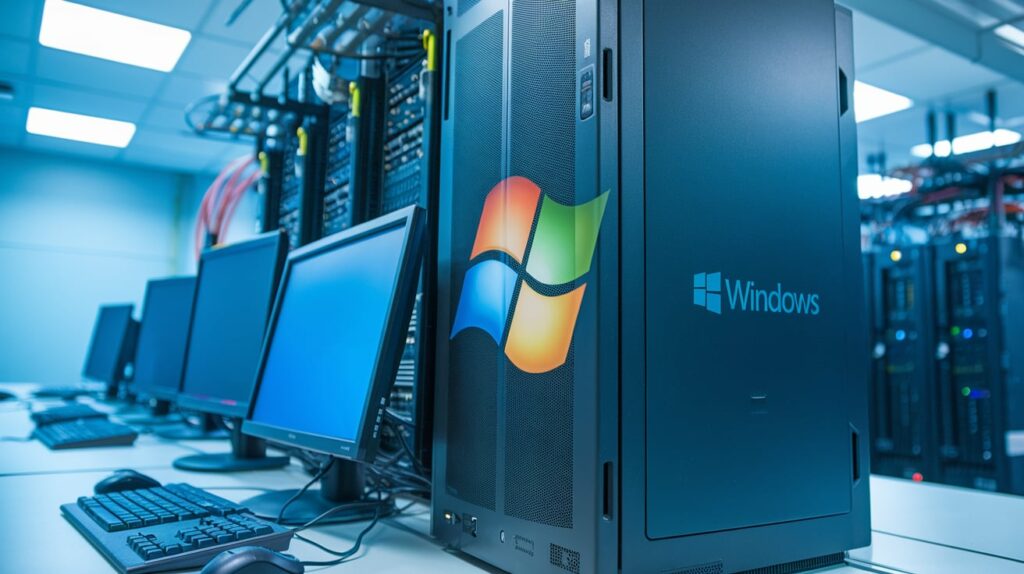
The integration of Windows Server into existing Windows infrastructures is a central aspect for optimizing IT systems in companies. Windows Server allows for seamless integration into existing Windows environments, simplifying implementation and administration. The use of Active Directory enables efficient management of user accounts and groups, thereby increasing the security and efficiency of the IT infrastructure. Furthermore, the integration of Windows Server allows for smooth interaction with other Microsoft products such as

The advantages of Windows Server Read more »

CAFM-Blog.de | Security Audit: How to Protect Your Company's IT

Cloud Security: Tips and Best Practices

Cloud security is of paramount importance for companies. With the increasing use of cloud services for corporate data and applications, it is essential to implement robust security measures. The cloud offers numerous advantages such as scalability, flexibility, and cost-effectiveness, but it also entails specific security risks. Companies must protect their data from threats such as data loss, data breaches, and unauthorized access. Compliance with legal regulations and industry standards is another critical aspect of

Cloud Security: Tips and Best Practices Read more »

CAFM-Blog.de | Microsoft Azure: Risk Without Qualified Knowledge

Microsoft Azure: Risk Without Qualified Knowledge

In today's digital landscape, Microsoft Azure stands out as a powerful cloud platform that can help businesses, including those supported by the federal government, reach new heights. But: Utilizing its capabilities without the right expertise can lead to significant security risks. This article explores the benefits of Microsoft Azure, the potential pitfalls of using it without in-depth knowledge, and how proper certification can protect your company's data. Additionally

Microsoft Azure: Risk Without Qualified Knowledge Read more »

CAFM-Blog.de | Comparison of Windows and Linux Servers: Which is Better?

Comparison of Windows and Linux Servers: Which is Better?

Windows and Linux are two widely used operating systems for server applications. Windows Server, developed by Microsoft, is specifically designed for enterprise networks and offers features such as Active Directory for central user management, Remote Desktop Services for remote access, and extensive security and management tools. Linux is an open-source operating system based on Unix, characterized by high stability, security, and adaptability. It is frequently used in web servers, database servers, and other enterprise infrastructures. Windows Server is characterized by

Comparison of Windows and Linux Servers: Which is Better? Read more »

CAFM-Blog.de | Benefits of Cloud Technology: Efficiency and Flexibility

Advantages of Cloud Technology: Efficiency and Flexibility

Cloud technology has rapidly evolved in recent years and has become an essential element in the corporate landscape. Cloud computing enables organizations to store and utilize their data and applications over the internet, rather than relying on local servers or individual devices. This technology offers numerous advantages, including cost efficiency, flexibility, scalability, and enhanced security standards. Cloud technology has fundamentally changed the way companies operate and is expected to continue to do so in the future.

Advantages of Cloud Technology: Efficiency and Flexibility Read more »

CAFM-Blog.de | What Does an Operational Audit Mean?

Risks and Opportunities of Low-Code/No-Code Platforms

Low-code/no-code platforms are development tools that enable the creation of applications with minimal or no manual programming. These technologies aim to accelerate the development process and reduce the reliance on extensive programming knowledge. Low-code platforms offer a visual development environment where users can build applications by assembling pre-built components. No-code platforms go a step further, allowing application creation without any programming knowledge through the use of templates and visual tools. These platforms have

Risks and Opportunities of Low-Code/No-Code Platforms Read more »

CAFM-Blog.de | Successful Implementation of a CAFM Solution

How to Successfully Implement a CMMS

A Computerized Maintenance Management System (CMMS) is a software-based solution for managing and optimizing maintenance processes in companies. It enables the systematic planning, execution, and documentation of maintenance activities for facilities and equipment. The main functions of a CMMS include: 1. Asset Management: Recording and monitoring all assets and their technical data. 2. Maintenance Planning: Creating preventive and corrective maintenance plans. 3. Work Order Management: Generating, assigning, and tracking maintenance work orders. 4. Spare Parts Management: Managing inventory

How to Successfully Implement a CMMS Read more »

CAFM-Blog.de | What are Containers in Software Development?

The Future of Low-Code/No-Code Platforms

Low-code/no-code platforms are innovative development environments that enable the creation of applications without extensive programming knowledge. These platforms use visual development tools and pre-built components to simplify and accelerate the development process. Low-code platforms automatically generate a large part of the code, while no-code platforms can be used entirely without manual programming. Users can create complex applications using intuitive drag-and-drop functions and modular building blocks. The use of low-code/no-code platforms has increased significantly in recent years. They offer companies the opportunity to

The Future of Low-Code/No-Code Platforms Read more »

Scroll to Top