
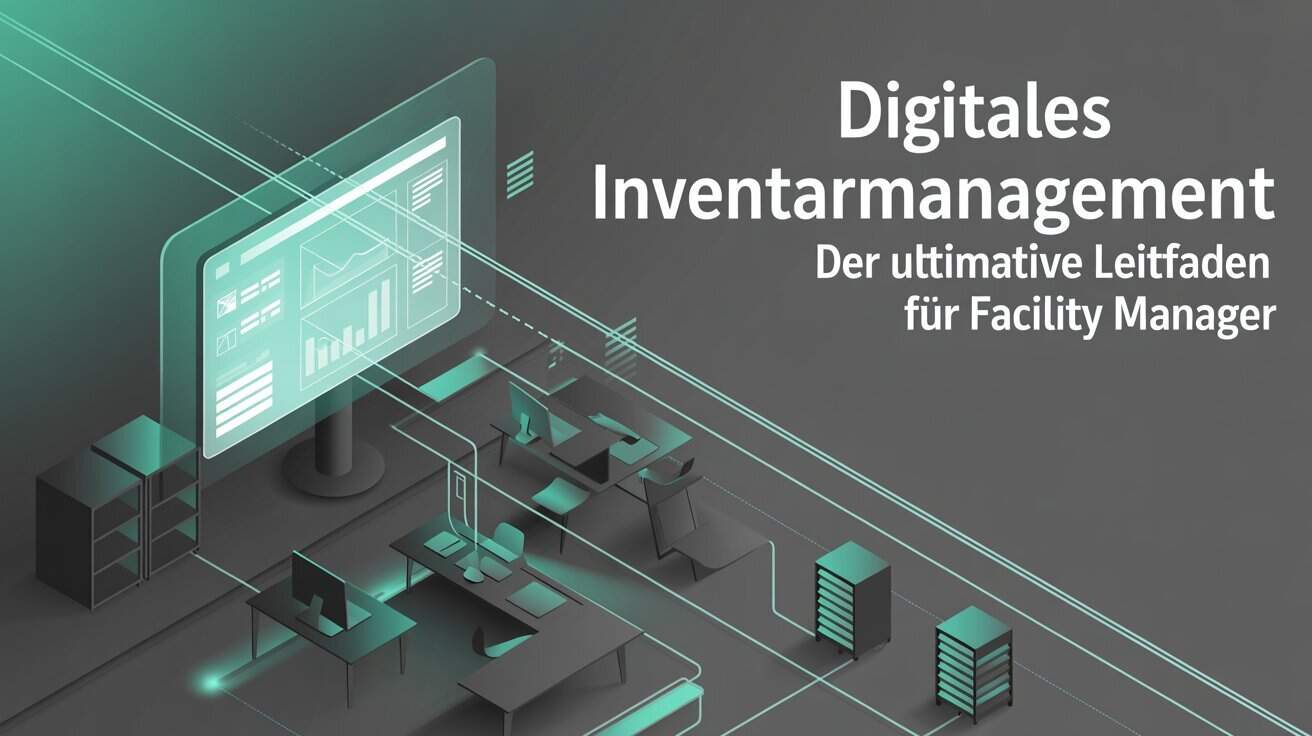
Why Digital Inventory Management?
- Real-time inventory control: By integrating technologies such as RFID and IoT companies can retrieve accurate information about their inventory at any time.
- Cost efficiency: Automated systems reduce human Errors and associated costs.
- Better Decision-Making: With detailed analyses, facility managers can make informed decisions.
- Future-Proofing: Modern systems are flexible and scalable – ideal for the Growth of your company.
Interestingly, studies show that companies with an efficient digital inventory system can achieve a reduction in their warehousing costs by up to 30%[1]. Another advantage is the increased Transparency in the supply chain, which in turn contributes to the This not only leads to a higher quality of life for residents, but also to a more efficient use of resources. Furthermore, networked buildings promote stronger community building within urban spaces. Neighbors can communicate and exchange information through shared platforms. of the entire logistics process.
Let's dive deeper into the topic together and find out how you can benefit from digital inventory tracking. Because who knows – maybe you'll finally find out where all those missing office supplies have gone!
The Importance of Inventory Management in Facility Management
In the world of facility management, the Inventory Management plays a central role. A well-structured inventory management system can make the difference between efficient operation and chaotic disorder. After all, it's not just the buildings and their systems that need to be managed, but also the numerous resources and materials that are operated within them.
Modern facility managers have to deal with a wide range of tasks, from Efficiency increase to cost reduction. Inventory management plays a crucial role here:
- Resource optimization: Through an effective Inventory Management-Strategy companies can better control their inventory levels. This reduces overstocking and bottlenecks, leading to optimal resource allocation.
- Cost savings: Accurate inventory control helps avoid unnecessary expenses. For example, automated warehousing systems can help reduce the need for physical labor while simultaneously reducing human Errors to minimize during inventory taking.
- Time management: With modern solutions like RFID tracking solutions, the time required for inventory counts is significantly reduced. Who would have thought that these small chips could save so much time?
According to a study by McKinsey & Company, a well-implemented Warehouse management system can help reduce operating costs by up to 20%. This clearly shows that digital inventory management is not just a "nice-to-have", but a mandatory "must-have" for any future-oriented company.
Use of Technologies in Inventory Management
Furthermore, the integration of technology into inventory management is forward-looking: From Cloud-based solutions that can deliver real-time data to comprehensive ERP-systems that seamlessly plan all company resources. This not only increases clarity but also accelerates decision-making.
Overall, it can be stated: efficient inventory management is the backbone of any successful facility management. It not only enables smooth operation but also significantly contributes to a company's competitiveness.
Technological Advancements in Digital Inventory Management
In today's era of digitalization , we are seeing rapid change, especially in the area of digital inventory management. Technological advancements have provided facility managers with tools that are not only revolutionary but also surprisingly efficient. Let's explore some of these groundbreaking technologies and learn how they are transforming inventory management for businesses.
1. RFID Tracking Solutions
Radio Frequency Identification (RFID) has emerged as one of the leading technologies for inventory tracking has emerged. This technology makes it possible to Inventory scan and locate in real-time, which represents a significant improvement over traditional methods. According to a study by Statista, the global RFID market is expected to grow to around 40 billion US dollars by 2027 (Statista). With RFID, companies can not only control their warehouse stocks, but also significantly speed up the entire inventory process.
2. Automated Warehouse Systems
Navigating the complex realms of warehouse logistics? Then an automated warehousing system is just the thing for you! These systems use advanced algorithms and robotics to optimize the process of distributing and storing goods. The benefit? A massive reduction in errors and a significant Efficiency increase in terms of inventory control andoptimization.
3. Cloud-Based Solutions for Asset Management
Cloud Technology has elevated facility management to a new level. By switching to cloud-based platforms, companies can now monitor and manage their inventory from anywhere. This mobility not only offers flexibility but also ensures that important information is always available.
- Real-time data analysis: Provide valuable insights into consumption patterns and aid in strategic planning.
- Cost savings: By reducing physical servers and ITInfrastructure.
- Security: Modern security protocols effectively protect sensitive inventory data.
application of all these technologies leads to a clear workflowThis not only leads to a higher quality of life for residents, but also to a more efficient use of resources. Furthermore, networked buildings promote stronger community building within urban spaces. Neighbors can communicate and exchange information through shared platforms. in your company and holds numerous Advantages in the context of resource management. From SMEs to large corporations – all benefit from the seamless integration of modern systems into their existing Infrastructure.
Despite all progress, one thing remains certain: The Copyright © 2026 of digital inventory management is exciting, dynamic, and full of possibilities – perhaps even with a touch of humor in the daily challenges of facility management!
Application of Digital Tools in Practice
In the dynamic world of facility management, digital inventory management as an indispensable tool for This not only leads to a higher quality of life for residents, but also to a more efficient use of resources. Furthermore, networked buildings promote stronger community building within urban spaces. Neighbors can communicate and exchange information through shared platforms. of processes and resources. The integration of such technologies is not rocket science, but often a matter of the right tool at the right time. Let us take you on a journey through the practical applications of these digital helpers.
1. Real-time Inventory Control: The Holy Grail of Efficiency
- Real-time updates: With modern Cloud Technology inventory changes can be recorded immediately, significantly accelerating the decision-making process.
- RFID Tracking: Thanks to RFID technologies, inventory control becomes child's play. Lost items? Not anymore with you! According to a study by Zebra Technologies, 73% of companies reported a significant improvement in inventory accuracy thanks to RFID.
2. Automated Warehouse Systems: The Silent Servant in the Background
Automated systems can not only reduce working time but also minimize human Errors A typical example is automated high-bay warehouses, which are specifically designed for handling large quantities and help to optimally utilize available space. This leads to an average space utilization of up to 90%, reports the Fraunhofer Society.
3. Dispatch Systems: Planning Like a Chess Master
Planning is half the battle – at least in facility management. Modern dispatching systems support optimal inventory management and prevent both overstocking and bottlenecks. An efficient dispatching system can reduce storage costs by up to 30%, according to the Handelsblatt Research Institute.
Besides all these advantages, one must not forget: The introduction of such digital Tools requires a well-thought-out Strategy and a dedicated team that is willing to embrace new technologies. With the right approach, the potential of digital inventory management can be fully exploited – and thus a smooth operation of your Business Processes business processes anymore!
Benefits of Digital Inventory Management for SMEs in Germany
Digital inventory management is more than just a buzzword – it is a necessity, especially for small and medium-sized enterprises (SMEs) in Germany. But why should SMEs in particular rely on this technology? The Advantages are numerous and convincing.
1. Increasing efficiency through automation
Imagine being able to drastically reduce the time you spend on manual inventory. Thanks to digital inventory management, this becomes possible. Automated warehousing systems minimize human errors and ensure that Data are updated in real-time. This saves not only time but also money – two resources that SMEs can never have enough of.
2. Cost reduction and better budget planning
Digital systems enable precise inventory control, which reduces stockouts and overstocking. According to a study by the auditing and consulting firm Deloitte, improved inventory management can reduce operating costs by up to 15%. For SMEs, this means less capital tied up in Warehouse and more flexibility in budget planning.
3. Better decision-making through data analysis
Real-time data from an enterprise resource planning (ERP) system provides valuable insights into consumption patterns and demand forecasts. This enables informed decision-making and helps to react quickly to market changes. And who knows, maybe this will finally clarify the question: Why does the printer paper always run out when you need it most?
4. Integration with other systems
Another advantage is the seamless integration of digital inventory management with other business systems such as ERPor SCM systems. This integration promotes a holistic view of all company resources and processes, leading to optimized workflows.
Last but not least, the switch to digital solutions also facilitates interaction with modern technologies such as RFID tracking solutions for inventory management (see our article on cloud-Infrastructure). These technologies offer not only higher accuracy in inventory recording but also improved resource management.
Conclusion: The Future of Inventory Management in Facility Management
The Inventory Management is undergoing an exciting transformation, characterized by technological innovations and increasing digitalization. For facility managers, this presents a wealth of opportunities to make their processes more efficient, cost-effective, and sustainable. But what awaits us in the Copyright © 2026? A look at current trends and Developments provides insight.
1. Cloud-based solutions
- Cloud technologies enable inventory data to be updated in real-time and made available worldwide. This flexibility is particularly advantageous for companies with multiple locations.
- Furthermore, cloud services offer scalability, which is especially relevant for SMEs. As business grows, investments no longer need to increase linearly.
2. Automation through Artificial Intelligence (AI)
- Artificial intelligence can help identify patterns in inventory and make predictions about usage. This information contributes to optimal inventory management and avoiding overstocking.
- A AI-supported inventory management can also minimize human errors and optimize workflows.
3. RFID tracking solutions
- Real-time inventory control is easier than ever with the use of RFID technology. This significantly reduces the time for manual inventories while simultaneously improving the accuracy of inventory data.
- In addition, there is the advantage of The digitalization is not an obstacle to simplicity, but a key to it. of warehouse processes, which can relieve employees so they can concentrate on more strategically important tasks.
The integration of such modern technologies offers facility managers the potential to save costs while drastically increasing Efficiency . The Copyright © 2026 of inventory management is definitely digital – a development that is also supported by experts: According to a study by the German digital association Bitkom, it is expected that by 2025, every second company in Germany will have switched to digital inventory recording systems.
Overall, it can be stated: Those who invest in modern technologies now and digitize their warehouse logistics will benefit in the long term – both financially and in terms of market competitiveness. The future is now – so why wait?
