
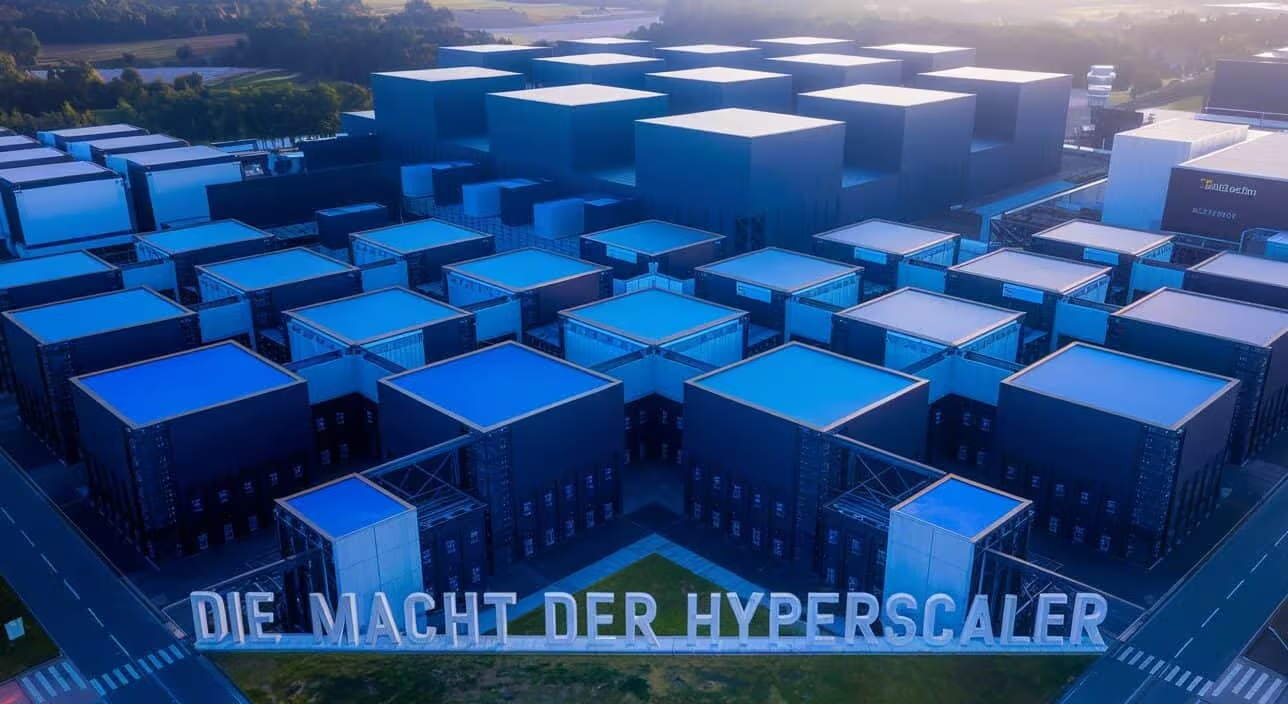
Hyperscalers are companies that operate large data centers and offer cloud computing services. They possess extensive infrastructure and provide a wide range of services such as storage, computing power, and databases. These companies are crucial for the digital transformation of organizations, as they enable the optimization of IT infrastructures, cost reduction, and increased operational flexibility.
Hyperscalers have a significant impact on the economy and society. They generate jobs, foster innovation, and contribute to economic growth. Their services enable companies to develop new business models and enhance their competitiveness.
Furthermore, they democratize access to advanced IT resources by making them accessible to small and medium-sized enterprises as well. The importance of hyperscalers in the digital landscape is considerable. They have become an essential component of modern IT infrastructure and play a central role in shaping the technological future.
Their services and innovations significantly influence the way companies and organizations operate and evolve in the digital era.
Correct determination of VAT liability
- Hyperscalers play a crucial role in the digital landscape, as they possess vast data centers and infrastructures that enable them to process large amounts of data and develop innovative technologies.
- The dominance of hyperscalers in the cloud computing industry is undeniable, as they own the infrastructure and resources to offer and operate cloud services on a global scale.
- The impact of hyperscalers on competition and innovation is multifaceted, as they can create new opportunities for companies while also displacing potential competitors.
- The controversy surrounding the power of hyperscalers revolves around data protection and monopolization, as they have access to large amounts of personal data and hold a dominant position in the industry.
- Regulation plays an important role in controlling hyperscalers, as it aims to ensure fair competition and compliance with data protection standards.
The Dominance of Hyperscalers in the Cloud Computing Industry
The Spread of Their Services
Their services are used by companies of all sizes, from startups to multinational corporations, and have changed the way businesses manage and operate their IT infrastructure.
Influence on the Development of New Technologies
The dominance of hyperscalers has also led to them having a significant influence on the development of new technologies and innovations. Through their massive investments in research and development, they drive the advancement of new technologies and set industry standards.
Key Players in the Digital Economy
Their services enable companies to quickly access new technologies and integrate them into their business processes. This has led to hyperscalers becoming key players in the digital economy, with a significant influence on the development of new technologies and innovations.
The Impact of Hyperscalers on Competition and Innovation
The impact of hyperscalers on competition and innovation is multifaceted. On the one hand, they have helped intensify competition by providing companies of all sizes access to powerful IT resources. This has enabled companies to develop new business models and offer innovative products and services.
On the other hand, hyperscalers have also changed the nature of competition within the industry itself by occupying a dominant position, making it difficult for small and medium-sized enterprises to compete with them. Furthermore, hyperscalers also have a significant impact on innovation. Through their massive investments in research and development, they drive the advancement of new technologies and set industry standards.
Their services enable companies to quickly access new technologies and integrate them into their business processes. This has led to hyperscalers becoming key players in the digital economy, with a significant influence on the development of new technologies and innovations.
The Controversy Surrounding Hyperscaler Power: Data Protection and Monopolization
| Category | Metrics |
|---|---|
| Data Protection | Proportion of user data collected by hyperscalers |
| Data Protection | Number of data breaches by hyperscalers |
| Monopolization | Market share of hyperscalers in the cloud computing sector |
| Monopolization | Number of competitor acquisitions by hyperscalers |
The power of hyperscalers has also led to controversies, particularly regarding data protection and monopolization. Due to their vast amounts of data and their ability to analyze this data, hyperscalers have access to an enormous amount of personal information about their users. This has raised concerns about data privacy, as many people worry that their personal data could be misused or inadequately protected.
Furthermore, hyperscalers have also established a dominant position in the industry, leading to concerns about monopolization. Their vast resources and their ability to offer services on a large scale have enabled them to exert significant influence on the market, making it difficult for small and medium-sized enterprises to compete with them. This has led regulatory authorities worldwide to take measures to curb the power of hyperscalers and ensure that competition in the industry is maintained.
The Role of Regulation in Controlling Hyperscalers
The role of regulation in controlling hyperscalers is crucial. Regulatory authorities worldwide have taken measures to curb the power of hyperscalers and ensure that competition in the industry is maintained. This includes measures to promote data protection, prevent monopolization, and ensure fair competition.
Additionally, regulatory authorities also play an important role in shaping the legal framework for collaboration between hyperscalers and other companies. This includes measures to ensure fair access to hyperscaler services as well as to ensure adequate protection for user data. Overall, regulation is an important component in controlling the power of hyperscalers and ensuring fair competition in the industry.
The Future of the Digital Landscape: How Can Companies Compete with Hyperscalers?
The Challenge for Companies
Companies face the challenge of competing with hyperscalers while maintaining their independence.
Specialized Service Providers as an Alternative
One option for companies is to utilize specialized service providers who focus on specific areas and can offer high-quality services. This allows companies to benefit from the advantages of hyperscalers without becoming completely dependent on them.
Open-Source Technologies for Independence
Furthermore, companies can also rely on open-source technologies to maintain their independence from hyperscalers. Open-source technologies offer companies the opportunity to develop and adapt their own solutions without being dependent on hyperscaler services.
Overall, companies face the challenge of competing with hyperscalers while maintaining their independence. This requires careful planning and strategy development to ensure that companies can succeed in an increasingly hyperscaler-dominated digital landscape.
The Opportunities and Challenges of Collaborating with Hyperscalers for Companies
Collaboration with hyperscalers offers companies both opportunities and challenges. On the one hand, companies can benefit from the powerful IT resources and services of hyperscalers to optimize their business processes and increase their competitiveness. Collaboration with hyperscalers can enable companies to quickly access new technologies and integrate them into their business processes.
On the other hand, collaboration with hyperscalers also presents challenges. Companies must ensure that they maintain their independence and do not become completely dependent on hyperscaler services. Furthermore, they must ensure that their data is adequately protected and that they retain control over their IT infrastructure.
Overall, collaboration with hyperscalers offers both opportunities and challenges for companies and requires careful planning and strategy development to ensure that companies can successfully benefit from the advantages of hyperscalers.
