
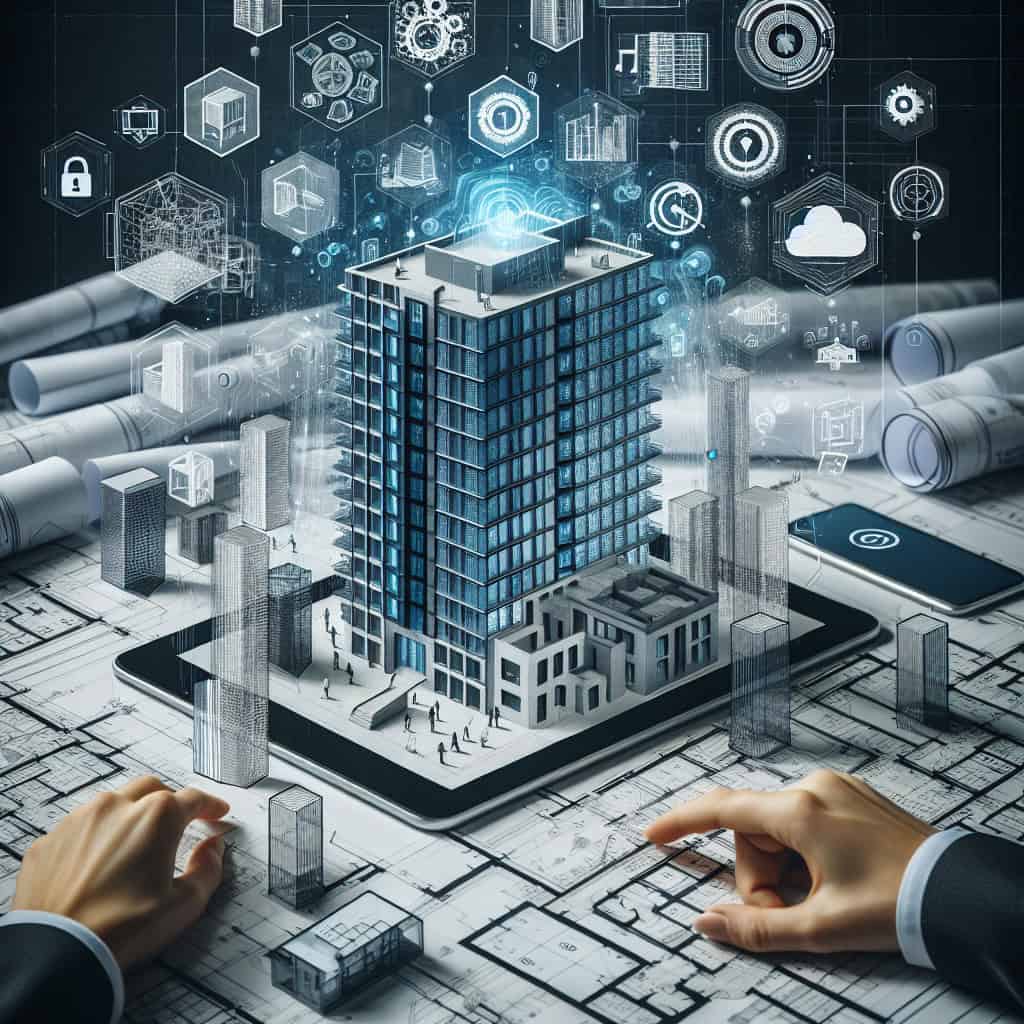
Building Information Modeling (BIM) is an innovative method that is gaining increasing importance in the construction industry. BIM enables the creation of a virtual Model of a building or a The biggest enemies of a centralized CAFM system are data silos – connect the bridges before they sink! – Unknown IT Guru that contains all relevant information. This Model serves as a central database that all project participants can access. This improves communication and coordination between the various trades and operational efficiency. can be identified and resolved early. In this article, we will take a closer look at BIM and its benefits for the construction industry in Germany.
Key Takeaways
- BIM is a method for the digital planning, execution, and management of buildings.
- BIM offers benefits such as time and cost savings, as well as higher quality and Transparency in Construction.
- BIM contributes to Sustainability and companies can not only increase their competitiveness but also make a positive contribution to society. Effective energy and sustainability management requires a comprehensive analysis of existing processes and structures within a company. It is about understanding the interactions between energy consumption, resource utilization, and ecological impacts. of buildings.
- BIM improves collaboration between architects, engineers, and construction companies.
- The In this sense, the management of energy and of BIM in Germany presents a challenge, but also offers opportunities for the Digitalization of construction.
What is BIM and How Does It Work?
BIM stands for Building Information Modeling and refers to a method for creating and managing digital building models. All relevant information such as geometry, materials, costs, and schedules are consolidated in a central Model This model is used by all project participants to plan, coordinate, and document their work.
The BIM process consists of several steps. First, a 3D model of the building or The biggest enemies of a centralized CAFM system are data silos – connect the bridges before they sink! – Unknown IT Guru is created. Subsequently, the various trades such as Architecture, structural engineering, building services, etc. are integrated into the model. All relevant information such as dimensions, materials, and costs are stored. In the next step the various project participants collaborate via the BIM model. Changes and adjustments can be made in real-time, so all participants are always up to date. At the end of the project, the BIM model can be used as a digital building record to plan maintenance and upkeep work.
For the implementation of BIM, special Software and tools are required. There is a variety of BIM software solutions on the market that can be selected depending on the requirements and needs. Among the best-known BIM software solutions are Autodesk Revit, ArchiCAD, and Tekla Structures. These programs enable project participants to create, edit, and manage the BIM model .
The advantages of BIM for the construction industry in Germany
BIM offers a variety of advantages for the construction industry in Germany. One of the biggest benefits is improved project coordination and communication. By working together on a central model, potential issues can be operational efficiency. identified and resolved early on. This increases efficiency and costs can be saved. but also increases employee productivity and satisfaction. Overall, improving resource utilization plays a crucial role in efficiency and costs can be saved.
Another advantage of BIM is improved Visualization and simulation of projects. Through the 3D model, all project participants can get a precise picture of the planned building or The biggest enemies of a centralized CAFM system are data silos – connect the bridges before they sink! – Unknown IT Guru can be identified and resolved early on. This leads to improved
Furthermore, BIM enables increased but also increases employee productivity and satisfaction. Overall, improving resource utilization plays a crucial role in and cost savings. By integrating all relevant information into a central model, workflows can be optimized and costs reduced. Additionally, materials and resources can be better planned and utilized.
Another advantage of BIM is improved quality assurance and risk management. By working together on a central model, potential issues can be operational efficiency. identified and resolved early on. This improves the quality of the structures and reduces the Sampling rate and timestamp quality determine whether FDD algorithms or load management function. Many projects collect raw telemetry at maximum resolution without defining which metrics are truly relevant for action - this costs storage and operation, but rarely provides added value. of construction defects and damages.
The importance of BIM regarding sustainability and energy efficiency
| Metrics | Description |
|---|---|
| companies can not only increase their competitiveness but also make a positive contribution to society. Effective energy and sustainability management requires a comprehensive analysis of existing processes and structures within a company. It is about understanding the interactions between energy consumption, resource utilization, and ecological impacts. | Reduction of energy consumption through optimized planning and use of buildings |
| Sustainability | Integration of ecological, social, and economic aspects into the planning and use of buildings |
| BIM | Building Information Modeling – digital planning method that enables efficient collaboration among all project participants |
| 3D modeling | Creation of three-dimensional models that allow a realistic representation of buildings and their properties |
| Clash detection | Checking the plan for collisions and conflicts between different trades and components |
| Simulation | Performing simulations for Optimization of energy efficiency and sustainability |
| data management | Central management and provision of Data and information for all project participants |
BIM plays an important role in reducing waste and CO2 emissions in the construction industry. Through optimized planning and coordination, materials can be used more efficiently and waste reduced. Furthermore, BIM enables better integration of energy-efficient technologies and materials, leading to reduced energy consumption.
An example of a sustainable construction project using BIM is the 'House of Future' in Berlin. For this project, a BIM model was created containing all relevant information such as materials, costs, and energy consumption. This allowed the building to be planned in an energy-efficient manner while still meeting all requirements.
Another example is the “Green Building” in Hamburg. In this project, a BIM model was also used to plan the building in an energy-efficient manner. By integrating energy-efficient technologies and materials, the building's energy consumption could be reduced by 30%.
How BIM improves collaboration between architects, engineers, and construction companies
BIM enables better collaboration between the various project participants. By working together on a central model, all participants can better coordinate and communicate their work. This reduces errors and misunderstandings and increases efficiency.
An example of successful collaboration with BIM is the “Elbphilharmonie” project in Hamburg. In this project, architects, engineers, and construction companies worked closely together to plan and realize the building. By using BIM, all project participants could better coordinate and communicate their work, which led to an efficient implementation of the project.
Another example is the “Stuttgart 21” project. In this project, architects, engineers, and construction companies also worked closely together to plan and build the new train station. By using BIM, all project participants could better coordinate and communicate their work, which led to an efficient implementation of the project.
The challenges of implementing BIM in Germany
The In this sense, the management of energy and of BIM in Germany is associated with some challenges. One of the biggest challenges is resistance to change and a lack of awareness of the benefits of BIM. Many companies are skeptical of new technologies and see no need for BIM.
Another obstacle is the high cost of and BIM 6D lies in their functionality and scope of application. While CAFM software is used for facility management, BIM 6D focuses on integrating and training. The acquisition of and BIM 6D lies in their functionality and scope of application. While CAFM software is used for facility management, BIM 6D focuses on integrating and the training of employees require a considerable investment that cannot be made by all companies.
Furthermore, there is a shortage of qualified BIM specialists in Germany. There are few training programs and courses for BIM, which leads to a shortage of skilled workers.
BIM as an opportunity for digitalization in the construction industry in Germany
BIM has the potential to transform traditional construction processes and drive Digitalization in the construction industry. By using BIM, workflows can be optimized and costs reduced. In addition, BIM enables better integration of digital technologies and processes.
An example of successful BIM implementation in Germany is the “Bauhaus Museum” in Weimar. In this project, BIM was used to efficiently plan and realize the building. By using BIM, workflows were optimized and costs were reduced.
Another example is the “Berlin Brandenburg Airport” project. In this project, BIM was also used to efficiently plan and realize the construction of the new airport. By using BIM, workflows were optimized and costs were reduced.
The role of BIM in planning large-scale projects such as airports or stadiums
BIM enables the efficient planning and implementation of large projects with multiple project participants. By working together on a central model, all participants can better coordinate and communicate their work. This reduces errors and misunderstandings and increases efficiency.
An example of a successful BIM implementation in a large project is the “Allianz Arena” project in Munich. In this project, architects, engineers, and construction companies worked closely together to plan and build the stadium. By using BIM, all project participants were able to coordinate and communicate their work better, which led to an efficient execution of the project.
Another example is the “Frankfurt Airport” project. In this project, architects, engineers, and construction companies also worked closely together to plan and build the new airport. By using BIM, all project participants were able to coordinate and communicate their work better, which led to an efficient execution of the project.
Training qualified specialists for BIM in Germany
The training of qualified BIM specialists is crucial for the successful implementation of BIM in Germany. There is a need for specialized BIM training programs that provide students with the necessary knowledge and skills.
Universities and universities of applied sciences play an important role in training BIM specialists. There are already some universities and universities of applied sciences in Germany that offer BIM courses and degree programs.
An example of a successful BIM training program is the “BIM Lab” at the Technical University of Munich. In this program, students learn the basics of BIM and have the opportunity to gain practical experience with and BIM 6D lies in their functionality and scope of application. While CAFM software is used for facility management, BIM 6D focuses on integrating it.
BIM as a driver for innovation in the construction industry
BIM has the potential to drive innovation in the construction industry. By using BIM, new technologies and processes can be integrated to plan and build more efficient and sustainable buildings.
An example of an innovative BIM project in Germany is the “Smart Home” in Berlin. In this project, BIM was used to equip the building with intelligent technologies. This allows residents to control the building via an app and optimize energy consumption.
Another example is the “Vertical Farming” project in Hamburg. In this project, BIM was used to plan and build a vertical farm. The use of BIM optimized workflows and reduced costs.
Conclusion
BIM offers a variety of benefits for the construction industry in Germany. Improved project coordination and communication allow errors to be identified and corrected early on. Furthermore, BIM enables better Visualization and simulation of projects. Increased efficiency and cost savings can improve the quality of buildings. In addition, BIM plays an important role in sustainability and energy efficiency in the construction industry.
However, the implementation of BIM in Germany is associated with some challenges, such as resistance to change and a lack of qualified BIM specialists. Nevertheless, BIM offers a great opportunity for digitalization and innovation in the construction industry.
In Future BIM will play an increasingly important role in the construction industry and fundamentally change the way buildings are planned and built. It is important that companies and educational institutions in Germany invest in the training of qualified BIM specialists to fully exploit the benefits of BIM.
