
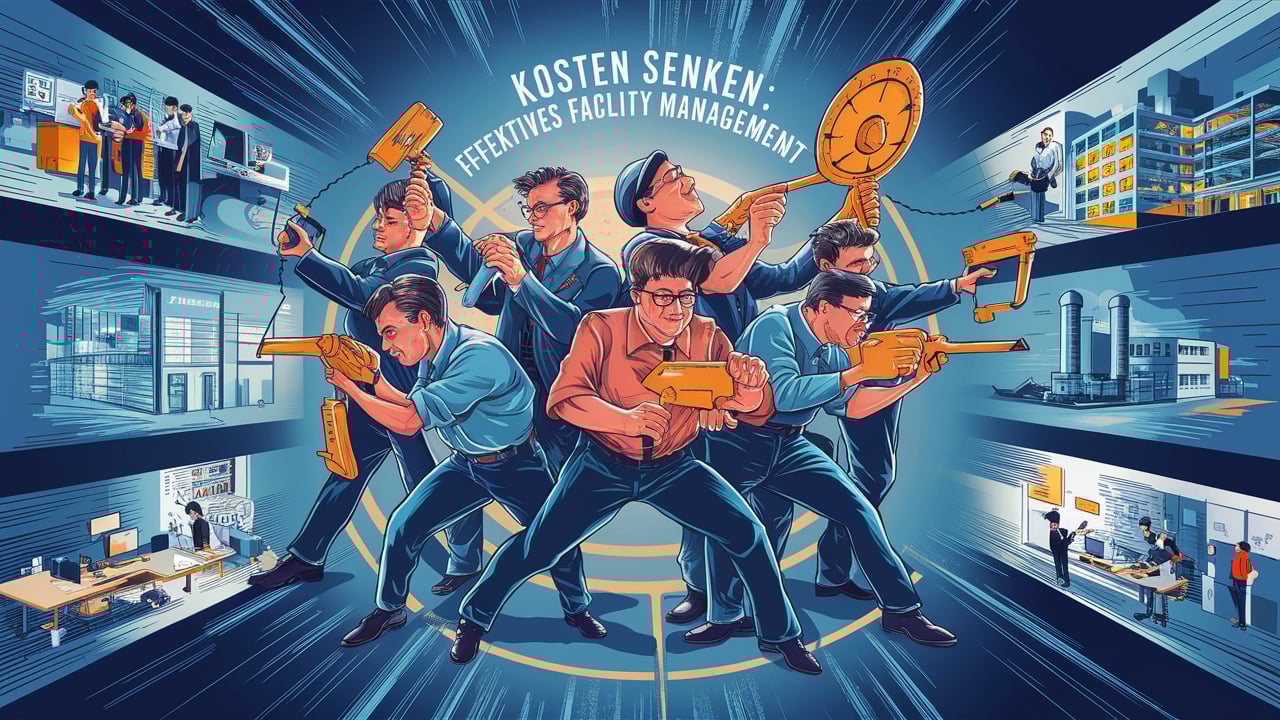
Facility Management ist ein wesentlicher Faktor für die Kostenoptimierung in Unternehmen. Es ermöglicht eine signifikante Reduzierung der Betriebskosten, was zu einer Steigerung der Rentabilität und Wettbewerbsfähigkeit führt. Ein strategisch geplantes und implementiertes Facility Management maximiert die Effizienz von Gebäuden und Anlagen, optimiert die Ressourcennutzung und verlängert die Lebensdauer der Infrastruktur.
Zudem trägt es zur Risikominimierung und Gewährleistung der Arbeitssicherheit bei. Die effektive Umsetzung des Facility Managements erfordert einen ganzheitlichen Ansatz, der alle Aspekte des Gebäude- und Anlagenbetriebs umfasst. Dies beinhaltet die Planung, Organisation, Steuerung und Überwachung sämtlicher Prozesse im Zusammenhang mit der Nutzung und dem Betrieb von Immobilien und technischen Anlagen.
Durch die Optimierung von Betriebsabläufen, den Einsatz effizienter Technologien und die Implementierung nachhaltiger Praktiken können Kosten gesenkt und die Unternehmensrentabilität gesteigert werden. Darüber hinaus fördert ein effektives Facility Management die Mitarbeiterzufriedenheit durch die Schaffung einer angenehmen und sicheren Arbeitsumgebung. Es stellt somit einen wichtigen Hebel zur Kostensenkung und Steigerung der Wettbewerbsfähigkeit von Unternehmen dar und ist ein integraler Bestandteil moderner Unternehmensstrategien.
Key Takeaways
- Facility Management spielt eine entscheidende Rolle bei der Kostensenkung in Unternehmen
- Effektive Strategien zur Senkung der Betriebskosten umfassen die Optimierung von Energieverbrauch und die Implementierung von effizienten Prozessen
- Technologie spielt eine wichtige Rolle im Facility Management, insbesondere bei der Überwachung und Steuerung von Gebäudesystemen
- Nachhaltige Praktiken wie Abfallreduzierung und Ressourceneffizienz tragen maßgeblich zur Kostensenkung im Facility Management bei
- Regelmäßige Wartung und Instandhaltung sind unerlässlich, um langfristige Kosten zu senken und den reibungslosen Betrieb von Anlagen und Gebäuden sicherzustellen
Effektive Strategien zur Senkung der Betriebskosten
Optimierung von Betriebsabläufen
Eine der wichtigsten Strategien ist die Optimierung von Betriebsabläufen, um Ressourcen optimal zu nutzen und Verschwendung zu minimieren. Dies kann durch die Einführung von Lean-Management-Prinzipien erreicht werden, die darauf abzielen, Prozesse zu vereinfachen, Überproduktion zu vermeiden und Lagerbestände zu reduzieren.
Kostenanalyse und -senkung
Darüber hinaus ist es wichtig, regelmäßige Analysen der Betriebskosten durchzuführen, um Einsparpotenziale zu identifizieren und gezielte Maßnahmen zur Kostensenkung zu ergreifen. Eine weitere effektive Strategie zur Senkung der Betriebskosten ist die Implementierung von energieeffizienten Technologien und Systemen. Durch den Einsatz von intelligenten Gebäudemanagementsystemen, energieeffizienten Beleuchtungslösungen und modernen Heizungs- und Kühlsystemen können Unternehmen ihre Energiekosten erheblich reduzieren.
Umweltschutz und Ressourcenschonung
Darüber hinaus können auch Wasserverbrauch und Abfallentsorgung optimiert werden, um Kosten zu senken und gleichzeitig einen Beitrag zum Umweltschutz zu leisten.
Kontinuierliche Innovation
Insgesamt ist es wichtig, dass Unternehmen kontinuierlich nach innovativen Lösungen suchen, um Betriebskosten zu senken und ihre Wettbewerbsfähigkeit zu stärken.
Die Rolle von Technologie im Facility Management
Technologie spielt eine entscheidende Rolle im Facility Management, insbesondere wenn es darum geht, Betriebskosten zu senken. Durch den Einsatz von modernen Technologien können Unternehmen ihre Betriebsabläufe optimieren, Ressourcen effizient nutzen und die Produktivität steigern. Ein wichtiger Bereich, in dem Technologie eine Rolle spielt, ist das Gebäudemanagement.
Intelligente Gebäudemanagementsysteme ermöglichen es Unternehmen, den Energieverbrauch zu überwachen und zu steuern, um Kosten zu senken und gleichzeitig den Komfort der Nutzer zu verbessern. Darüber hinaus können auch digitale Lösungen im Bereich der Instandhaltung und Wartung dazu beitragen, Betriebskosten zu senken. Durch den Einsatz von Predictive Maintenance-Technologien können Unternehmen den Zustand ihrer Anlagen kontinuierlich überwachen und frühzeitig potenzielle Ausfälle erkennen, um teure Reparaturen zu vermeiden.
Darüber hinaus können auch digitale Plattformen zur Verwaltung von Lieferanten und Dienstleistern dazu beitragen, Prozesse zu optimieren und Kosten zu senken. Insgesamt ist Technologie ein wichtiger Treiber für Effizienzsteigerungen im Facility Management und kann dazu beitragen, Betriebskosten nachhaltig zu senken.
Nachhaltige Praktiken zur Kostensenkung im Facility Management
| Nachhaltige Praktiken | Kostensenkung im Facility Management |
|---|---|
| Energieeffizienzsteigerung | Reduzierung der Energiekosten durch effizientere Nutzung von Strom und Wärme |
| Abfallmanagement | Optimierung der Abfallentsorgung und Recyclingmaßnahmen zur Kostensenkung |
| Wartungsplanung | Regelmäßige Wartung zur Verlängerung der Lebensdauer von Anlagen und Reduzierung von Reparaturkosten |
| Grüne Beschaffung | Einkauf von umweltfreundlichen und langlebigen Produkten zur Kostensenkung und Ressourcenschonung |
Nachhaltige Praktiken spielen eine wichtige Rolle bei der Kostensenkung im Facility Management. Durch die Implementierung von umweltfreundlichen Lösungen können Unternehmen nicht nur ihre ökologische Verantwortung wahrnehmen, sondern auch langfristig Kosten senken. Ein wichtiger Bereich, in dem nachhaltige Praktiken zur Kostensenkung beitragen können, ist die Energieeffizienz.
Durch den Einsatz von erneuerbaren Energien, energieeffizienten Technologien und intelligenten Energiemanagementsystemen können Unternehmen ihre Energiekosten erheblich reduzieren. Darüber hinaus können auch nachhaltige Beschaffungspraktiken dazu beitragen, Kosten zu senken. Durch den Einsatz von umweltfreundlichen Materialien und Produkten können Unternehmen nicht nur ihre Umweltbilanz verbessern, sondern auch langfristig Kosten einsparen.
Darüber hinaus können auch Abfallmanagementlösungen dazu beitragen, Ressourcen zu schonen und Kosten zu senken. Insgesamt ist es wichtig, dass Unternehmen nachhaltige Praktiken in ihr Facility Management integrieren, um langfristig Kosten zu senken und gleichzeitig einen Beitrag zum Umweltschutz zu leisten.
Die Bedeutung von regelmäßiger Wartung und Instandhaltung
Regelmäßige Wartung und Instandhaltung sind entscheidend für die Kostensenkung im Facility Management. Durch die rechtzeitige Wartung von Anlagen und Gebäuden können teure Reparaturen vermieden werden, was langfristig Kosten spart. Darüber hinaus trägt regelmäßige Wartung auch dazu bei, die Lebensdauer von Anlagen zu verlängern und deren Effizienz aufrechtzuerhalten.
Ein gut geplantes Wartungsprogramm kann dazu beitragen, Ausfallzeiten zu minimieren und die Produktivität des Unternehmens zu steigern. Darüber hinaus ist auch präventive Instandhaltung ein wichtiger Bestandteil eines effektiven Facility Managements zur Kostensenkung. Durch die frühzeitige Erkennung von Verschleißerscheinungen und potenziellen Ausfällen können teure Reparaturen vermieden werden.
Darüber hinaus trägt präventive Instandhaltung auch dazu bei, die Sicherheit am Arbeitsplatz zu gewährleisten und das Risiko von Unfällen zu minimieren. Insgesamt ist regelmäßige Wartung und Instandhaltung ein wichtiger Bestandteil eines effektiven Facility Managements zur Kostensenkung.
Die Rolle von Outsourcing im Facility Management
Vorteile der Auslagerung von Dienstleistungen
Durch die Auslagerung von bestimmten Dienstleistungen an externe Anbieter können Unternehmen ihre Betriebskosten senken und gleichzeitig ihre Effizienz steigern.
Optimierung der Gebäudereinigung
Durch die Zusammenarbeit mit professionellen Reinigungsunternehmen können Unternehmen ihre Reinigungskosten optimieren und gleichzeitig sicherstellen, dass ihre Räumlichkeiten stets sauber und gepflegt sind. Darüber hinaus kann auch die Auslagerung von Instandhaltungs- und Reparaturdienstleistungen dazu beitragen, Kosten zu senken. Externe Dienstleister verfügen oft über spezialisiertes Know-how und moderne Technologien, um Wartungsarbeiten effizient durchzuführen und Ausfallzeiten zu minimieren.
Auslagerung administrativer Aufgaben
Darüber hinaus können auch administrative Aufgaben wie das Lieferantenmanagement oder das Flottenmanagement ausgelagert werden, um interne Ressourcen freizusetzen und Kosten zu senken. Insgesamt ist Outsourcing ein wichtiger Bestandteil eines effektiven Facility Managements zur Kostensenkung.
Erfolgsfaktoren für ein effektives Facility Management zur Kostensenkung
Ein effektives Facility Management zur Kostensenkung erfordert eine ganzheitliche Herangehensweise und die Berücksichtigung verschiedener Erfolgsfaktoren. Dazu gehören unter anderem eine klare Strategie und Zielsetzung, um gezielt Kostenpotenziale zu identifizieren und Maßnahmen zur Kostensenkung einzuleiten. Darüber hinaus ist auch eine kontinuierliche Analyse der Betriebskosten wichtig, um Einsparpotenziale frühzeitig zu erkennen und gezielte Maßnahmen einzuleiten.
Ein weiterer Erfolgsfaktor ist die Integration von Nachhaltigkeitspraktiken in das Facility Management. Durch den Einsatz von umweltfreundlichen Lösungen können Unternehmen nicht nur ihre Umweltbilanz verbessern, sondern auch langfristig Kosten einsparen. Darüber hinaus ist auch die regelmäßige Wartung und Instandhaltung ein wichtiger Erfolgsfaktor für ein effektives Facility Management zur Kostensenkung.
Durch die rechtzeitige Wartung von Anlagen können teure Reparaturen vermieden werden, was langfristig Kosten spart. Insgesamt ist ein ganzheitlicher Ansatz entscheidend für ein effektives Facility Management zur Kostensenkung. Durch die Integration verschiedener Maßnahmen wie Optimierung von Betriebsabläufen, Einsatz von Technologie, Implementierung nachhaltiger Praktiken und regelmäßige Wartung können Unternehmen ihre Betriebskosten nachhaltig senken und ihre Wettbewerbsfähigkeit stärken.
