
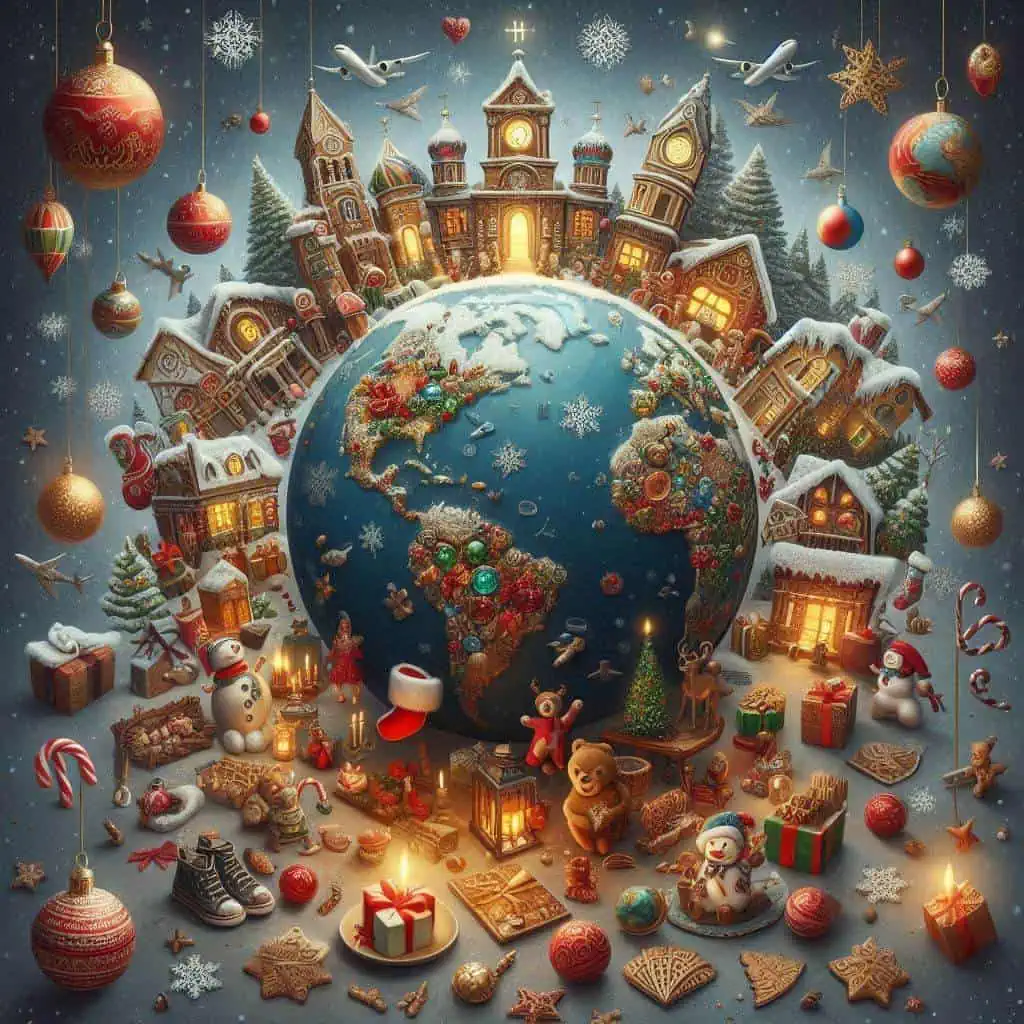
When we talk about Christmas Eve, many of us immediately think of the festive time when families come together to exchange gifts and enjoy festive meals. But what seems like a familiar tradition to us is often quite different in other countries! Christmas Eve is celebrated worldwide in the most diverse ways – each culture brings its own customs and traditions. From the festive markets in Germany to warm celebrations in Latin America, December 24th is a day full of unique rituals and warm gatherings.
Here are some notable Christmas Eve traditions from different countries:
- Tradition of Carol Singing: In many regions, children go from house to house singing Christmas carols to receive small gifts or sweets.
- Spain: In Spain, families celebrate "Nochebuena" with a large feast, often consisting of multiple courses. Special Christmas dishes like "Pavo trufado" (truffle turkey) are also served here, followed by midnight mass.
- Italy: The Italian "Vigilia di Natale" is known for its fish dish – a variety of seafood is often served. The evening concludes with the exchange of gifts and the singing of traditional Christmas carols.
- Mexico: In Mexico, the 'Posadas' are an important tradition during Advent. On Christmas Eve, families and friends gather to sing songs together and spend a festive night, often with piñatas and delicious food.
"Christmas Eve brings the whole family together – it's not just a celebration, but a feeling of togetherness."
No matter where in the world you celebrate, the spirit of Christmas Eve remains the same: love, community, and joy are at the center. Therefore, all these different customs make December 24th so special.
Christmas Eve in Germany
Christmas Eve in Germany is a combination of tradition, family, and festivity. Preparations often begin weeks in advance with the start of Advent. Many families set up their Christmas trees and begin decorating them – fairy lights, glass baubles, and handmade ornaments find their place. It's also lovely that many people decorate the tree only on December 24th to make the evening even more festive.
A typical Christmas Eve meal might consist of a delicious festive roast, such as goose or duck. This is often accompanied by red cabbage and potato dumplings. And not to forget: the cookies! Gingerbread and other sweet treats are indispensable companions during this contemplative time.
The gift-giving itself is the highlight of the evening for many. After the festive dinner, a joint visit to a church service is often undertaken. Whether by candlelight or in a full hall – the Christ vespers is a time of reflection and joy, celebrating the Holy Night.
"The most beautiful time of the year is the time with family."
After the church service, everyone goes home for the gift exchange. Gifts are distributed under the Christmas tree, often accompanied by cheerful laughter and sparkling eyes. Another custom is singing Christmas carols; sometimes even reading classic Christmas stories aloud.
- Family celebration: In Germany, Christmas Eve is primarily a family celebration. Whether young or old, everyone contributes something to the festivities.
- Need for Carol Singing: In many regions, children go from house to house singing Christmas carols to receive small gifts or sweets.
- Absurd traditions: In some areas, people go around with the "Christkind" (Christ Child) – much to the delight of the children.
Christmas Eve in Germany unites deeply rooted traditions with modern family traditions in a heartfelt way. It is this magic that makes December 24th so special – an evening full of warmth, love, and community.
Christmas Customs in Sweden
Looking at Sweden, Christmas Eve (or "Julafton", as the Swedes call it) is celebrated with a mix of traditions and festive flair that makes every Christmas lover's heart beat faster. On December 24th, families gather for a grand feast, which is often more than just a meal – it's a joyous ritual that embodies the spirit of Christmas.
The typical dishes are diverse and vary by region, but a classic Swedish Christmas Eve meal might include delicious Köttbullar (meatballs), Janssons Frestelse (a casserole with potatoes and pickled herring), as well as a variety of pickled fish. And let's not forget the famous Glögg – a spicy mulled wine that is particularly popular during the cold winter months.
Another centerpiece of the Swedish Christmas celebration is Julklappar, meaning gifts, which are traditionally exchanged on Christmas Eve. The family gathers around the decorated Christmas tree, and everyone takes turns opening their gift. There's often a very special rule here: the gifts are not simply handed out; rather, family members draw their Julklapp one after another and must read the gift aloud!
Another lovely custom is dancing around the Christmas tree. Often, people sing joyfully while the whole family dances in a circle – this creates a warm and exuberant atmosphere.
"The best time of the year is Christmas Eve; it's not just about the food or the gifts, but also about the community and laughter with family."
Traditional Christmas carols like "Nu tändas tusen juleljus" are also particularly popular and can be sung during dinner.
In Sweden, the evening often ends with a visit to the "Midnight Mass", where many attend the religious part of the celebration.
Christmas Eve in Sweden is a charming combination of delicious food, joyful customs, and above all, loving community.
Christmas Eve in Italy
Christmas Eve in Italy, or as the locals say, "Vigilia di Natale", is a celebration full of delicious traditions and warm gatherings. Here, the evening is characterized by culinary delights, which often represent the highlight of the festivities. Instead of a heavy festive meal with meat dishes, the focus is on fish. Many Italian families prepare a variety of seafood – from calamari and shrimp to cod – making the evening a festive experience for all the senses.
A traditional dish often served is "Sgombro alla Griglia" (grilled mackerel), which is prepared simply yet exquisitely. But it's not just about the taste... gifts are usually exchanged after dinner, accompanied by joyful singing of traditional Christmas carols. It's almost as if the music itself brings the family even closer together.
"Eating is a necessity. Enjoying is an art."
In many regions of Italy, there is also the custom of the "Cenone di Vigilia", a grand feast on Christmas Eve, where several courses are served – often eight! This represents the tradition of fasting before Christmas. It's not just about the taste; family recipes are also passed down and thus preserved over generations.
- Family gathering: As in many other cultures, family is the focus of Christmas Eve in Italy. People gather around the table to eat together and spend time with each other.
- Christmas in the family: After the meal, games or the telling of Christmas stories that have endured for generations often follow.
- Cultural diversity: Christmas Eve can be celebrated differently in various regions – while more fish dishes may be served in the south, heartier meals are common in the north.
To conclude the evening, many families gather around the Christmas tree or the nativity scene and sing songs together like "Tu scendi dalle stelle", adding a harmonious note to the evening. This tradition impressively shows how important community and family are during this contemplative time.
Christmas Eve in Italy combines delicious food with deep-rooted traditions, creating unforgettable moments of joy and warmth.
Christmas Celebration in Mexico
Christmas Eve in Mexico is a celebration full of colors, music, and warm gatherings. Mexican Christmas festivities often begin with the "Posadas", which take place throughout the Advent season. This tradition symbolizes Mary and Joseph's search for lodging and brings friends and family together to sing songs and strengthen the sense of community. On December 24th, the celebrations reach their peak.
The Mexican "Nochebuena" (Christmas Eve) is characterized by a festive dinner, which often includes a variety of delicious dishes. Here are some typical dishes:
- Cod Vizcaina Style: A traditional dish made from salted cod, prepared in a tomato sauce.
- Pozole: A hearty soup made from hominy (dried corn) with meat, often served with fresh vegetables.
- Tamales: Steamed dough rolls, filled with various ingredients, which play an important role in Mexican cuisine.
"Nochebuena is not just a dinner; it's an experience of sharing and celebrating with our loved ones."
Another highlight of the evening is the piñatas. During the celebration, they are filled with sweets and then broken by the children, creating a joyful atmosphere. Gifts are typically distributed after the meal, followed by joyful singing of traditional Christmas carols like "El Pobre de Asís" or "Campana sobre campana", which evoke a feeling of joy and community for everyone present.
The religious component also plays a significant role: many families attend Midnight Mass (Misa de Gallo) on Christmas Eve to commemorate the Holy Night. It is a time for reflection and gratitude for all the good things in the past year.
Christmas Eve in Mexico is a moving combination of festive food, lively traditions, and loving family gatherings. It impressively shows how important community and warmth are, even in these special moments.
Bespoke Christmas in Australia
In Australia, Christmas Eve, or as the locals say, 'Christmas Eve', is celebrated in a completely different atmosphere. While temperatures here often rise to a summery 30 degrees Celsius, the image of festively decorated houses and Christmas trees is characterized not only by snow, but much more by sunshine and BBQ smells.
A typical Australian Christmas Eve meal might consist of delicious seafood, fresh salads, and meat prepared on the grill – the perfect enjoyment for an outdoor dinner. Many families prefer to celebrate on the beach, enjoying the warm breeze and the sound of the waves.
Gifts are opened in Australia on the morning of December 25th, which means that Christmas Eve is often a relaxed time with family and friends. On the evening itself, many enjoy attending church services and midnight masses. The transition from contemplative moments to joyful conviviality is highly valued here.
"Christmas in Australia is like a sunny holiday with the best food!"
Another beautiful custom is 'Carols by Candlelight', where families gather outdoors to sing Christmas carols – often by candlelight under the starry sky. This combines musical traditions with a sense of community and brings people of all ages together.
Here are some more interesting aspects of Christmas Eve in Australia:
- BBQ Culture: Instead of a traditional feast, there are often grilled steaks or sausages – a true Australian specialty!
- Summer Activities: Many spend the day at the beach or in the park, where games like cricket and volleyball provide entertainment.
- Cultural diversity: Due to the multicultural society, many international Christmas dishes can also be found on the tables.
Whether on the beach or in the backyard – Christmas Eve in Australia combines fun, sun, and festivity in a special way! Christmas here impressively shows us that it's not just about traditions, but also about enjoying life with loved ones.
Contemplative Traditions in Russia
Looking at Russia, Christmas Eve, or as the locals say 'Сочельник' (Sotschelnik), becomes a celebration full of contemplative traditions and meaningful customs. Russian culture is permeated by deep-rooted religious rites and festive practices that make Christmas Eve a unique experience.
In Russia, Christmas Eve falls on January 6th, as the Orthodox Church follows the Julian calendar. One of the central traditions is fasting until dinner, meaning many families abstain from solid food during the day. Instead, they look forward to a rich feast in the evening with many delicious dishes. The traditional Christmas meal can include up to twelve different dishes – a symbolic number reminiscent of the twelve apostles.
Here are some typical dishes served on Christmas Eve:
- Borscht: A hearty beetroot soup, often served with sour cream.
- Olivier Salad: A popular salad made with potatoes, carrots, peas, and sausage – a must-have on every festive table!
- Pierogi: Filled dumplings with various fillings such as potatoes or cherries.
"Fasting leads us to reflection and makes the Christmas celebration even more delicious."
Another special custom is 'Sviata Vecheria' – the holy supper. Families gather around a festively set table and begin their meal with the first star in the sky. Often, a grain or hay decoration is placed in the center of the table as a symbol of prosperity in the coming year.
Singing Christmas carols and offering blessings for family and friends. Many families attend a midnight mass in church before or after the festive meal to celebrate the spiritual part of Christmas Eve.
- Family gathering: Christmas Eve brings families together – relatives often travel from afar.
- Cultural Customs: In some regions, there are special songs that are performed during the festivities.
- Light Traditions: Lighting candles and placing a nativity scene are popular rites for celebrating Christmas.
"Christmas is not just a date; it is a time for family and hope."
Christmas Eve in Russia combines fasting traditions with warm family gatherings and culinary delights. The celebrations are not just a time for eating and celebrating, but also a moment of reflection and compassion for each other during this special time of year.
Diversity of Christmas Traditions on Christmas Eve
Christmas Eve, or "The Night of Miracles," is an evening where the diversity of Christmas traditions worldwide comes to light. In each country, this special day is celebrated in its own way, and each ritual tells a story of love, community, and cultural identity. While Germans admire the Christmas tree and exchange gifts, Swedes dance joyfully around their fir trees and enjoy the feast. Or as Mexicans say: "Nochebuena" is not just a meal, but an experience of sharing with our loved ones.
Here are some notable aspects of the diversity of Christmas Eve traditions:
- Cultural Identity: Each country brings its own customs – from the traditional Christmas markets in Germany to the lively celebrations in Mexico. These customs reflect not only the culture but also the values of the community.
- Food at the Heart: Whether it's Italian seafood or Swedish meatballs – food plays a central role in the festivities. A festive dinner brings families together and creates memories.
- Family Cohesion: Worldwide, Christmas Eve is a time for family gatherings. Regardless of traditions, the community is at the center – shared songs, stories, and the exchange of gifts strengthen the bonds between loved ones.
"Every culture has its own way of celebrating, but at the end of the day, it's all about the same thing: being together with loved ones."
The variety of Christmas traditions shows us that it's not just about the holiday itself, but also about the emotions and experiences we share with each other. Christmas Eve is more than just a date on the calendar; it is a celebration of life, hope, and love – regardless of where you are in the world.
In this spirit: Wishing you a wonderful Christmas season!
