
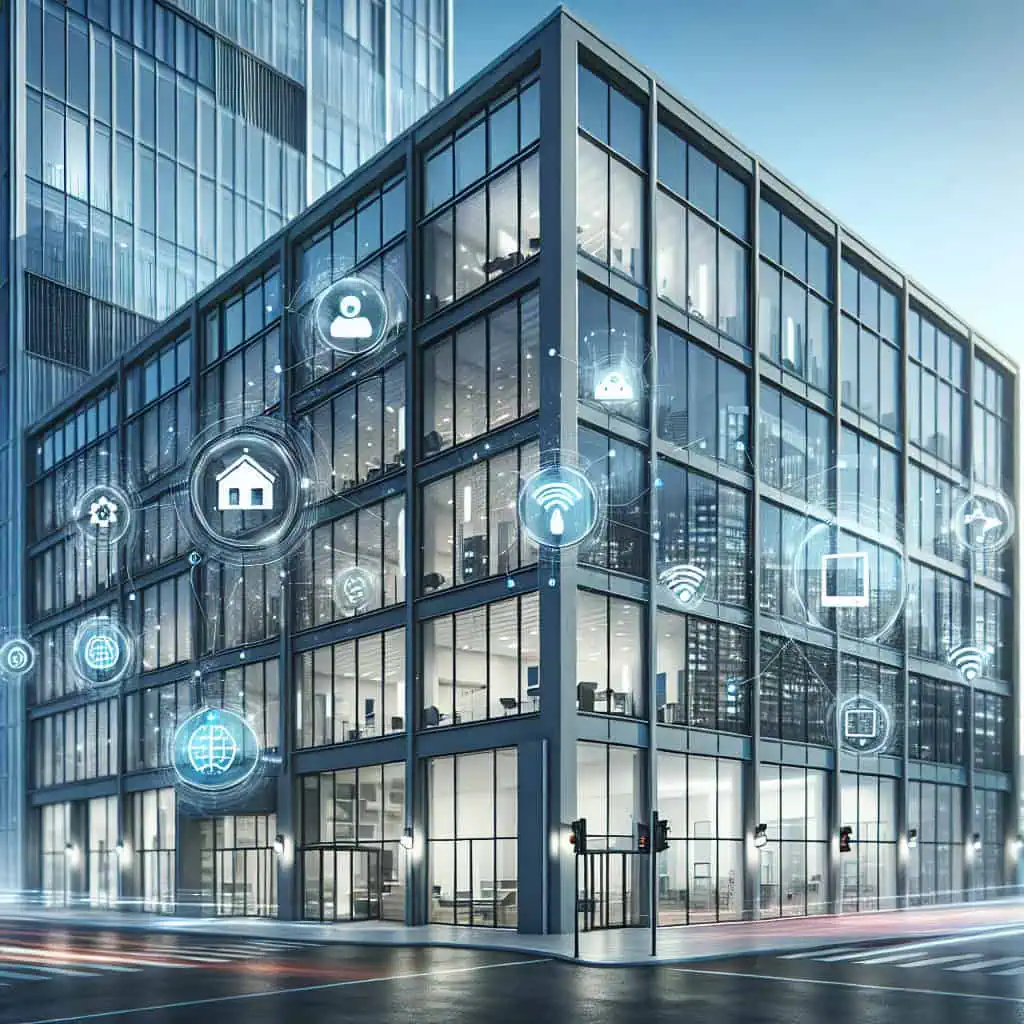
Imagine if you could manage your entire Building management optimisation with a single click. According to a study by Gartner, by 2025 more than 75 % of companies are expected to have IoT technologies into their existing systems. This is not only a Trend, but a necessity for facility managers who Efficiency and cost savings.
The integration of IoT into facility management systems is not rocket science, but a strategic decision that many organisations need to make. Advantages brings with it. Think of a large office building with hundreds of sensors that monitor temperature, light and air quality. These Data can be recorded and analysed in real time in order to make immediate adjustments and optimise energy consumption.
Advantages of IoT integration
The Advantages are numerous:
- Increased operational efficiency through automated processes.
- Improving the user experience through personalised environments.
- Reduced operating costs thanks to precise energy monitoring.
- Early detection of maintenance requirements through predictive analytics.
Did You Know? An early Maintenance can reduce costs by up to 30 %!
Integration challenges
Of course, there are also challenges. Integration often requires an overhaul of existing systems and possibly also training for staff. One example: a large shopping centre opted for the Implementation of a new IoT system for monitoring pedestrian traffic. The process was lengthy and required extensive testing to ensure that all sensors communicate seamlessly with each other.
If you don't know where you stand, you can't know, wherever you go. This wisdom is especially true for facility management in the age of IoT. A clear inventory helps to identify potential stumbling blocks at an early stage.
Shaping an IoT-enabled future
IoT-enabled means more than just introducing new devices; it also means creating a culture of change. Facility managers must be willing to explore innovative solutions and potentially rethink their way of thinking about traditional practices. Those who do so will not only improve their Efficiency but also achieve a competitive advantage.
Integrating IoT into existing systems is not a one-off project; it is a continuous process of learning and adapting. Facility managers should regularly evaluate new technologies and be prepared to adapt their strategies accordingly.
Data analysis and decision-making in IoT-supported facility management
The Data, generated by IoT devices are not just numbers on a screen - they are the key to intelligent decision-making. According to a McKinsey survey, 70 % of organisations are already using IoT data to improve their operations. This is no coincidence; it's a revolution in facility management.
Imagine a large hospital that cares for hundreds of patients every night. Monitoring temperature, air quality and even equipment usage in real time can not only increase patient safety, but also save significant costs. If facility managers analyse this data correctly, they can make proactive decisions and solve problems before they escalate.
The power of data analysis
Data analysis in IoT-enabled facility management goes beyond the mere collection of information. It enables managers to recognise patterns and develop well-founded strategies. For example, an office building with intelligent sensors for lighting control can automatically dim or switch off the lights when people are no longer present. This not only saves energy, but also extends the service life of the lights.
Did you know? Data-based decision making can reduce operating costs by up to 25 %!
Real-time decision-making
The ability to make decisions in real time is another major benefit of IoT in facility management. Let's say a shopping centre has installed sensors to monitor pedestrian traffic. If the data shows that a large crowd has gathered outside a particular shop, management can take immediate action - be it through additional security staff or targeted marketing campaigns.
- Increasing the speed of response to operational challenges.
- Optimization of resource utilisation in real time.
- Improving customer service through proactive measures.
Conclusion: The integration of IoT data analysis into facility management is no longer an optional bonus; it is a necessity for all companies that want to remain competitive. Those who take the plunge and become data-driven will not only be able to work more efficiently - they will also have a decisive advantage over their competitors.
Optimisation of energy consumption through IoT technologies
Energy prices are rising and the environment is suffering - that's no secret. According to a study by Statista, companies could save energy by using IoT technologies save up to 30 % of their energy consumption. Does that sound like a dream? For facility managers, it's a tangible reality.
Let's say a modern office building in Berlin has recently installed IoT-enabled sensors to control lighting and temperature. These sensors not only collect data, but also analyse it in real time. So if no one is in the conference room, the system automatically dims the lights and adjusts the air conditioning. This not only ensures the comfort of employees, but also drastically reduces energy consumption.
How does the optimisation work?
The Optimization of energy consumption through IoT technologies is based on three key components: Data collection, analysis and Automation.
- Data recording: Sensors continuously record data on temperature, lighting conditions and occupancy.
- Analysis: The collected data is analysed in order to recognise patterns and identify potential savings.
- AutomationBased on the analyses, systems are automatically adapted to minimise energy consumption.
Did You Know? A smart building can reduce its energy costs by up to 40 %!
Practical application in facility management
Imagine that a large shopping centre wants to optimise its energy consumption. Through the Implementation IoT technologies, they can not only reduce the power consumption of their lighting, but also control their heating and air conditioning systems more efficiently. For example, if the outside temperature drops, the system can automatically turn up the heating - but only in the areas where there are actually customers.
You might think that sounds like science fiction. But that's exactly how it works! Thanks to these technologies, a facility manager of such a centre can not only save money, but also reduce their ecological footprint - which is an important competitive advantage for many companies today.
But what about the Security? some sceptical facility managers ask themselves. That's understandable! The Security of the data collected must be a top priority. Good practice is to carry out regular security checks and ensure that all systems are up to date.
The Optimization of energy consumption through IoT technologies in facility management is not only possible - it is necessary! Facility managers should be proactive and consider innovative solutions. Those who adapt and learn now will benefit in the long term.
User experience and interactivity in smart buildings
Did you know that according to a survey by J.D. Power, over 75 % of occupants in modern office buildings say that user experience is critical to their productivity? In an age where we are constantly striving for efficiency and convenience, user experience in smart buildings is not just a nice-to-have - it's an absolute must-have.
Imagine entering an office building that not only responds to your needs, but also takes proactive measures to improve your working day. A smart building can use IoT technologies to recognise your preferences - be it the ideal room temperature or the desired lighting. This personalised interactivity not only increases the well-being of employees, but also their productivity.
The role of IoT in facility management
IoT-enabled devices continuously collect data on the utilisation of rooms and resources. This information enables facility managers to make informed decisions. One example: a company has installed sensors that monitor the room climate and make adjustments if necessary. If no one is in the meeting room, for example, the system automatically lowers the temperature and switches off the lights. This not only saves energy, but also improves the user experience.
Interactivity between people and buildings is being revolutionised by IoT technologies!
Challenges during implementation
Of course, there are also challenges: Integrating these technologies requires careful planning and staff training. A facilities manager in a large organisation may find that some employees struggle to adapt to new systems or use them effectively. The key here is to promote a culture of change and provide training.
A practical example: Take a modern office building in Munich. After the introduction of a new IoT system for room monitoring, employees reported a significant improvement in their daily experience - fewer disruptions due to overheating or poor air quality led to greater satisfaction and productivity.
The path to an optimal user experience
To ensure an optimal user experience, facility managers should regularly obtain feedback from employees. This can be done through surveys or face-to-face discussions. The implementation of IoT technologies should be seen as a dynamic process: constant adjustments based on user needs are essential.
- Organise feedback sessions with employees, to better understand their needs.
- offer training courses, to ensure that all employees are familiar with the new systems.
- Carry out technological updates regularly, to ensure that all systems function optimally.
The Future of facility management lies in the ability to adapt to new technologies and create a positive user experience. Facility managers need to be proactive and consider innovative solutions - because in the end, everyone benefits!
Sustainability and ecological impact of IoT in facility management
The question of Sustainability is becoming increasingly urgent in today's world. Surprisingly, according to a study by Deloitte, over 80 % of facility managers are convinced that IoT technologies can play a key role in reducing the environmental footprint of their buildings.
Imagine a large office building equipped with intelligent sensors. These sensors not only monitor energy consumption, but also analyse the use of resources in real time. If the building recognises that a room is not being used, it automatically switches off the lights and adjusts the temperature. This is not only a clever idea, but also a real step towards a more sustainable future. Step towards a more sustainable Future.
Benefits of IoT integration for the environment
The integration of IoT in facility management offers numerous Advantages for the environment:
- Reduction of energy consumption through automated control systems.
- Minimising water consumption through intelligent irrigation systems.
- Reduction of CO2 emissions through optimised heating, ventilation and air conditioning systems (HVAC).
Did you know? A smart building can reduce its energy consumption by up to 40 %!
Challenges during implementation
But what about the costs, many facility managers ask themselves. The initial cost of implementing IoT technologies can be high, but the long-term savings and environmental benefits often far outweigh this. One example: a shopping centre in Hamburg invested in intelligent lighting systems and was able to reduce its energy costs by 30 % within a year.
What about the Data protection? A legitimate question! When implementing IoT systems, facility managers must ensure that all data collected is stored and processed securely. Regular security checks are essential to avoid data breaches.
The path to sustainability in facility management
Facility managers should be proactive and look for innovative solutions to make their buildings more sustainable. The use of IoT technologies is not just a Trend - It is a necessity for companies that want to take their ecological responsibility seriously.
The Future of facility management lies in the combination of technology and Sustainability. If you act now, you can not only save costs, but also make a valuable contribution to the environment.
Security aspects in the implementation of IoT systems
The security of IoT systems in facility management is not just a technical detail, but a key challenge. An alarming study shows that over 70 % of organisations that have implemented IoT technologies have experienced security incidents. This is no coincidence - in a connected world, vulnerabilities are ubiquitous.
Understanding the threats
IoT systems consist of a large number of components: sensors, networks and Cloud-services. Each of these elements can serve as a gateway for cyber attacks. For example, imagine a modern office building equipped with intelligent air conditioning systems. If these systems are not properly secured, a hacker could not only manipulate the temperature, but also gain access to sensitive data.
- Insufficient authentication: Many IoT devices use default passwords.
- Bad EncryptionData is often transmitted unprotected via the Internet.
- Missing updates: Devices are often not updated regularly.
Did you know? A single security incident can cost companies millions!
Best practices for ensuring safety
To ensure the security of IoT systems, facility managers should take proactive measures. Here are some proven strategies:
- Carry out regular safety checks.
- Secure passwords and authentication methods implement.
- Use data encryption for all transmissions.
- Offer ongoing training for employees.
Conclusion: The implementation of IoT systems in facility management brings enormous benefits, but also significant security risks. Facility managers need to take these risks seriously and take appropriate measures to protect their systems. Ultimately, the success of a smart building depends not only on its technology, but also on its ability to operate that technology securely.
Future trends in building automation through IoT
The future of Building automation is accompanied by a fascinating Trend The integration of IoT technologies that not only increase efficiency, but also revolutionise the way we interact with our buildings. According to a recent survey, over 80 % of facility managers believe that IoT technologies will play a key role in improving the user experience.
Imagine a modern office building where the lighting is automatically adjusted to your preferences depending on whether you come into the room in the morning or book a meeting room in the afternoon. This type of user experience is made possible by seamless communication between different IoT devices and could soon become the standard.
Intelligent sensors and automation
The introduction of intelligent sensors is a key trend. These sensors not only record data on temperature and lighting conditions, but also learn from user behaviour. One example: In a large shopping centre, sensors can analyse pedestrian traffic and automatically adjust the air conditioning or lighting to save energy and increase comfort at the same time.
Did you know? Smart buildings can reduce their energy consumption by up to 40 %!
Proactive maintenance through predictive analytics
Another exciting trend is the forward-looking Maintenance. Continuous data collection allows facility managers to identify potential problems before they lead to costly breakdowns. Let's say a large office building has sensors installed that monitor the condition of the heating, ventilation and air conditioning systems. If a device shows anomalies, the system can automatically generate a maintenance request.
- Reduction of unexpected downtimes.
- Optimization maintenance costs.
- Increasing the service life of systems.
Integration of AI in building automation
The fusion of IoT with artificial intelligence (AI) opens up new possibilities for intelligent buildings. AI can recognise patterns in the collected data and make suggestions for Optimization energy consumption or the indoor climate. One example would be a system that learns when rooms are used most frequently and adjusts heating or cooling cycles accordingly.
The trends in the Building automation clearly show that facility managers must be prepared to innovate and integrate new technologies. The future belongs to those who act proactively and adapt their strategies :-)
 Deutsch
  English (UK)