
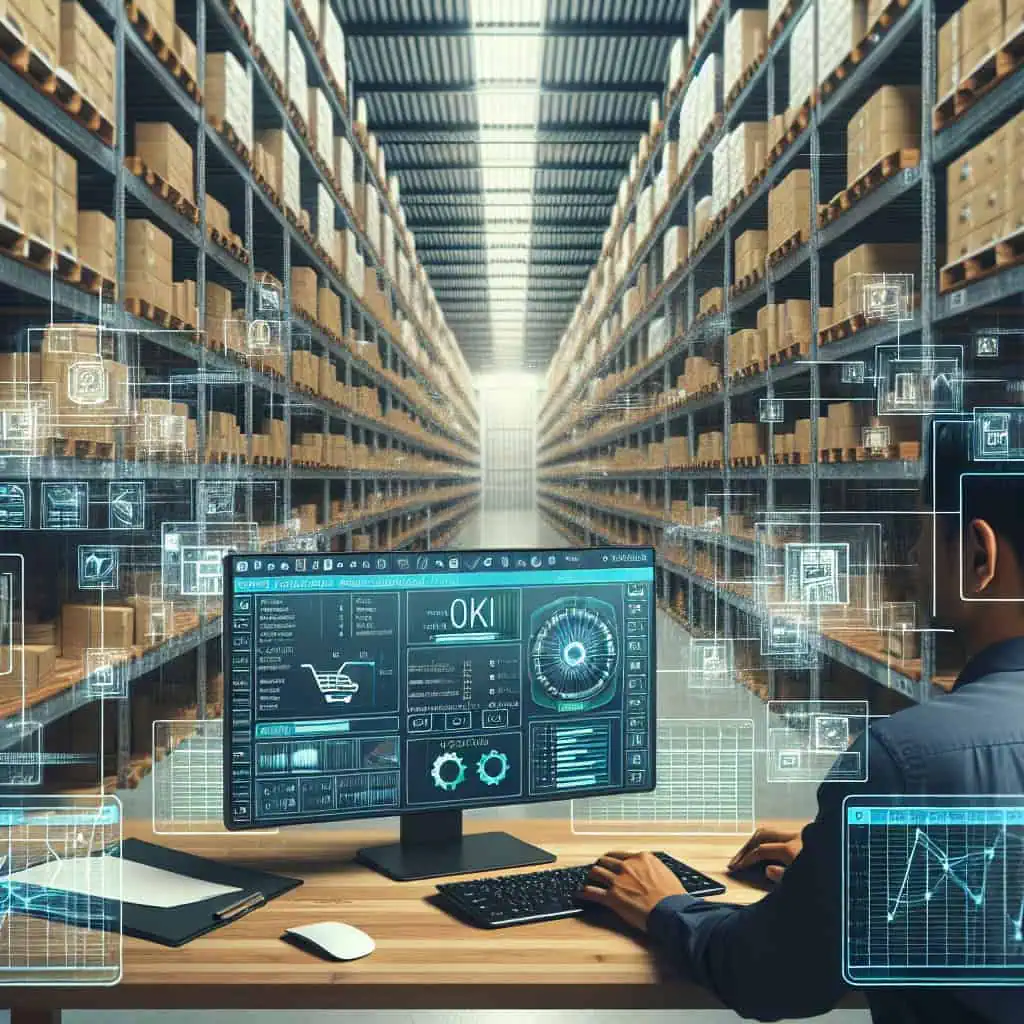
If you take a look around industry and business at the moment, you will realise that Inventory management is more than just a buzzword - it is the key to Efficiency and profitability. Companies that manage their inventories effectively can not only reduce costs, but also improve customer service and optimise their processes. But what exactly is behind the term Inventory management? And how can modern software solutions help to minimise the Inventory management to the next level?
What is inventory management?
Inventory managementor as we like to call it: the superhero of warehouse management, is a crucial component of any successful warehouse management system. Corporate strategy. It is the process that involves planning, monitoring and controlling stock levels. The aim is to ensure that the right products are in the right place at the right time - without breaking the bank!
The Inventory management covers various aspects, including:
- Inventory management: The systematic recording and management of all assets of a company.
- Inventory management: Strategic planning and control of stocks to avoid overstocking and bottlenecks.
- Warehouse management: The organisation and Optimization of storage space to improve the Efficiency.
Difference between inventory management and stock management
Although the terms are often used interchangeably, there are subtle differences. While the Inventory management concentrates on the recording and documentation of all assets, the Inventory management on the strategic decisions on the Optimization of these stocks. You could say that inventory management is like keeping a diary of all your treasures, while inventory management is about making sure you have enough treasures when you need them!
Tip: Effective inventory software can help you to optimise both inventory management and stock management. It enables precise stocktaking and real-time inventory control.
In a world full of uncertainties - be it supply chain problems or sudden fluctuations in demand - well thought-out inventory management is the backbone of any successful materials management system. Companies must not only know, what they have (Inventory), but also plan strategically (inventory) in order to avoid falling behind the competition.
The role of modern software solutions in inventory management
In today's business world, this is Inventory management more than just a chore. It is a strategic tool that helps companies to manage their resources efficiently and increase profitability. Modern software solutions are revolutionising the Inventory management and offer a variety of functions that optimise the entire process.
Let's start with a Overview digital tools and software solutions that are specially designed for the Inventory management were developed:
- Merchandise management systems: These systems integrate various aspects of warehouse management and enable centralised control of all stocks.
- Real-time inventory control: With the help of technologies such as RFID tracking, companies can monitor their stock levels in real time.
- Automated warehousing systems: These systems minimise manual intervention and reduce sources of error, which leads to increased efficiency.
Another important aspect is the Automation in inventory management. The Advantages are manifold:
- Time saving: Automated processes reduce the time required for Inventoryso that employees can concentrate on value-adding activities.
- Cost reduction: Precise data analyses enable companies to avoid overstocking and thus save costs.
- Better decision making: Real-time data enables well-founded decisions to be made with regard to purchasing and warehousing.
Tip: When selecting your warehouse management software, make sure that it integrates seamlessly into your existing systems - be it ERP or SCM. Good integration can significantly improve the workflow!
Let's not forget that many companies are still working with outdated methods. It is often assumed that manual processes are sufficient to keep track of stock levels. However, this can lead to significant problems: Out-of-stocks, overstocks and ultimately dissatisfied customers.
It is therefore crucial to utilise modern software solutions for inventory management. These technologies not only offer a competitive advantage, but are also essential for the Optimization the entire supply chain. So if you have not yet switched to digital solutions, now could be the right time!
Conclusion: The role of modern software solutions (such as CAFM) in inventory management cannot be emphasised enough. From the Automation to real-time monitoring - these tools are crucial for efficient warehouse management and help companies to optimise the use of their resources.
Important functions of inventory software
Choosing the right Inventory software can make the difference between a chaotic camp and a well-organised Warehouse management make the difference. Here are some of the most important features to consider when choosing your Software should take into account:
-
Real-time inventory control
Imagine that you could knowwhere your products are located. With a Softwarewhich offers real-time inventory control, you always have an up-to-date overview of your Stock. This not only helps to avoid bottlenecks, but also to reduce overstocking.
-
Inventory optimisation and management
The right software analyses sales data and trends to determine optimal order quantities. This allows you to utilise your resources more efficiently and save costs. Remember: a well-managed inventory is like a well-oiled clockwork - everything runs smoothly!
-
Stock control and planning
Effective stock control is essential for every company. With modern solutions, you can not only monitor current stock levels, but also plan future requirements. This reduces the Risk of stock shortages and ensures that your customers are always satisfied.
-
Inventory tracking
With features such as RFID tracking, companies can track every item in the camp This not only improves inventory accuracy, but also optimises the entire workflow in warehouse logistics.
-
Integration with other systems
Modern inventory software can be seamlessly integrated into existing systems such as ERP or SCM. This enables a comprehensive view of all company resources and considerably simplifies resource management.
SummarisingThe right functions in your inventory software are crucial for effective inventory management. Invest in a solution that will help you optimise your inventory management and take your business to the next level!
Implementation of a digital inventory management system
The Implementation of a digital inventory management system is like putting together the perfect jigsaw puzzle - it requires planning, patience and the right pieces. Here are some steps to help you choose the right software solution and successfully integrate it into your existing systems.
Steps for selecting the right software solution
- Needs analysis: Before you start looking for a solution, you should know exactly what your requirements are. Ask yourself: Which functions are essential for your company? Do you need real-time inventory control or comprehensive inventory optimisation?
- Market research: Take a look at various providers and compare their offers. Pay attention to reviews and testimonials from other users.
- Test demo versions: Use free trial versions to get a feel for the user interface and functions. This can help you to make an informed decision.
Integration into existing systems (e.g. ERP, SCM)
The integration of your new inventory management software into existing systems such as ERP or SCM is crucial for a smooth workflow. Here are a few points to bear in mind:
- Check compatibility: Ensure that the new software can communicate seamlessly with your existing systems.
- Data migration plan: Plan carefully how Data from old systems to the new system. Incorrect migration can lead to considerable problems.
- Plan a test phase: Carry out tests to ensure that everything works smoothly before the system is fully implemented.
Employee training and change management
No matter how great your new software is, it won't be used properly without the right training. Here are some tips for successfully training your employees:
- Develop training programmes: Create customised training programmes based on the roles of your employees in the company.
- Obtain feedback: Let your employees give feedback on the software and use it to continuously improve the user experience.
- Change management actively shaping the future: Communicate clearly about the changes and their Advantages for the company and for each individual employee.
Application examples in practice
In the world of the Inventory management there are numerous exciting application examples that show how companies can increase their efficiency with modern software solutions. Let's take a closer look at some of these practical applications.
Small and medium-sized enterprises (SMEs) in Germany
Small and medium-sized enterprises (SMES) are often the pioneers when it comes to innovative solutions in the field of Inventory management goes. One example is a German SMES from the food industry, which manages its inventories with the help of a modern merchandise management system has optimised. By implementing a digital solution, the company was able to:
- carry out stock control in real time,
- Avoid excess stock and thus reduce costs,
- significantly increase the efficiency of warehouse logistics.
Successful implementations of RFID tracking solutions
Another notable example is the introduction of RFID tracking solutions in a large retail company. Here, an automated warehousing system was implemented which Advantages brought:
- Real-time inventory control: Stock levels can now be monitored at all times, enabling precise inventory management.
- Optimization of the flow of goods: The software analyses sales data and automatically suggests repeat orders.
- Error reduction: Human Error in inventory recording have been drastically minimised by automated systems.
Tip: When selecting an inventory solution, SMEs should ensure that it is scalable and can be easily integrated into existing systems (e.g. ERP or SCM).
These examples clearly show that the right software can not only revolutionise processes in the area of inventory management, but also lead to a significant increase in competitiveness. The Digitisation in inventory management is no longer an option - it is a must for companies that want to survive in a dynamic market.
The future of digital inventory management
If we take a look into the crystal ball of digital inventory management, we see an exciting Futurecharacterised by innovation and an unprecedented level of efficiency. Warehouse logistics and materials management are facing a paradigm shift that is being driven by technological advances.
Trends in warehouse logistics and materials management
Warehouse management is becoming increasingly intelligent. With the integration of RFID tracking solutions companies can monitor their stock levels in real time, leading to a significant improvement in stock control. This means fewer stock-outs and overstocks - a real benefit for the business. Inventory management.
Opportunities for further automation and digitalisation
The possibilities for automation are almost endless. Companies are increasingly relying on automated warehousing systems that not only increase efficiency but also minimise human error. Error minimise. These systems are often seamlessly integrated into existing Merchandise management systems and enable precise stocktaking.
Tip: If you are thinking about using digital solutions, make sure you check how well they can harmonise with your current systems. Smooth integration is crucial to the success of your investment!
Another Trend is the use of artificial intelligence (AI) for forecasting demand and for Optimization warehouse planning. Machine learning enables companies to better manage their inventories and react to market changes.
Conclusion on the future of inventory management
The Future of digital inventory management looks promising! With advanced technologies such as AI and RFID tracking, companies will not only increase their efficiency, but also optimise their entire supply chain management.Strategy revolutionise your processes. Get ready to take your processes to the next level!
Conclusion
In today's business world Efficient inventory management is no longer a luxury, but a necessity. The implementation of modern software solutions is revolutionising the Inventory management and offers companies the opportunity to optimise their processes and reduce costs.
Through the use of Warehouse management software and Real-time inventory control companies can not only improve their Stock better monitor, but also the Inventory optimisation to drive forward the new business model. This leads to an improved Warehouse logisticswhich in turn increases the overall efficiency of the company.
Tip: When selecting your software solution, make sure that it can be seamlessly integrated into your existing systems to ensure a smooth implementation.
The Future The future of digital inventory management looks promising. With the ongoing Digitisation and automation, it will be easier than ever to achieve a precise Inventory control to carry out. Technologies such as RFID tracking are becoming increasingly accessible to SMEs in Germany and offer an excellent opportunity to improve the Resource management.
To summarise, modern inventory management not only saves time, but also helps to use valuable resources more efficiently. If you are still hesitating to switch to digital solutions, remember: in today's world, it's no longer just an advantage - it's a must.
 Deutsch
  English (UK)