
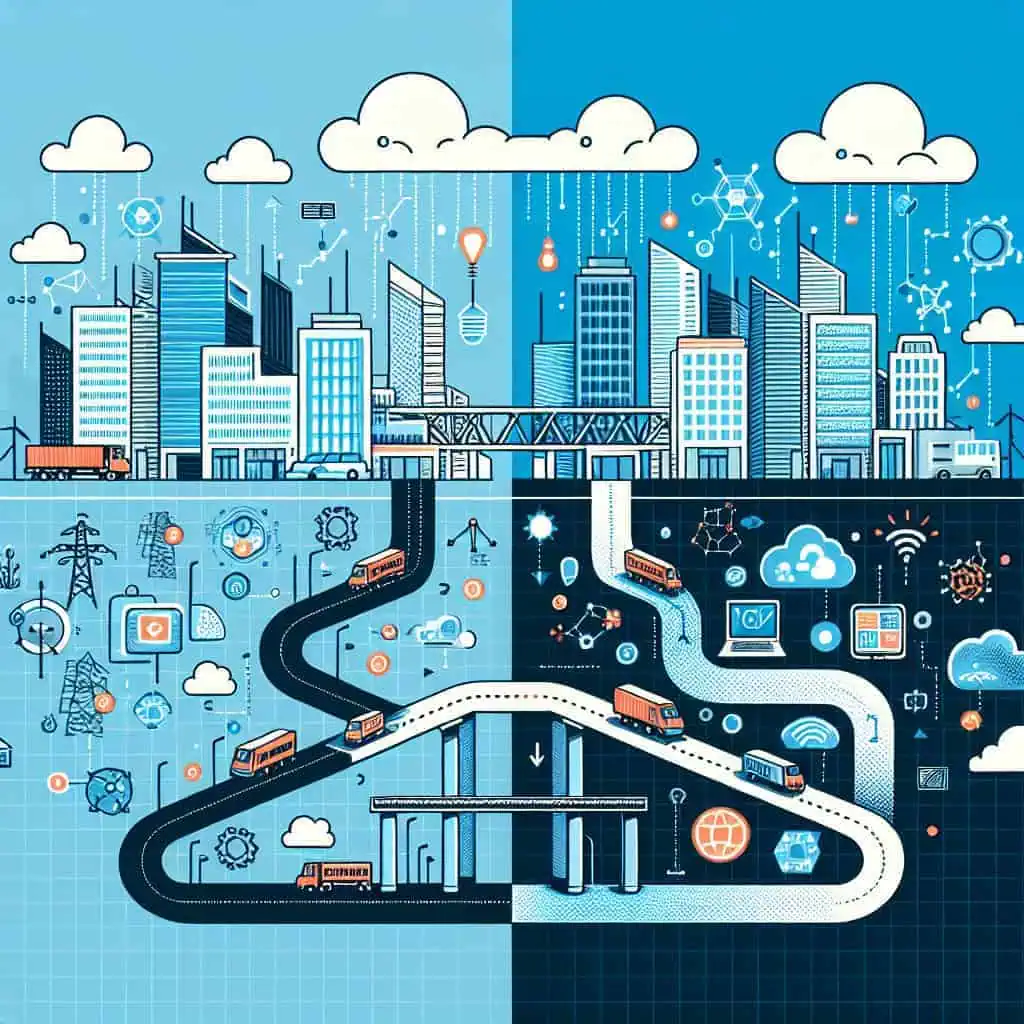
At a time when digital Transformation is an omnipresent topic, the Infrastructure the backbone of every modern society. But what exactly does the term "infrastructure" mean? A clear definition of infrastructure is essential in order to understand its diverse functions and effects on economic and social structures.
What is infrastructure?
In the simplest sense, infrastructure refers to the system of physical structures and facilities - such as roads, bridges and water pipes - that are necessary to support a functioning society. It includes both public as well as private componentswho work together to ensure the smooth running of daily life.
- Physical infrastructure: These include road, rail and air transport networks as well as energy and water supply systems.
- Digital infrastructure: Includes telecommunication networks and Internet connections that are indispensable in our increasingly networked world.
- Social infrastructure: Hospitals, schools and leisure facilities are also part of the infrastructure, as they strengthen the social fabric.
Importance of infrastructure
Infrastructural development has a profound impact on a country's economic growth. According to a study by the World Bank, every dollar invested in Energy infrastructure to an average increase in GDP of around 2%. However, the importance of well-planned infrastructure extends far beyond economic parameters:
- National security aspects: A robust transport and energy infrastructure is crucial for the national economy. Security.
- Climate-friendly Growth: The focus on sustainable infrastructure solutions supports environmental goals and promotes urban mobility.
"Well-planned infrastructures are not only drivers of economic growth, but also engines of social justice." - World Bank
Ultimately, it is essential that both public and private stakeholders are continuously involved in the Maintenance and development of their infrastructures. A strong foundation not only ensures the functioning of the economy in the here and now, but also secures the success of future generations.
The various components of the infrastructure
Infrastructure is a broad term that encompasses numerous components that together form the backbone of any society. The various elements of infrastructure are essential for the smooth running of daily life and economic development. But like a complex clockwork mechanism, each component is crucial to making the whole picture work.
1. transport infrastructure
- Roads and motorways: These form the backbone of passenger and freight transport. There are over 13,000 km of motorway in Germany that connect everything together.
- railway network: Deutsche Bahn operates one of the densest rail networks in Europe, making rail transport an environmentally friendly means of transport.
2. energy infrastructure
Energy supply plays a central role in a modern society. This includes
- power stations: From fossil fuels to renewable energies such as wind and solar power, the energy transition in Germany is in full swing.
- Power grids: These ensure the distribution of electricity over long distances.
3. water infrastructure
Modern life would not be possible without access to clean water:
- Sewerage and water supply: These systems are crucial for public health and hygiene.
4. communication infrastructure
Let's be honest; without the internet we could barely survive - or at least not keep up with the latest cat videos!
- Telecommunications networks: These enable everything from phone calls to high-speed Internet access, which is an essential part of digitalisation. Transformation represents.
"The importance of telecommunications technology in the German economic infrastructure cannot be overestimated."
5. social infrastructure
This includes schools, hospitals and other facilities that contribute to improving the quality of life. They are at the heart of every forward-looking society.
In addition to these main components, there are also specialised areas such as digital infrastructure, which is becoming increasingly important in the context of the progressive Digitisation. In this sense, infrastructure is truly more than just concrete and steel - it is an integrated system that tangibly influences and shapes our lives.
Types of infrastructure: public vs. private systems
The Infrastructure definition comprises a variety of components that can be divided into two main categories: public and private infrastructures. Both types play a critical role in the functioning of our society, but differ significantly in their structure, financing and management.
Public infrastructure
Public infrastructures are those facilities that are provided and financed by the state. They are designed to be accessible to all citizens and to guarantee basic services. Typical examples include:
- Transport infrastructure: This includes roads, bridges and public transport such as buses and trains. These enable urban mobility, a term that describes mobility within cities.
- Energy infrastructure: Electricity supply systems are of crucial importance for everyday life in Germany.
- Water infrastructure: Waterworks and wastewater systems ensure clean drinking water and environmentally friendly wastewater disposal.
- communication infrastructure: Telecommunications networks ensure that we remain seamlessly connected in the digital world.
According to a study by KfW Bankengruppe, around EUR 45 billion was invested in German transport and energy infrastructure in 2021 (KfW). These investments emphasise the importance of sustainable public infrastructure for economic growth and quality of life.
Private infrastructure
Private infrastructures are at the interface between services and private property. These systems are provided and financed by private companies. They differ from public infrastructure in terms of their accessibility - a fee is often required. Examples include
- energy supplier: Some electricity suppliers belong to private entities that have individual tariff models.
- Security servicesPrivate security companies offer specialised solutions to protect installations.
- Construction industry: Companies in the construction sector invest in private projects such as shopping centres or factories.
"The role of private investment is crucial for innovation in infrastructure development," says Prof Dr Max Mustermann from the Institute for Urban development at the TU Berlin.
In fact, studies show that private investments are often drivers of innovation - be it through new technologies or efficient construction methods (TU Berlin). This dual structure of public and private infrastructure ensures that both basic needs are met and specialised services are available.
Whether public or private, each type has its own functionality and importance within the larger fabric of Germany's national infrastructure. It is essential that both are managed effectively to ensure sustainable development (Facility24).
Infrastructure management: planning and function
Infrastructure management is at the heart of effective infrastructure development. It combines strategic planning with a detailed analysis of existing resources to ensure that infrastructures are both efficient and sustainable are. But what exactly does that mean? Let's delve deeper into this topic.
Infrastructure Definition: Creating a foundation
Before looking at management, it is crucial to understand the definition of infrastructure. Essentially, infrastructure encompasses all the physical and organisational structures required to keep a company running. These range from transport infrastructure such as roads and railways to energy, water and communication networks.
Planning for a sustainable future
A key aspect of infrastructure management is long-term planning. This planning must not only cover current needs, but also take future requirements into account. This includes
- Assessment of the current infrastructure: What works well? Where are the weak points?
- Forecasts for the future: Which technological Developments could have an impact on the infrastructure? Think of the rapid progress in digitalisation. Transformation.
- User needs: Are public facilities sufficiently utilised by the population or are there areas with untapped potential?
"The best time to plant a tree was twenty years ago. The second best time is now." - Chinese proverb
This saying fits perfectly with infrastructure planning: planning ahead is crucial for success.
Function of infrastructure management: more than just administration
In addition to planning, infrastructural management plays a central role in the organisation and control of daily processes. This includes
- Cost management: Efficient budgeting and resource allocation are crucial for the successful operation of infrastructures.
- Safety measures: Regular safety checks are essential.
- Adaptation to change: Flexibility with new technologies Developments or unexpected events is a must.
Ultimately, the aim of infrastructure management is to provide a reliable basis for economic growth. Growth and social progress - whether in urban or rural areas. In all of this, however, we must never forget: You can plan a lot, but without well thought-out implementation it remains just paperwork!
Digital transformation of the infrastructure
The digital transformation of infrastructure is no longer a dream of the future, but is already in full swing. It is not just about integrating new technologies, but also about changing processes and mindsets in order to meet the demands of the modern world.
Why is digital transformation important?
The importance of digital transformation cannot be overestimated. It enables efficiency gains, improves the Sustainability and creates completely new possibilities for networking and managing resources.
- Energy infrastructure: Intelligent networks (smart grids) help to distribute energy more efficiently and optimise consumption.
- Transport infrastructure: Real-time data enables better planning and control of traffic flow, resulting in less congestion.
- Communications infrastructure: The expansion of broadband internet improves connectivity and promotes the growth of digital services.
"With CAFM from the cloud, processes can be automated and Data analyse in real time - a decisive Step towards smart infrastructure.“
Examples of digital transformation projects
In Germany, many cities rely on the Digitisation their infrastructures. Hamburg, for example, is trialling autonomous buses as part of its smart city project. Berlin is investing in intelligent street lighting and Munich is focussing on digital platforms for urban mobility.
Challenges in the digital transformation
Despite their Advantages the digital transformation also brings challenges. These include
- Security: Ensuring data security is essential in order to create trust.
- Costs: The Implementation new technologies can be expensive, which is why careful planning is essential.
- Human factors: Employees must be trained to be able to handle new systems effectively.
To summarise, it can be said that the digital transformation of infrastructure makes a significant contribution to improving public and private services. However, it also places high demands on management teams in terms of planning and implementation.
Future developments in the area of infrastructure
In today's fast-paced world, infrastructure is no longer a rigid structure, but a dynamic organism that is constantly evolving. Based on current innovations and technological advances, a clear trend is emerging. Trend ab: Digital transformation will form the backbone of future infrastructure projects. But what does that mean for us in concrete terms?
1. digitalisation and automation
The Digital infrastructure is realised through the use of IoT (Internet of Things) and AI (artificial intelligence) continues to revolutionise the way we work. These technologies make it possible to monitor and manage physical structures more efficiently, whether in urban or rural environments. One example of this development is the introduction of intelligent traffic systems that can optimise traffic flow and reduce fuel consumption.
2. sustainability as a key component
In addition to the digital transformation, the Sustainable infrastructure play a decisive role. According to a study by the World Economic Forum, investments in green infrastructure could create over 24 million jobs worldwide by 2030. This is not just about green energy sources, but also about sustainable construction and planning techniques.
3 The role of smart cities
- Urban mobility: As urban populations continue to grow, the need for more efficient mobility solutions is becoming increasingly urgent. Urban mobility can be improved through innovative concepts such as car-sharing platforms or electrically powered public transport.
- Energy infrastructure: Smart grids promise a more efficient use of resources through real-time data analyses that better balance supply and demand.
"Investment in green infrastructure could create over 24 million jobs worldwide by 2030" - World Economic Forum
Ultimately, the Future In addition to technological adjustments to our infrastructure, this also requires a cultural change in the way we use our resources. It is important that we see these developments not only as a technical challenge, but also as an obligation to protect our environment and improve our quality of life.
Last but not least, this digital transformation also offers security benefits: Modern systems are often less susceptible to human Error and offer more robust solutions against cyber threats.
Conclusion: The importance of a holistic understanding of infrastructure
When we talk about Infrastructure many people first think of roads, bridges and perhaps railway lines. But the Truth is that infrastructure is much more far-reaching and multi-faceted. A comprehensive understanding of the definition of infrastructure is essential in order to grasp the complex interrelationships and their significance for society and the economy.
A holistic approach takes into account various Infrastructure components how:
- Transport infrastructure: Roads, rail networks and airports that enable the transport of people and goods.
- Energy infrastructure: Electricity grids and renewable energy sources, which form the basis of our modern economy.
- Water infrastructure: Water supply and wastewater disposal systems, without which no urban or rural life would be possible.
- Digital infrastructure: Fibre optic and mobile networks that connect us in the digital era.
The importance of integration
Coordinated management of all these elements leads to sustainable infrastructure development. According to a study by the EU Commission, investment in a modern digital infrastructure could increase the EU's GDP by up to 1.1 % by 2030. This impressively demonstrates the importance of not only optimising individual areas, but also considering them as part of a larger whole.
"A well-developed infrastructure is the backbone of any successful economy" - an often-quoted saying in the field of facility management.
Ultimately, our quality of life depends heavily on how well we build and maintain our infrastructure. Because let's face it, nobody wants to be stuck in a traffic jam or sweating because of a collapsed power grid. Comprehensive planning and management of these areas is therefore crucial to the success of our society.
 Deutsch
  English (UK)