Quality of life

LEED and BREEAM in comparison of sustainability standards

LEED and BREEAM in comparison of sustainability standards

Sustainability standards are crucial for promoting environmentally friendly practices in the construction and property industry. They provide a framework for assessing and minimising the environmental, social and economic impact of buildings. At a time when climate change and the depletion of natural resources are becoming ever more pressing, such standards are becoming increasingly important. They not only help to protect the environment, but also to improve people's quality of life by minimising [...]

LEED and BREEAM in comparison of sustainability standards Read more »

How to overcome the fear of changing jobs [and 5 signs of when]

How to overcome the fear of changing jobs [and 5 signs of when]

Have you ever wondered whether it's time to change jobs? Perhaps you feel dissatisfied or even stuck in your current position. According to a study by Gallup, only about 15 % of employees worldwide are engaged at work, while 85 % are more or less demotivated. These figures are alarming and show that many people are struggling with their job situation. If you are one of those

How to overcome the fear of changing jobs [and 5 signs of when] Read more »

Modern urban solutions, sustainable construction, digitalisation in urban development.

LEED and BREEAM in Germany: focus on sustainable construction

LEED (Leadership in Energy and Environmental Design) and BREEAM (Building Research Establishment Environmental Assessment Method) are two of the best-known certification systems for sustainable construction worldwide. LEED was developed in the USA and has become a global standard for environmentally friendly construction since its introduction in 1998. It assesses buildings based on various criteria, including energy efficiency, water management, choice of materials and interior quality. BREEAM, on the other hand, originated in the United Kingdom and was launched in 1990.

LEED and BREEAM in Germany: focus on sustainable construction Read more »

Sustainable building: Focus on LEED and BREEAM

Sustainable building: Focus on LEED and BREEAM

Sustainable construction is a concept that aims to minimise the environmental impact of building projects while improving the quality of life for users. It encompasses a variety of aspects, including the selection of environmentally friendly materials, the efficient use of energy and water and the creation of healthy interiors. The basic principles of sustainable construction are based on the idea that buildings are not only functional spaces, but also have a positive impact on the environment and the quality of life.

Sustainable building: Focus on LEED and BREEAM Read more »

Sustainable Development Goals (SDG): Challenges and opportunities

Sustainable Development Goals (SDG): Challenges and opportunities

Sustainability goals, also known as the Sustainable Development Goals (SDGs), were launched by the United Nations in 2015 and form a global framework for sustainable development by 2030. A total of 17 goals were defined that address a variety of social, economic and environmental challenges. These goals are not only important for governments, but also for companies, civil society and individuals. They aim to eradicate poverty, reduce inequalities

Sustainable Development Goals (SDG): Challenges and opportunities Read more »

Drone footage of modern skyscrapers in a futuristic city.

Networked buildings: the future of architecture

In today's world, where technological innovations and digital networking are omnipresent, networked buildings are becoming increasingly important. These smart structures are not just simple living or working spaces, but act as complex systems that are interconnected by modern technologies. They enable seamless communication between different devices and systems, leading to increased efficiency and an improved standard of living. In a world where urbanisation and population growth are steadily

Networked buildings: the future of architecture Read more »

The development of smart cities in Germany

The development of smart cities in Germany

Smart cities are urban spaces that utilise modern technologies and digital solutions to improve the quality of life of their residents and at the same time increase the efficiency of urban services. These cities integrate information and communication technologies (ICT) into all aspects of urban life, from traffic control to energy supply and waste management. The aim is to use data and intelligent systems to promote sustainable development that is both economically and socially sustainable.

The development of smart cities in Germany Read more »

The role of IoT sensors in a connected world

The role of IoT sensors in a connected world

In an increasingly connected world, IoT sensors play an important role by bridging the gap between the physical and digital worlds. These sensors are able to collect data from their environment and transmit this information to other devices or systems via the internet. As a result, they enable a variety of applications ranging from monitoring environmental conditions to automating processes. The importance of these

The role of IoT sensors in a connected world Read more »

Photo Green building

Sustainable property development: future-proof construction projects

Sustainable property development is a concept that aims to meet the needs of the current generation without jeopardising the opportunities of future generations. This form of development takes into account ecological, economic and social aspects in order to create a balance between these dimensions. The aim is to create buildings and infrastructure that are not only functional and aesthetically pleasing, but also environmentally friendly and resource-efficient. The definition of sustainable property development therefore encompasses a variety of

Sustainable property development: future-proof construction projects Read more »

Green financing: sustainable investments

Green financing: sustainable investments

Green financing is a concept that focuses on providing capital for environmentally friendly projects and companies. This form of financing aims to promote environmental sustainability while generating financial returns. Common green finance instruments include green bonds, sustainable investment funds, green loans and environmentally related equities. In recent years, the importance of green financing has increased significantly. This is due to a growing awareness of environmental problems

Green financing: sustainable investments Read more »

The power of big data: how data is shaping the future

The power of big data: how data is shaping the future

Big data refers to the processing and analysis of data volumes that cannot be handled using conventional data processing methods due to their size, complexity and growth rate. This data comes from various sources such as social media, business transactions, the Internet of Things (IoT) and industrial systems. Big data is often characterised by the "3 V's": Volume (amount of data) Velocity (speed of data generation and processing) and Variety (variety of data formats). Analysing big data enables companies to

The power of big data: how data is shaping the future Read more »

Photo Green building

Sustainability in facility management: efficiency and environmental protection

Sustainability in facility management encompasses the responsible management of buildings and facilities, taking into account ecological, social and economic aspects. The aim is to use resources efficiently, minimise environmental impact while improving the quality of life of users and generating economic benefits. A sustainable facility management strategy includes the integration of environmental protection, social responsibility and economic efficiency in all phases of the building life cycle. This includes the use of environmentally friendly materials and the implementation of energy-efficient systems,

Sustainability in facility management: efficiency and environmental protection Read more »

The digital transformation of property and building management in the municipality

The digital transformation of property and building management in the municipality

The digital transformation in property and building management has become significantly more important in recent years. The use of digital technologies and processes enables more efficient management, maintenance and optimisation of properties and buildings. This leads to improved resource utilisation, increased sustainability and cost savings. Digitalisation enables the collection, analysis and use of real-time data, which supports well-founded decisions and an increase in the performance of properties and buildings. Intelligent technologies such as the

The digital transformation of property and building management in the municipality Read more »

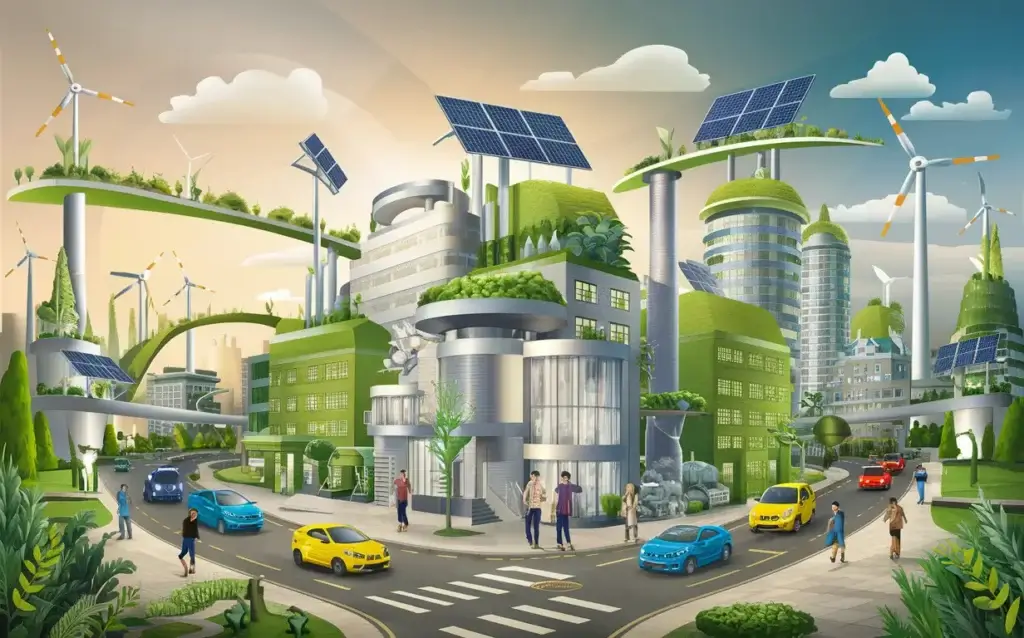
Ecological city with solar panels, wind turbines and green buildings, sustainable urban infrastructure.

Sustainable urban development: the future of cities

Sustainable urban development is a comprehensive concept for planning and designing cities that takes ecological, social and economic aspects into account. The aim is to fulfil the needs of the present generation without compromising the opportunities of future generations. The main objectives of sustainable urban development include: Creating environmentally friendly and energy-efficient cities Promoting social equity and inclusion Generating sustainable jobs and economic growth Conserving natural resources and biodiversity This approach aims to improve the quality of life in cities.

Sustainable urban development: the future of cities Read more »

Certification systems for sustainable buildings: an overview

Certification systems for sustainable buildings: an overview

Certification schemes for sustainable buildings are tools developed to assess and rate the sustainability of buildings. They serve as a guide for builders, architects and developers to ensure that their buildings are environmentally friendly, energy efficient and healthy for occupants. These schemes are based on a set of criteria that assess the environmental, social and economic impact of a building throughout its life cycle. The certification systems are developed by independent organisations

Certification systems for sustainable buildings: an overview Read more »

Innovative facility management and digitalisation for efficient building management.

The importance of facility management in the economy

Facility management is an important area of business that deals with the management and operation of buildings, facilities and infrastructure. The aim of facility management is to maximise the efficiency and productivity of buildings and facilities by ensuring their smooth operation and maintenance. This area covers a wide range of tasks, including the planning and organisation of workplaces, the maintenance of buildings and facilities, the

The importance of facility management in the economy Read more »

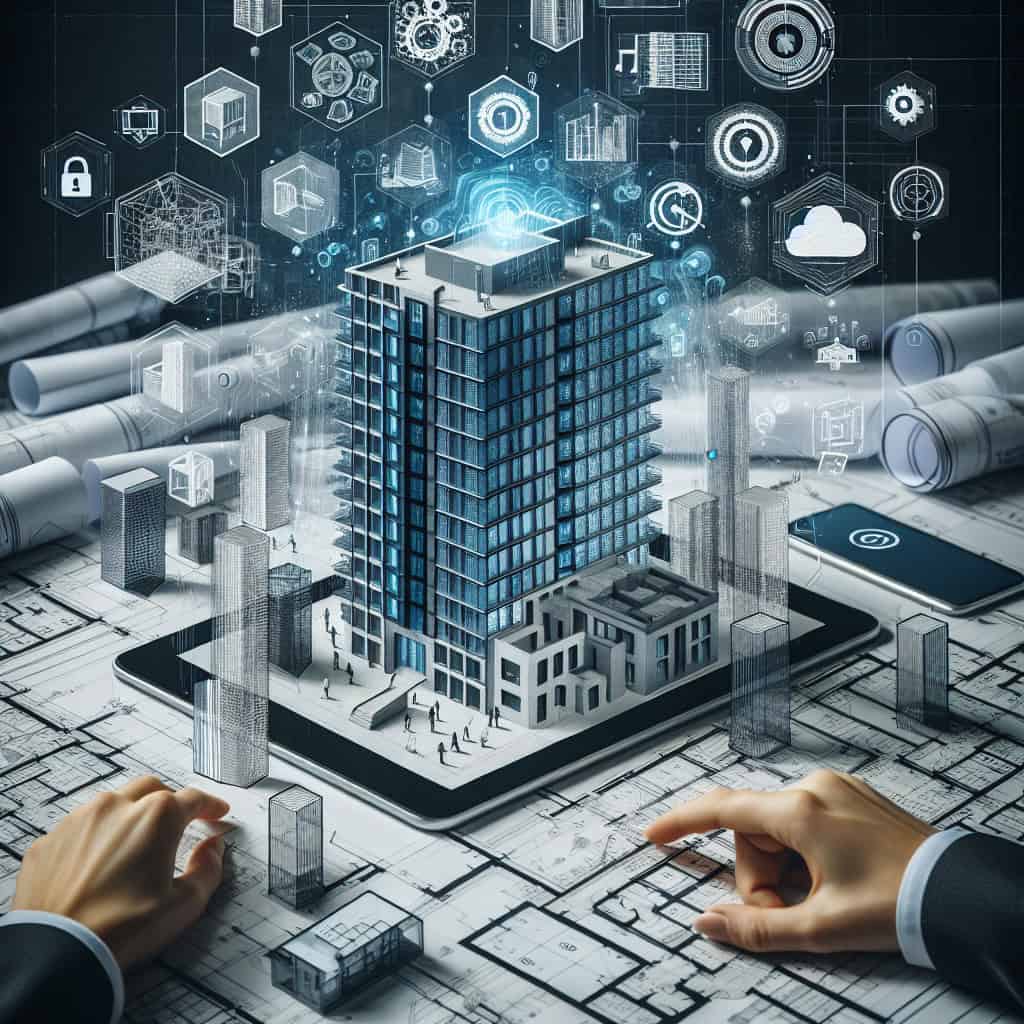
3. State-of-the-art CAD model of a building with digital infrastructure and smart technologies.

Sustainable building: Green buildings for the future

Sustainable construction refers to the planning, construction and operation of buildings in a way that protects the environment, conserves resources and promotes the health and well-being of the occupants. It involves the use of environmentally friendly building materials, the reduction of energy consumption, the use of renewable energy and the creation of healthy indoor spaces. Sustainable building aims to minimise the negative impact of the construction process on the environment while at the same time creating a healthy indoor environment.

Sustainable building: Green buildings for the future Read more »

Scroll to Top