Model

BIM models in building management: advantages and implementation

BIM models in building management: advantages and implementation

When we talk about the future of building management, it's almost impossible to ignore the BIM model. Building Information Modelling is not just a buzzword, but a revolution in digital building design that is fundamentally changing the way we design, build and manage buildings. But what exactly is behind these three letters? BIM models are digital representations of the physical and functional characteristics of a building. They combine geometric data with relevant information [...]

BIM models in building management: advantages and implementation Read more »
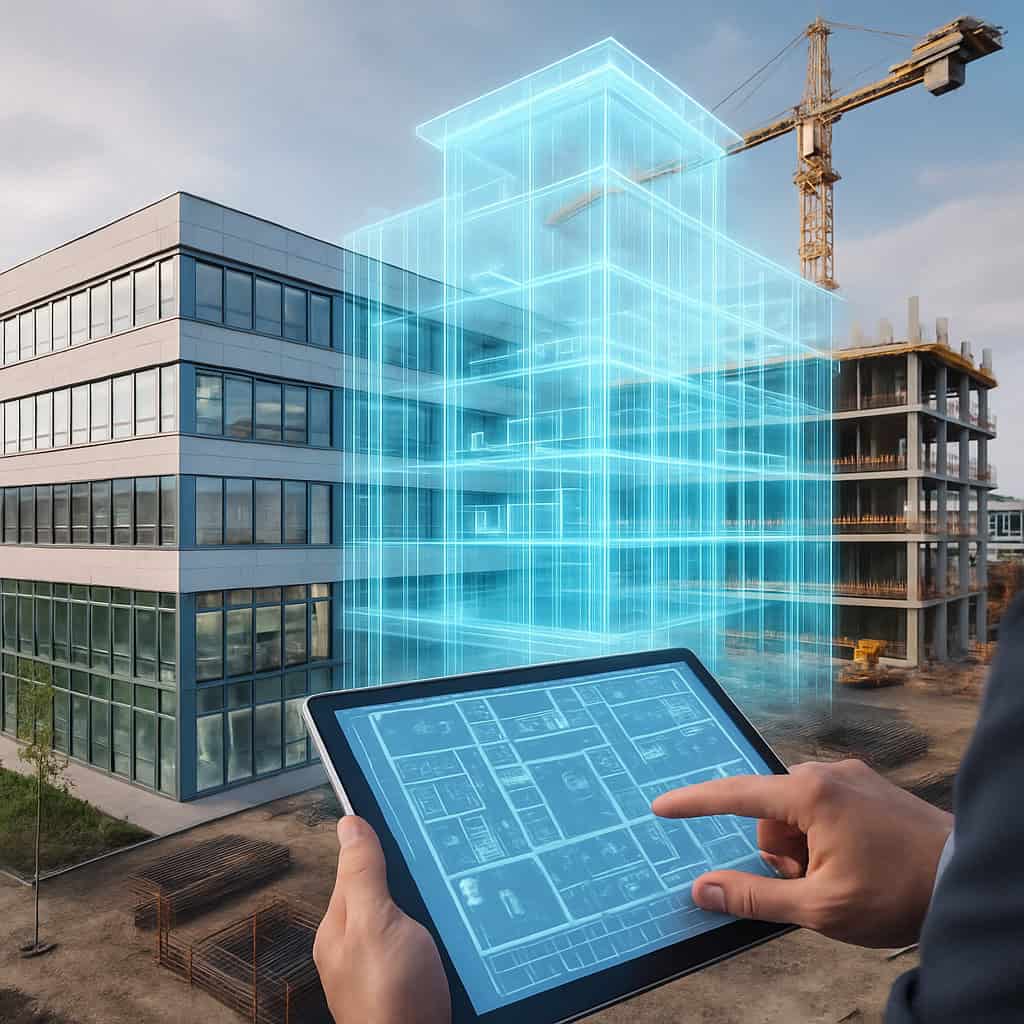
Modern cloud-based CAFM solutions for building management.

BIM models in practice: how to improve your building management

In the European construction industry, BIM modelling is not just a trend, but a necessity. But what exactly is a BIM model? It is a digital representation of a building's physical and functional characteristics that makes it possible to bundle all relevant data in an integrated platform. This building data modelling is revolutionising the way we plan, construct and manage buildings, and with the increasing complexity of construction projects, the importance of BIM software is only growing.

BIM models in practice: how to improve your building management Read more »

Progress chart for CAFM, IT and management, clear visualisation of industry developments and IT solutions.

Maturity model: an indispensable tool or just a trendy buzzword?

In the world of facility management, there are many buzzwords vying for attention. One of them is the maturity model. But is it an indispensable tool or just a trendy buzzword? This question deserves thorough consideration, especially in times when digital transformation is revolutionising the way we work. The maturity model offers companies the opportunity to evaluate and optimise their processes and systems in a targeted manner. It is not just a theoretical concept, but

Maturity model: an indispensable tool or just a trendy buzzword? Read more »

Sustainable building: Focus on LEED and BREEAM

Sustainable building: Focus on LEED and BREEAM

Sustainable construction is a concept that aims to minimise the environmental impact of building projects while improving the quality of life for users. It encompasses a variety of aspects, including the selection of environmentally friendly materials, the efficient use of energy and water and the creation of healthy interiors. The basic principles of sustainable construction are based on the idea that buildings are not only functional spaces, but also have a positive impact on the environment and the quality of life.

Sustainable building: Focus on LEED and BREEAM Read more »

Efficient BIM projects in public administration

Efficient BIM projects in public administration

Building Information Modelling (BIM) has become increasingly important in public administration in recent years. BIM is a digital method for the integrated planning, execution and management of buildings. In public administration, the efficient utilisation of resources and the on-time and on-budget execution of projects are of particular importance. BIM enables the integration of all relevant information of a construction project in a digital model, which facilitates collaboration between the parties involved.

Efficient BIM projects in public administration Read more »

Old: Visual representation of AI language models with increasing capacity.

The differences between language models in AI

Language models are a central element of artificial intelligence (AI) and enable the processing and generation of natural language. They analyse and reproduce linguistic structures and patterns. Areas of application for AI language models include machine translation, text creation, speech recognition and chatbot development. This technology enables machines to communicate in a human-like manner and perform complex linguistic tasks. AI language models utilise various techniques and algorithms for language processing. They are based on statistical or rule-based approaches and require extensive training data. Despite the wide range of possible applications

The differences between language models in AI Read more »

BIM2FM: Information exchange along the building life cycle

BIM2FM: Information exchange along the building life cycle

Building Information Modelling to Facility Management (BIM2FM) is an advanced process for integrating building data over the entire life cycle of a building. This method optimises the planning, construction, operation and maintenance of buildings. BIM2FM enables all relevant building information to be captured and managed in a digital model, resulting in more efficient and cost-effective building management. The BIM2FM approach includes the capture and management of all building-relevant data and information. This includes geometric

BIM2FM: Information exchange along the building life cycle Read more »

The advantages of Kubernetes for companies

The advantages of Kubernetes for companies

Kubernetes is an open source platform for orchestrating container applications. It was originally developed by Google and is now managed by the Cloud Native Computing Foundation. Kubernetes automates the deployment, scaling and management of containerised applications across different infrastructures. The platform offers numerous functions, including Auto-scaling: adjustment of resources based on workload Load balancing: distribution of network traffic across multiple instances Self-healing: automatic restart or replacement of faulty containers Rollout and rollback:

The advantages of Kubernetes for companies Read more »

Building planning and modelling, BIM, smart buildings, facility management, CAFM software.

Relevant technologies and applications of BIM: an overview

Building Information Modelling (BIM) is an innovative method for the digital representation and management of construction projects. It is a three-dimensional, data-rich model that captures all relevant information about a building or infrastructure throughout its entire life cycle. BIM integrates geometric, technical, functional and economic data in a single digital model. The use of BIM enables improved collaboration between all project stakeholders, including architects, engineers, contractors and facility managers. Through

Relevant technologies and applications of BIM: an overview Read more »

Legal aspects of BIM: what you need to know

Legal aspects of BIM: what you need to know

Building Information Modelling (BIM) is a digital method for planning, creating and managing buildings. This technology enables the creation of a virtual 3D model that contains all relevant information about a building. The BIM model serves as a central source of information for all parties involved in the construction project and covers the entire life cycle of a building, from design and construction through to operation and dismantling. The implementation of BIM brings various legal

Legal aspects of BIM: what you need to know Read more »

Innovative high-rise building with futuristic design and digital building technology.

AIA and BAP: requirements for effective BIM processing

The American Institute of Architects (AIA) and the Building Owners and Managers Association International (BOMA) have jointly developed the AIA BIM Protocol (AIA E202-2008) to standardise the use of Building Information Modeling (BIM) in construction projects. The AIA BIM Protocol is a guideline that defines the responsibilities and requirements for the use of BIM in construction projects. It defines the processes required for the creation, management and use of BIM models.

AIA and BAP: requirements for effective BIM processing Read more »

Modern IT and management solutions in the CAFM sector.

BIM: processes, roles and responsibilities

Building Information Modelling (BIM) is an advanced approach to the planning, design and management of construction projects. It is a digital representation of the physical and functional aspects of a building. BIM enables those involved to record, manage and exchange all relevant information about a construction project in a centralised model. This includes not only the geometric data, but also information about materials, costs, schedules and much more. Thanks to the

BIM: processes, roles and responsibilities Read more »

Strategies and use cases of BIM in FM

Strategies and use cases of BIM in FM

Building Information Modelling (BIM) is an advanced method that makes it possible to capture, manage and analyse building data throughout the entire life cycle of a building. BIM is playing an increasingly important role in facility management (FM), as it improves efficiency and effectiveness in the management of buildings and facilities. BIM in FM enables facility managers to capture all relevant information about a building in a digital model and analyse it.

Strategies and use cases of BIM in FM Read more »

BIM methodology: Fundamentals of Building Information Modelling for efficient facility management.

The basics of BIM methodology: an overview

Building Information Modelling (BIM) is an advanced method used in the construction industry to create a digital model of a building or infrastructure. This model contains not only the geometric information, but also the physical and functional characteristics of the building. BIM enables the various players in the construction industry, such as architects, engineers, contractors and clients, to collaborate and exchange information in real time. This method is revolutionising the way,

The basics of BIM methodology: an overview Read more »

Advanced building model with modern construction planning and digital visualisation.

As-built data: Optimisation of construction projects

As-built data is information that documents the actual condition of a building or facility after the construction phase has been completed. This data includes all changes made during the construction process and all deviations from the original construction plan. As-built data can contain various types of information, including technical drawings, CAD models, survey data, material lists and other relevant documents. They are used to accurately record and document the current condition of a structure or facility in order to ensure a

As-built data: Optimisation of construction projects Read more »

Modern office building with green roof and glass façade, sustainable architecture for efficient facility management.

Sustainable Architecture, Sustainable Building

Sustainable architecture is an approach that aims to design, construct and operate buildings and structures that minimise the impact on the environment while meeting the needs of the present generation without compromising the ability of future generations. This approach takes into account the environmental, social and economic impact of building projects and strives to promote balanced and sustainable development. Sustainable architecture not only refers to the

Sustainable Architecture, Sustainable Building Read more »

BIM-Viewer: Top Tool for Facility managers

BIM modeling: Efficient Planning and Building

Nowadays, BIM modelling has become an important part of the construction industry. BIM stands for Building Information Modelling and refers to the process of creating a digital model of a building or infrastructure. This model contains all relevant information about the project, from floor plans and dimensions to materials and costs. BIM modelling enables the various players in the construction industry to work together more efficiently, improve accuracy and reduce costs.

BIM modeling: Efficient Planning and Building Read more »

Scroll to Top