Building Information Modeling

Myths and truths about agile project implementation

Myths and truths about agile project implementation

In recent years, agile project implementation has become increasingly popular. This approach aims to deliver results quickly and adapt to change. In this blog post, we will discuss some of the myths and truths surrounding agile project delivery. What is agile project delivery? Agile project delivery is an approach that aims to deliver results quickly and adapt to change. It is a flexible and iterative approach that [...]

Myths and truths about agile project implementation Read more »

Property management: tips and tricks

BIM: processes, roles and responsibilities

Building Information Modelling (BIM) is an advanced approach to the planning, design and management of construction projects. It is a digital representation of the physical and functional aspects of a building. BIM enables those involved to record, manage and exchange all relevant information about a construction project in a centralised model. This includes not only the geometric data, but also information about materials, costs, schedules and much more. Thanks to the

BIM: processes, roles and responsibilities Read more »

Strategies and use cases of BIM in FM

Strategies and use cases of BIM in FM

Building Information Modelling (BIM) is an advanced method that makes it possible to capture, manage and analyse building data throughout the entire life cycle of a building. BIM is playing an increasingly important role in facility management (FM), as it improves efficiency and effectiveness in the management of buildings and facilities. BIM in FM enables facility managers to capture all relevant information about a building in a digital model and analyse it.

Strategies and use cases of BIM in FM Read more »

The battle between COBIE and IFC: the future of Building Information Modelling (BIM) technologies in the architecture industry.

BIM formats explained: What you need to know about IFC and COBie

If you work in the architecture, engineering or construction industry, you may have come across terms such as BIM, IFC and COBie. But what do these acronyms mean and why are they important for the design and construction of buildings? This article will explain the basics of BIM formats, specifically IFC and COBie. We will look at their purposes, benefits and limitations and how they work together in BIM projects. Acquire comprehensive

BIM formats explained: What you need to know about IFC and COBie Read more »

Window title: Project team during BIM implementation on a futuristic city terrace.

Basics of BIM implementation: Roadmap

The implementation of Building Information Modelling (BIM) is an important step for companies operating in the construction industry. BIM is an innovative method that makes it possible to digitally capture, manage and share all relevant information about a construction project. However, the implementation of BIM requires careful planning and realisation in order to take full advantage of this technology. In this article, we will explore the various aspects of BIM implementation in more detail.

Basics of BIM implementation: Roadmap Read more »

COBie: Efficient data exchange in the construction industry

COBie: Efficient data exchange in the construction industry

COBie stands for Construction Operations Building information exchange and is an internationally recognised standard for recording and documenting building data. It is a data format that was developed specifically for the construction and property industry to facilitate the exchange of information throughout the entire life cycle of a building. COBie was first introduced by the US Department of Defence to improve efficiency in the handover of construction projects. The standard defines the

COBie: Efficient data exchange in the construction industry Read more »

Innovative young man with futuristic tablet in front of digital city and world map, technology and innovation.

AIA: Requirements for client information management

Client information management (AIA) is an important part of construction project management that enables the efficient management and provision of information for clients and contractors. AIA encompasses the organisation, structuring and management of information throughout the entire life cycle of a construction project. All relevant data and documents, such as plans, contracts, authorisations and reports, are recorded and managed centrally. The aim of AIA is to improve transparency, traceability and efficiency in construction projects in order to

AIA: Requirements for client information management Read more »

BIM methodology: Fundamentals of Building Information Modelling for efficient facility management.

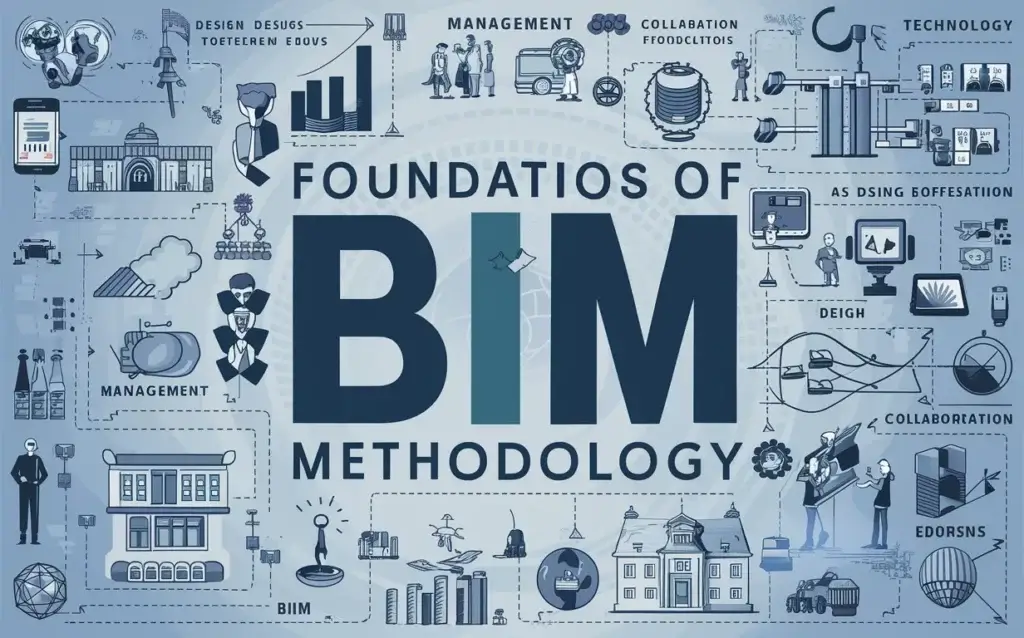
The basics of BIM methodology: an overview

Building Information Modelling (BIM) is an advanced method used in the construction industry to create a digital model of a building or infrastructure. This model contains not only the geometric information, but also the physical and functional characteristics of the building. BIM enables the various players in the construction industry, such as architects, engineers, contractors and clients, to collaborate and exchange information in real time. This method is revolutionising the way,

The basics of BIM methodology: an overview Read more »

Modern digital city model with financial data and property information.

Trends in the commercial property market: focus on the construction industry

The commercial property market in the construction industry has experienced rapid development in recent years. The increasing demand for modern and sustainable commercial property has led to a lively construction activity. Companies are increasingly looking for properties that not only meet their operational requirements, but also fulfil ecological and social standards. This trend has led to the increased development of commercial properties that are energy-efficient, environmentally friendly and resource-conserving. In addition, digitalisation and automation have

Trends in the commercial property market: focus on the construction industry Read more »

Advanced building model with modern construction planning and digital visualisation.

As-built data: Optimisation of construction projects

As-built data is information that documents the actual condition of a building or facility after the construction phase has been completed. This data includes all changes made during the construction process and all deviations from the original construction plan. As-built data can contain various types of information, including technical drawings, CAD models, survey data, material lists and other relevant documents. They are used to accurately record and document the current condition of a structure or facility in order to ensure a

As-built data: Optimisation of construction projects Read more »

High-rise repair and building management on the roof of a modern skyscraper.

Facility management during construction: efficient building management

Construction-related facility management refers to the administration and management of buildings throughout their entire life cycle, from the planning phase through to utilisation and maintenance. It includes the coordination and monitoring of various services, such as cleaning, security, maintenance, energy supply and waste management, to ensure that a building is operated efficiently. The aim of facility management during construction is to extend the service life of a building, optimise operating costs and increase comfort.

Facility management during construction: efficient building management Read more »

BIM-Viewer: Top Tool for Facility managers

BIM modeling: Efficient Planning and Building

Nowadays, BIM modelling has become an important part of the construction industry. BIM stands for Building Information Modelling and refers to the process of creating a digital model of a building or infrastructure. This model contains all relevant information about the project, from floor plans and dimensions to materials and costs. BIM modelling enables the various players in the construction industry to work together more efficiently, improve accuracy and reduce costs.

BIM modeling: Efficient Planning and Building Read more »

Efficient planning thanks to BIM implementation

Efficient planning thanks to BIM implementation

Building Information Modelling (BIM) is an innovative method that is becoming increasingly important in the construction industry. BIM makes it possible to create a virtual model of a building or infrastructure that contains all relevant information. This model serves as a common database for all parties involved in the construction process and enables efficient collaboration and communication. In this article, we will take a closer look at BIM and its benefits for construction project planning,

Efficient planning thanks to BIM implementation Read more »

BIM data processing: Efficient planning and implementation

BIM data processing: Efficient planning and implementation

BIM data processing plays a crucial role in the construction industry. It enables efficient planning and realisation of construction projects. In this article, we will take a closer look at BIM data processing, analyse its importance for the construction industry and explain its advantages over conventional planning methods. We will also look at how BIM data processing works in practice, what software is used for it and how it can contribute to faster and more cost-effective construction projects.

BIM data processing: Efficient planning and implementation Read more »

3. State-of-the-art CAD model of a building with digital infrastructure and smart technologies.

BIM in Germany: Digital planning revolutionises the construction industry

Building Information Modelling (BIM) is an innovative method that is becoming increasingly important in the construction industry. BIM makes it possible to create a virtual model of a building or infrastructure that contains all relevant information. This model serves as a central database that can be accessed by all project participants. This improves communication and coordination between the various trades and allows errors to be recognised and rectified at an early stage. In this article

BIM in Germany: Digital planning revolutionises the construction industry Read more »

3. State-of-the-art CAD model of a building with digital infrastructure and smart technologies.

BIM in construction projects: Increasing efficiency through digital planning

Building Information Modelling (BIM) is an innovative method that is becoming increasingly important in the construction industry. BIM makes it possible to create a virtual model of a building or infrastructure that contains all relevant information. This model serves as a common database for all parties involved in the construction project and enables improved collaboration and communication. In this article, we will take a closer look at BIM and analyse its benefits in construction projects.

BIM in construction projects: Increasing efficiency through digital planning Read more »

3. State-of-the-art CAD model of a building with digital infrastructure and smart technologies.

BIM in Engineering and management: Effective planning and implementation of

Building Information Modelling (BIM) is an innovative method that is becoming increasingly important in the construction industry. BIM enables engineers, architects and other project participants to create and manage a virtual model of a building or infrastructure. This model contains all relevant information about the project, from the dimensions and materials to the costs and schedule. BIM is revolutionising the way projects are planned, implemented and managed.

BIM in Engineering and management: Effective planning and implementation of Read more »

Scroll to Top