
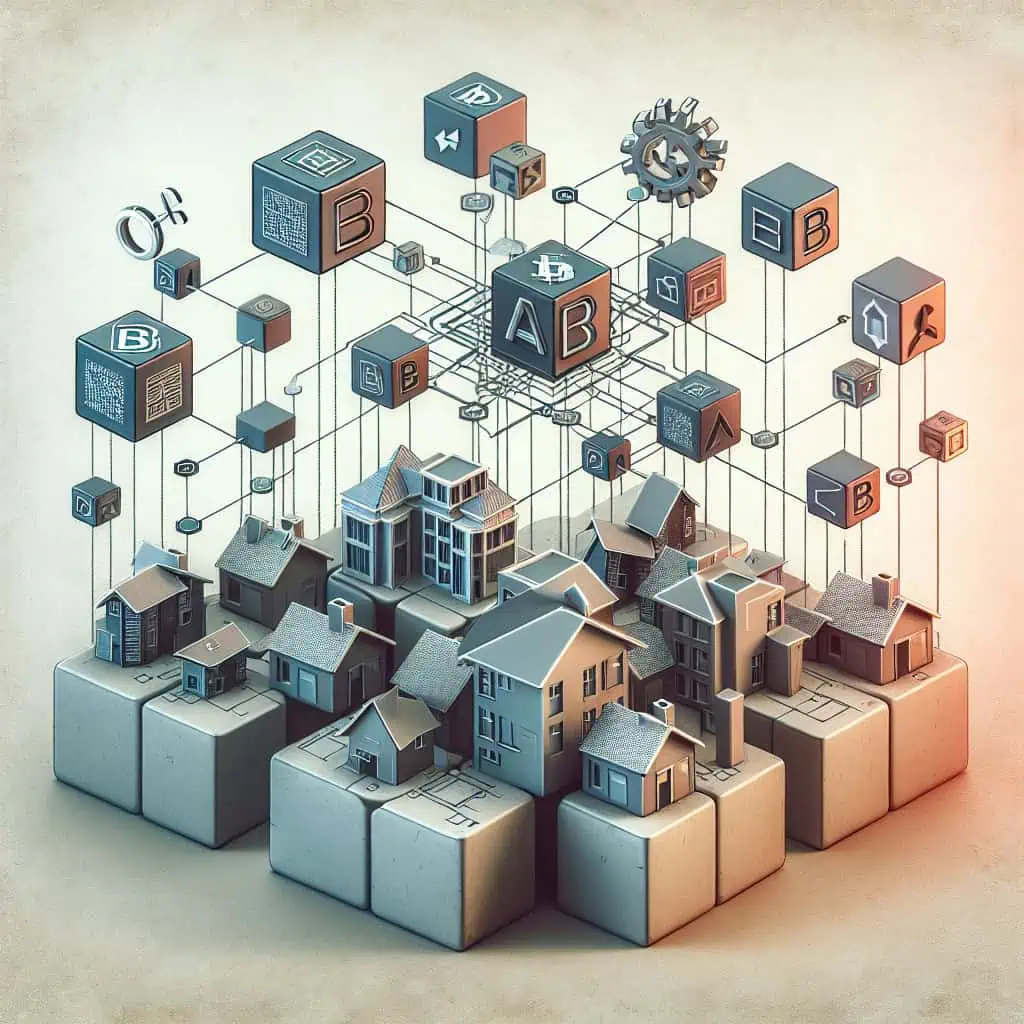
Blockchain technology has caused quite a stir in recent years, particularly through its application in the field of cryptocurrencies. However, the revolutionary properties of this technology could extend far beyond the financial sector and also have a significant impact on property transactions. But how exactly could the integration of blockchain into ALKIS, the ALB, the Property management and parcel management work? And which Advantages What does this mean for geographic information systems (GIS) in Germany?
Imagine if every property transaction - be it the purchase, sale or lease of parcels of land - could be recorded in an unchangeable, transparent ledger (= "cash book"). This would not only prevent manipulation, but also significantly reduce the administrative burden. Blockchain could therefore act as a kind of digital notary's office that stores property information securely and traceably.
Advantages of blockchain in property transactions:
- Transparency: Everyone involved has access to the same information, which reduces misunderstandings and fraud.
- Speed: Thanks to automated processes, transactions could be completed more quickly.
- Cost efficiency: Less paperwork and less need for intermediaries lead to lower administrative costs.
Furthermore, combining blockchain with existing GIS applications for land parcels and/or even a kind of upgrade of ALKIS could open up new possibilities for Visualisation and analysis of properties. This not only optimises the entire property transaction process, but also provides investors with a better basis for decision-making.
"The Future belongs to those who believe in the beauty of their dreams.“ – Eleanor Roosevelt
Ultimately, the interplay between blockchain technology and advanced Software introduce a paradigm shift in the real estate sector for cadastral data processing. It is time to consider: Are we ready for this digital revolution? When I look at Germany: certainly not. But who knows?
What is blockchain and why is it relevant?
Blockchain is a decentralised database technology that enables, Data securely and transparently. Essentially, it functions like a digital ledger in which all transactions are stored in „blocks“ that are linked together. Each block contains information about the transactions, a timestamp and a reference to the previous block. This structure makes it virtually impossible to alter data once it has been stored. Data to manipulate or delete.
But why is this relevant to us in the field of real estate transactions? Quite simply, blockchain could help solve many of the challenges we face today. Imagine if you could use digital tools to store all property information in a tamper-proof manner while simultaneously Efficiency of parcel management.
- Security: Thanks to cryptographic Encryption Blockchain offers a high standard of security that makes unauthorised access virtually impossible.
- Decentralisation: There is no central authority that controls everything. Instead, all participants have equal rights and can access the same information.
- Traceability: Every change is recorded immediately and permanently. This creates trust between buyer and seller in property transactions.
In combination with modern geographic information systems (GIS) in Germany, these could Advantages be enormous. The Digitisation Cadastral data processing could be revolutionised by blockchain – think of a digital field map that is not only up to date but also remains reliable!
"Technology is nothing. What really counts is people's ability to use it." - Steve Jobs
So when you're thinking about how blockchain technology could transform property transactions, remember: it's not just about the latest trends or innovations; it's about optimising processes and building trust in an increasingly complex world. Are you ready for this Step? Let's embark on this digital journey together!
Simplification of property transactions
Simplifying property transactions is a key area where blockchain technology could revolutionise the industry. Just think about it: buying or selling a property can often be a lengthy and bureaucratic process involving numerous steps, Documents and, above all, time. This is where blockchain comes in – it has the potential to streamline this process considerably.
- Automated contracts: Smart contracts are self-executing contracts with the conditions written directly into the code. In the case of a property sale, a smart contract could automatically trigger payment to the seller as soon as all contractual conditions are met. This makes the entire process not only faster, but also more secure.
- Real-time transaction tracking: By using blockchain, all transactions can be tracked in real time. Buyers and sellers receive immediate confirmation of the status of their transactions. No more waiting for confirmations or documents! Documents!
- Fewer sources of error: Conventional methods often involve human Error the culprit - be it through incorrect entries or lost documents. With blockchain, on the other hand, every Step documents and verifies what the Risk of errors is drastically minimised.
In addition, the combination of blockchain with existing municipal applications provides a robust basis for effective parcel management. A digital parcel map could not only display current property information, but could also be updated automatically when new data is entered - without any manual effort.
"A goal without a plan is just a wish." - Antoine de Saint-Exupéry
The Implementation These technologies could help the entire real estate sector to work more efficiently while strengthening trust between all parties involved. So when we talk about the Future When it comes to property transactions, we should not ignore these possibilities! It is time to take proactive action and focus on a simplified Future to move towards.
Improved transparency in the transfer of ownership
When it comes to the transfer of ownership of land, Transparency the be-all and end-all. This is precisely where blockchain technology can make a real difference! Imagine if you could see at a glance who the current owner of a property is, what their previous sales and purchase history is, and whether there are any encumbrances or mortgages – all stored in a tamper-proof ledger.
With the integration of blockchain into the Property management this concept becomes tangible. Here are a few points that illustrate how blockchain can provide greater clarity:
- Public inspection: All relevant information is accessible to authorised persons. This means less uncertainty and trust between buyers and sellers.
- Immutability of the data: Once information has been entered, it cannot be changed without further ado. This protects against fraud and manipulation.
- Fast verification: During a transaction, the identity of the seller and the accuracy of the data can be checked at lightning speed, which speeds up the entire process.
In addition, a geographic information system (GIS) could help to create a digital field map that is constantly updated. Thus, know all parties involved are always fully informed about the current state of affairs. And when we think about cadastral data processing: a digital system combined with blockchain could work wonders here!
"Transparency leads to responsibility and trust is the key to success."
Could this mean that we will have fewer legal disputes in property transactions in future? Possibly...
If all parties have access to reliable data, this will Risk misunderstandings and conflicts are significantly minimised. And who wouldn't want to experience a smooth transfer of ownership? It looks like we have an exciting time ahead of us ;-)
Integration of blockchain into existing systems such as ALKIS ALB and GIS
The integration of blockchain technology into existing systems such as ALKIS and ALB could be a real game changer for land parcel management. But how can this be implemented in practice? Let's take a look at the possibilities that are opening up here.
1. seamless data linking
By linking the blockchain with ALKIS Software and geographic information systems (GIS), property information can be updated and managed in real time. Imagine that every change to a parcel of land is immediately recorded in the blockchain – whether it is a purchase, sale or encumbrance. This avoids the old problem of duplicate Accounting and ensure more Efficiency in property transactions.
2. improvement of data security
Another advantage of blockchain integration is the increased Security. Through cryptographic Encryption it becomes virtually impossible to access or manipulate stored data. This is particularly important in cadastral data processing, where accuracy and reliability are crucial. Who would want their valuable property information to fall into the wrong hands?
3. automation through smart contracts
Smart contracts could represent a revolutionary approach to managing property transactions. These self-executing contracts can be linked directly to ALKIS data, allowing transactions to be carried out automatically once all conditions are met. This not only saves time, but also reduces human error. Error – and nothing hurts more than a lost document!
4. real-time analyses and reports
The combination of blockchain technology and GIS enables facility managers to create analytical reports in real time. This means you can get instant insights into the condition of your properties - from market analyses to land value information. And who couldn't want to save a little time?
"Innovation distinguishes between a leader and a follower." - Steve Jobs
Such integration is not only promising for the future, it could also herald a new era in parcel management! When we talk about digital Transformation the time has come to talk about the next Step to go: The combination of proven software solutions such as ALKIS ALB with the revolutionary possibilities of blockchain technology could be the key to Optimization of property transactions.
Challenges in the implementation of blockchain in property transactions
The Implementation The implementation of blockchain technology in land transactions brings with it many promising opportunities, but like any new technology, it is not without its challenges. Let's take a closer look at what we might face when integrating blockchain into existing systems such as ALKIS and ALB Grundstücksverwaltung.
1. technological barriers
Despite their Advantages Despite its advantages, blockchain is a comparatively new and complex technology. Many companies are not yet ready to convert their existing systems or make the necessary investments in new software. Integration with existing property management tools can be challenging and often requires specialised knowledge.
2 Regulatory uncertainties
Another obstacle is the legal framework. The laws governing the use of blockchain in property transactions are often unclear or Obsolete. A misunderstanding of the legal requirements can lead to complications and deter potential users.
3. lack of acceptance and trust
Many stakeholders in property transactions may be sceptical about blockchain technology. Trust is crucial, especially when it comes to such important data as property information. A changeover requires intensive education of those involved - from estate agents and notaries to the buyers themselves. And trust in blockchain technology is not always strengthened by cryptocurrencies (which, roughly speaking, are also based on it).
4. costs for implementation
Although cost savings can be achieved in the long term through more efficient processes, there are initial investment costs that can be difficult to bear. This could be a major hurdle, especially for smaller companies in the field of land parcel management.
"Every challenge is an opportunity in work clothes."
Despite these challenges, one thing is certain: the benefits of successfully implementing blockchain in property transactions could be enormous! It is up to us to overcome these hurdles and realise the full potential of this technology. After all, the combination of blockchain and modern cadastral data processing could mean that we will soon be able to experience smooth, transparent and efficient property transactions!
Future prospects for the use of blockchain in property transactions
The future of property transactions looks promising, especially when we consider blockchain technology. The Developments in this area could not only revolutionise the transaction process, but also significantly strengthen trust between buyers and sellers.
When we imagine the possibilities offered by integrating blockchain with geographic information systems (GIS), it quickly becomes clear that this presents an enormous opportunity for Optimization of parcel management:
- Standardised database: Thanks to a shared blockchain database, all participants can access the same information. No more different versions - everything is transparent and traceable!
- Smart contracts: These programmed contracts could automate the process of transferring ownership. As soon as all the conditions are met, the transfer takes place without any paperwork. Sounds like a dream of the future, doesn't it?
- Advanced analyses: The connection to GIS for properties enables precise analyses to be created in real time. This means you always have a clear Overview about your properties and their market value.
However, like any new technology, blockchain also brings with it a number of challenges. The key to success lies in tackling these proactively. Promoting acceptance among stakeholders and clarifying the legal framework are essential steps on the way to mass implementation.
Ultimately, blockchain has the potential to take property transactions to a whole new level. From simplified management of cadastral data to digital field maps and Automation of transactions - the possibilities are manifold. And they also harbour immense risks.
 Deutsch
  English (UK)